
Shop by OFFICINE PETRUCCI
Shop by OFFICINE PETRUCCI
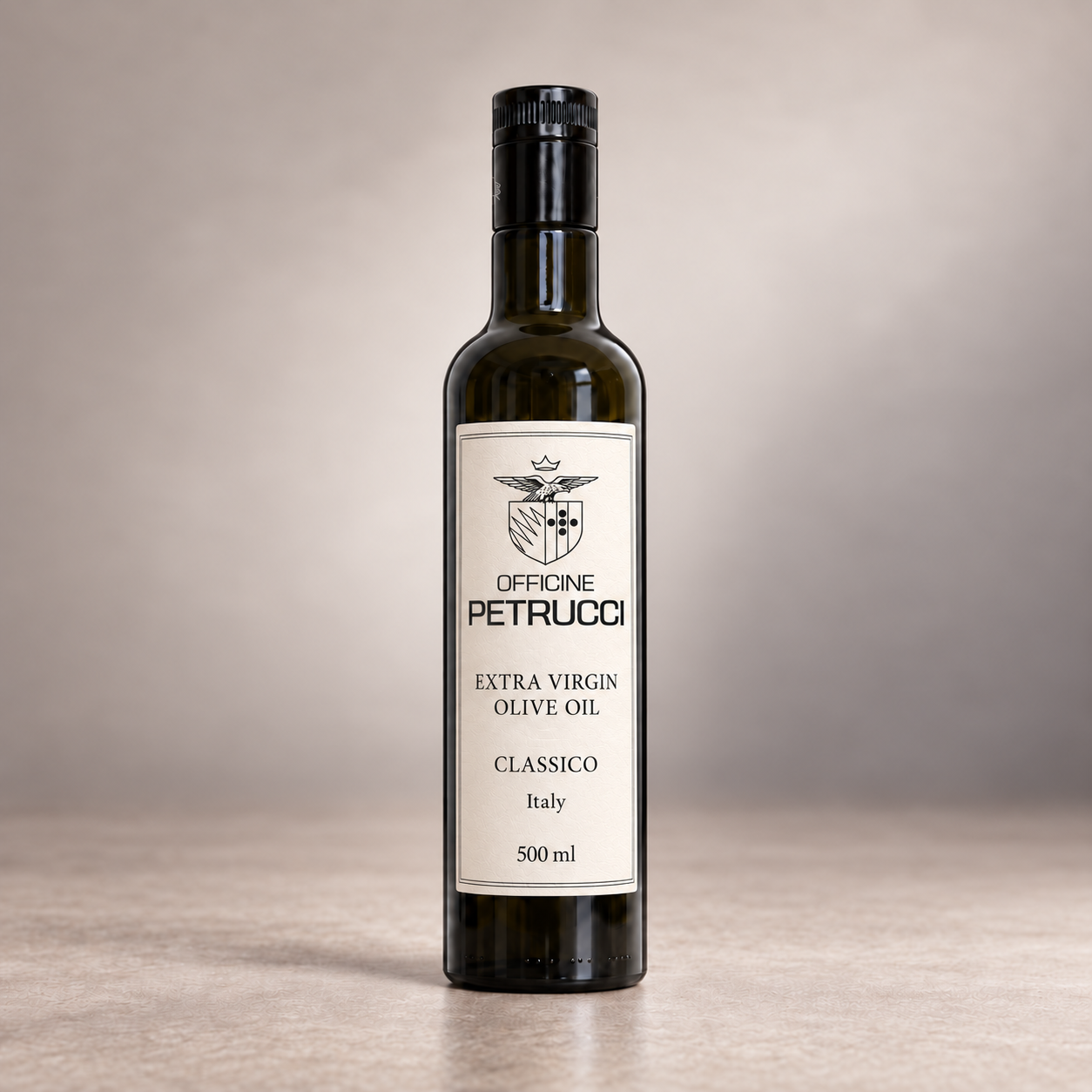
Produced in Tuscia, Classico is a multivarietal extra virgin olive oil made from Caninese, Leccino, Frantoio and Coratina olives.
The olives are grown in the Province of Viterbo, a landscape shaped by its volcanic origins and a long tradition of olive cultivation. The blend produces a medium-fruity extra virgin olive oil for everyday use in the kitchen and at the table.
Produced for Officine Petrucci by Colli Etruschi in Blera, Italy.
Caninese · Leccino · Frantoio · Coratina
Medium Fruity · 100% Italian
500 ml · Product of Italy
Incense burner
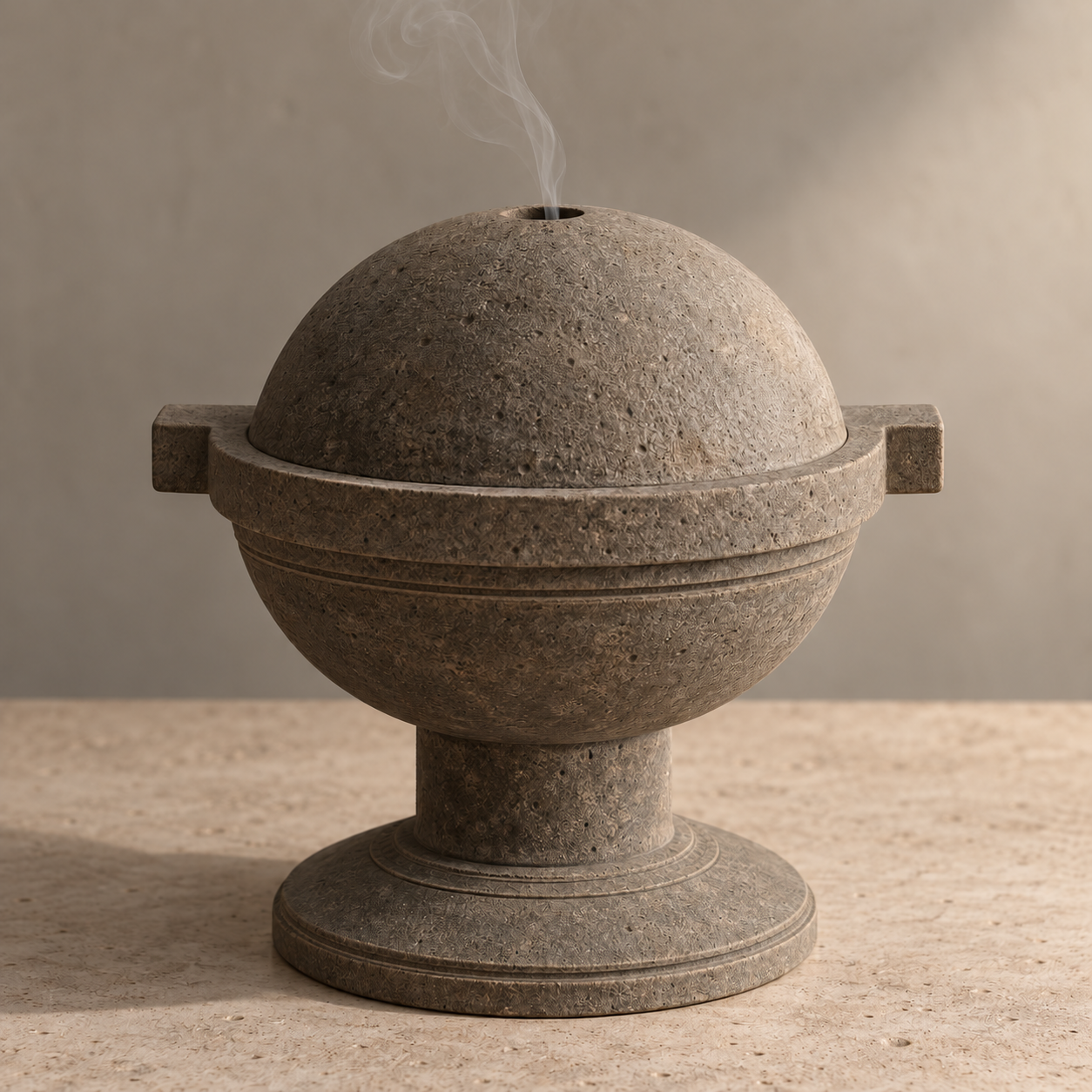
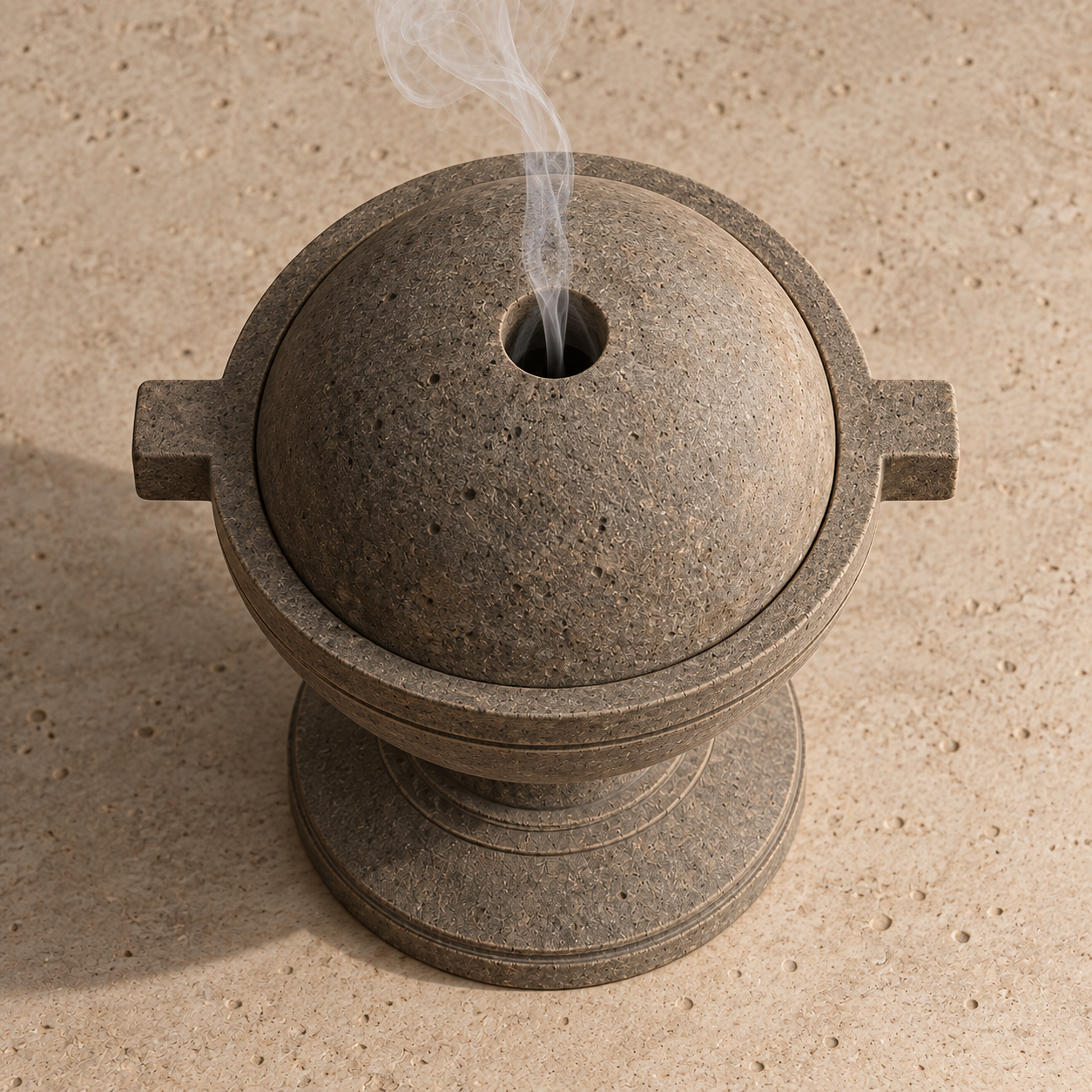
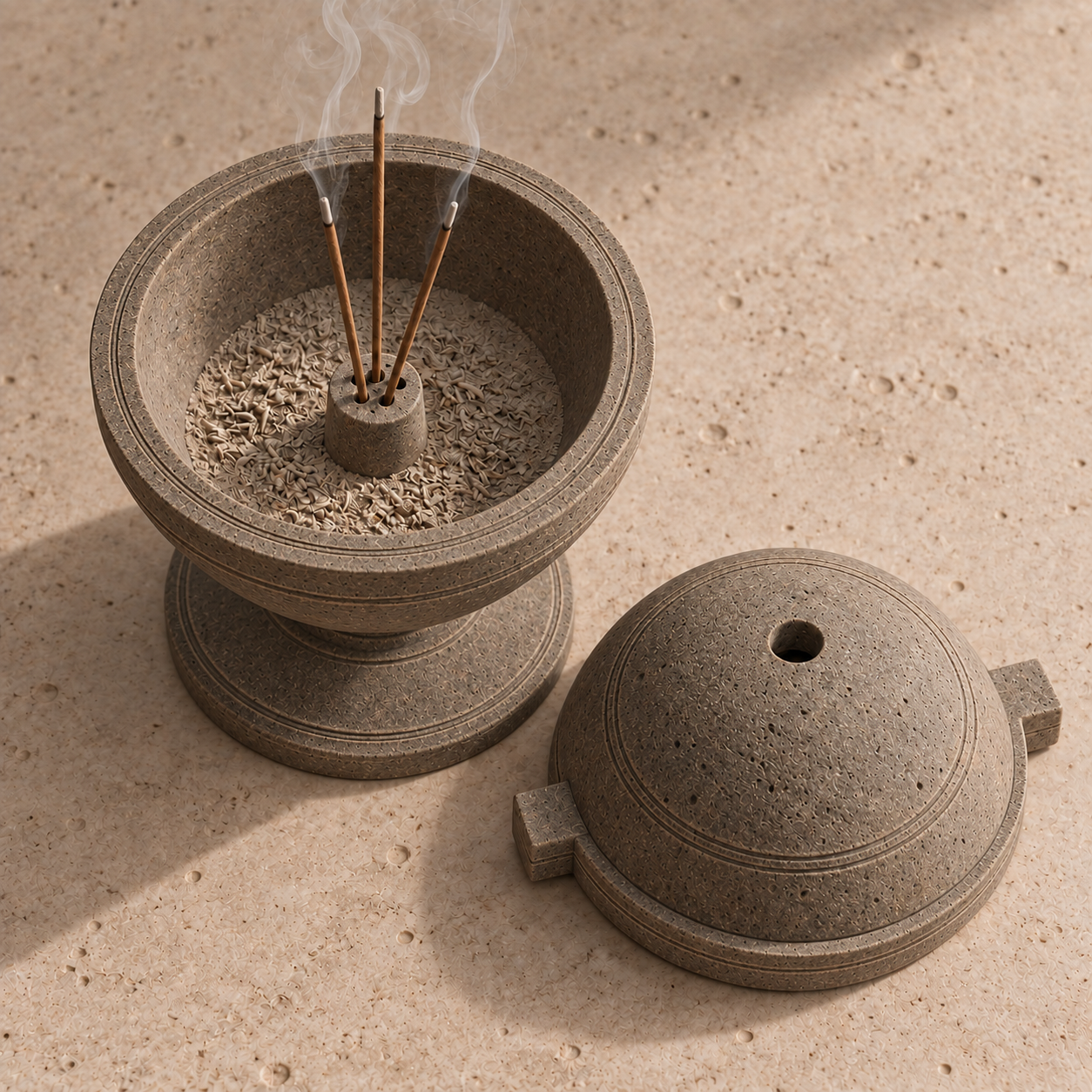
Inspired by Etruscan ritual objects seen at the Museo Nazionale Etrusco di Villa Giulia in Rome, Lucus reinterprets the form of a ceremonial container as a contemporary incense burner. Carved in peperino, the object is composed of a rounded base and removable domed cover. When closed, it reads as a compact sculptural form; when opened, the interior reveals the incense holder and ash chamber within.
Dimensions: H 20.6 × W 19 × D 16 cm
Materials: solid Peperino stone
Made in Italy
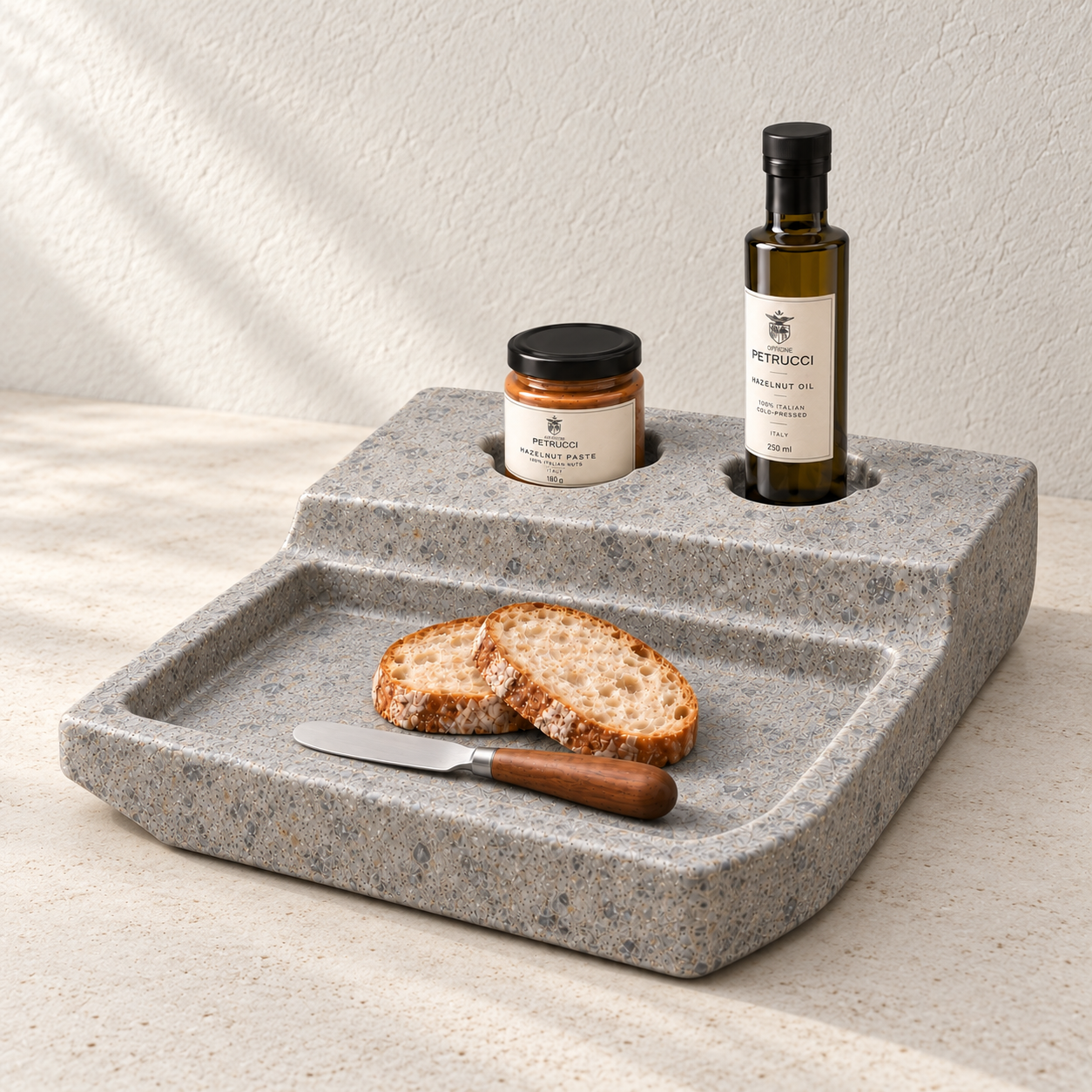
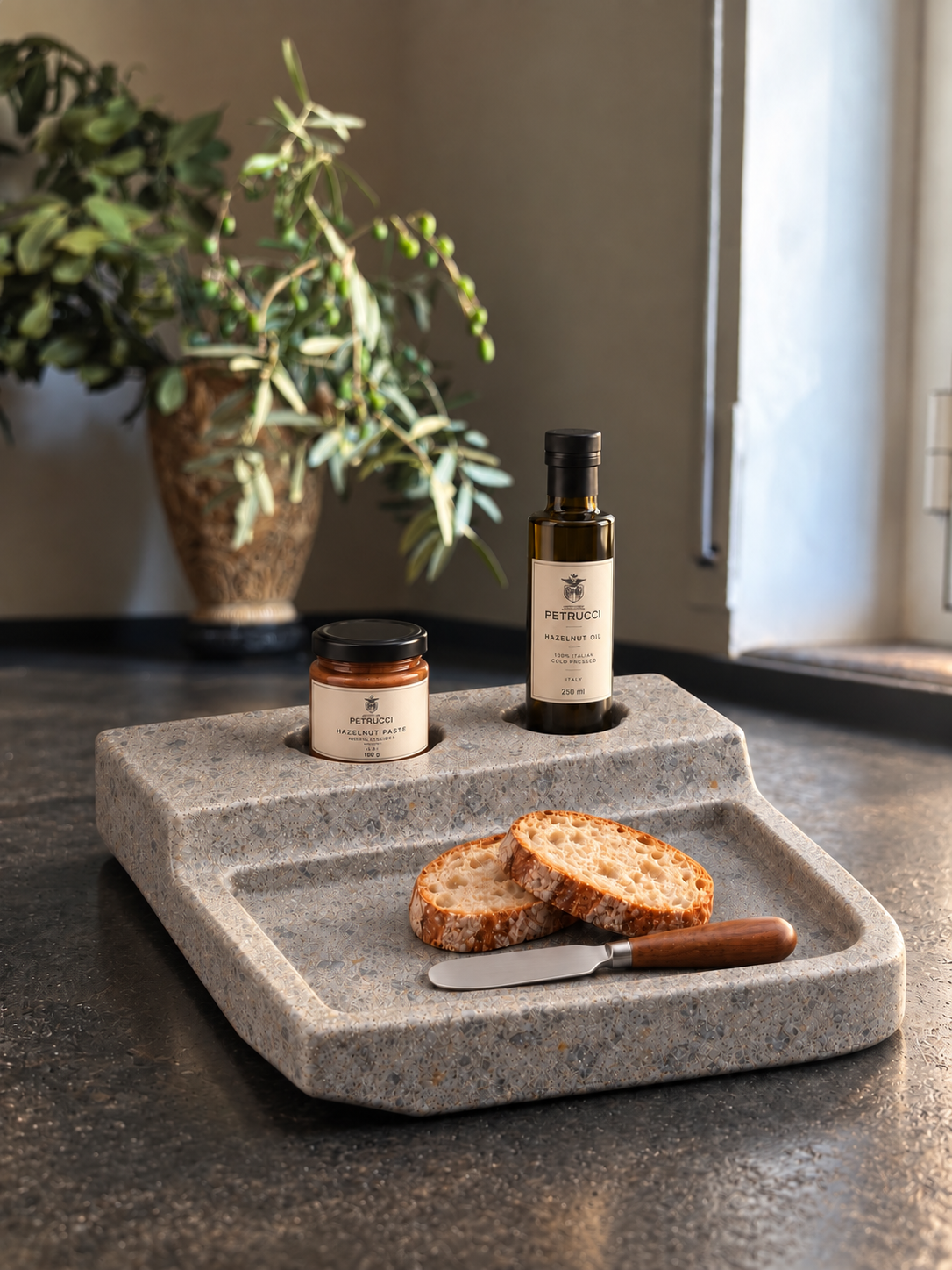
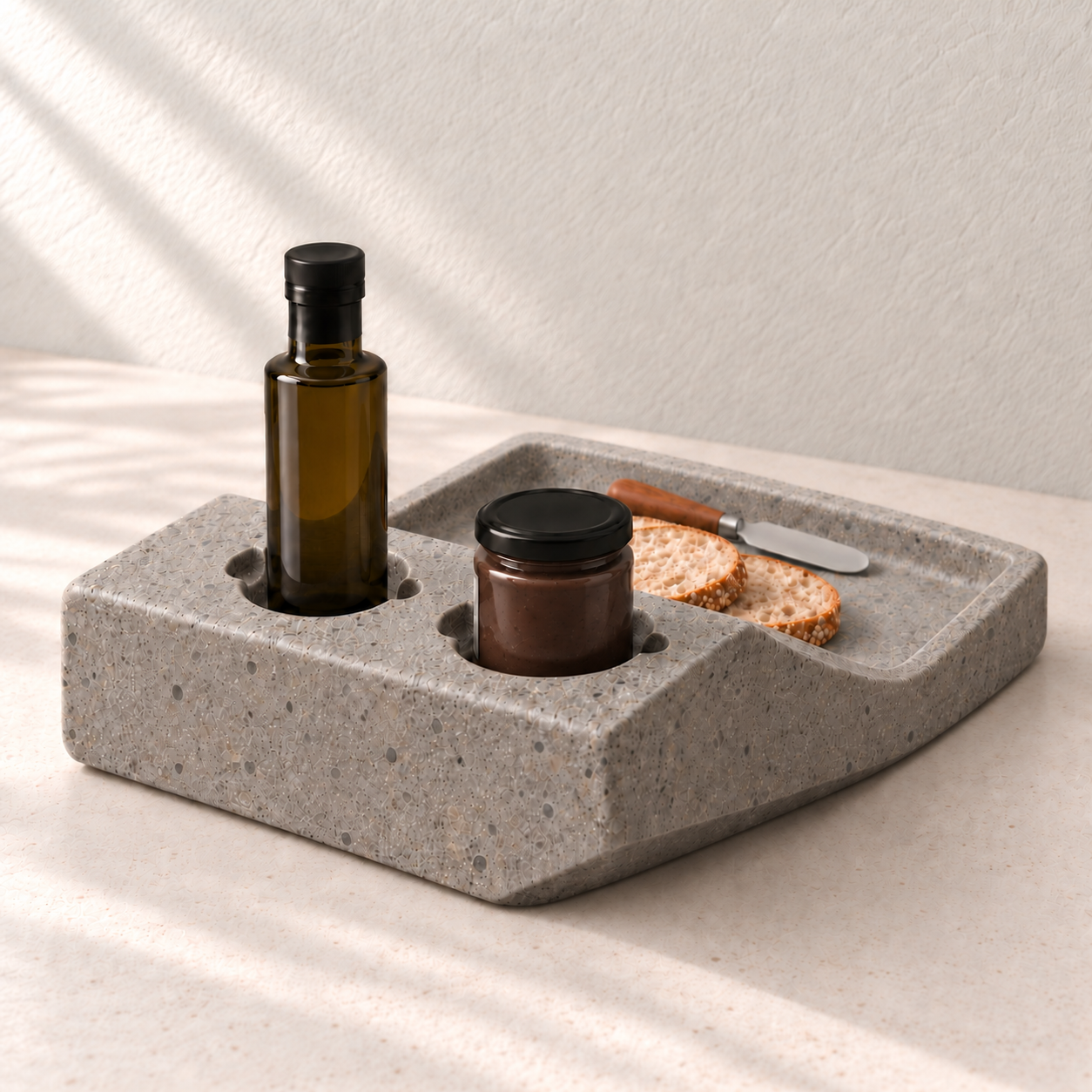
A hazelnut tasting ritual from Tuscia, Italy.
Gentile Altar brings together two expressions of the Tonda Gentile Romana hazelnut — a cold-pressed hazelnut oil and a 100% hazelnut paste from Azienda Agricola Profili — presented with a carved peperino serving piece designed for tasting and use at the table.
The peperino altar transforms the pair into a small domestic ritual: a place for the oil, the paste, bread, and a serving knife or spoon. Once the products are finished, the stone object remains, intended to be reused over time as a serving piece or ritual object in the kitchen or on the table.
Rooted in the material culture of Tuscia, Gentile Altar reflects the Officine Petrucci approach to food and objects: utility, permanence, and a contemporary sense of ceremony.
Includes
250 ml hazelnut oil
180 g 100% hazelnut paste
Carved peperino tasting altar
Produced in Italy
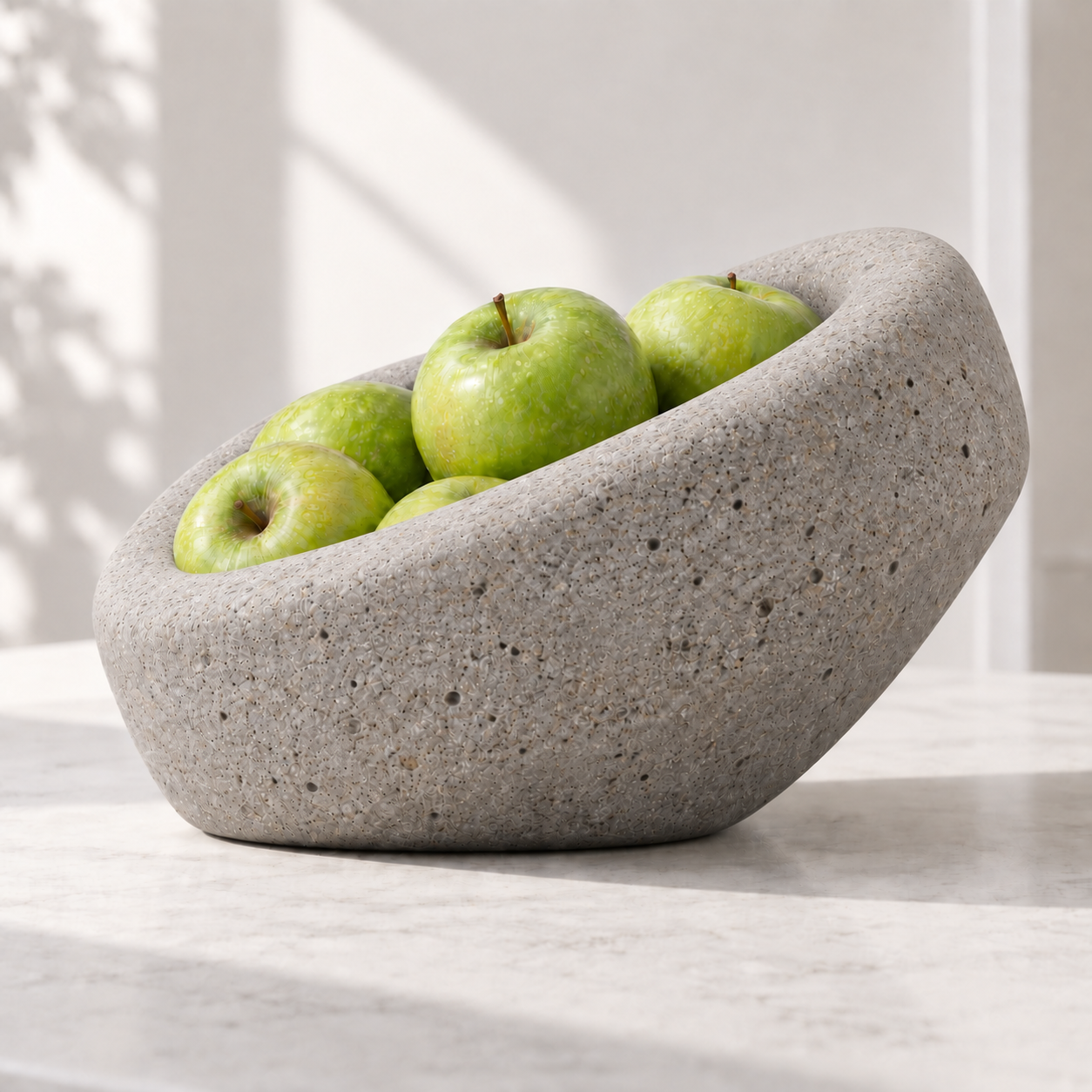
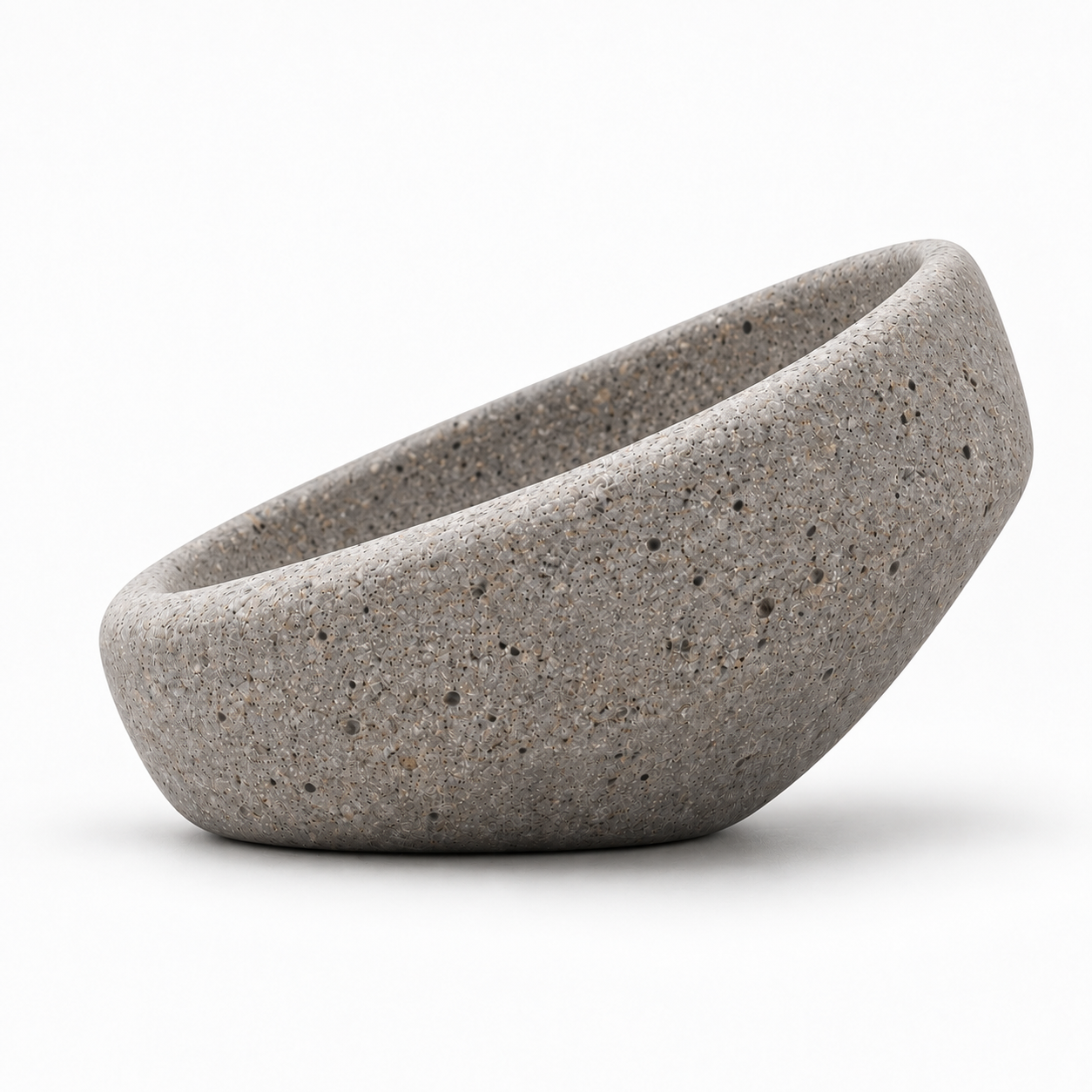
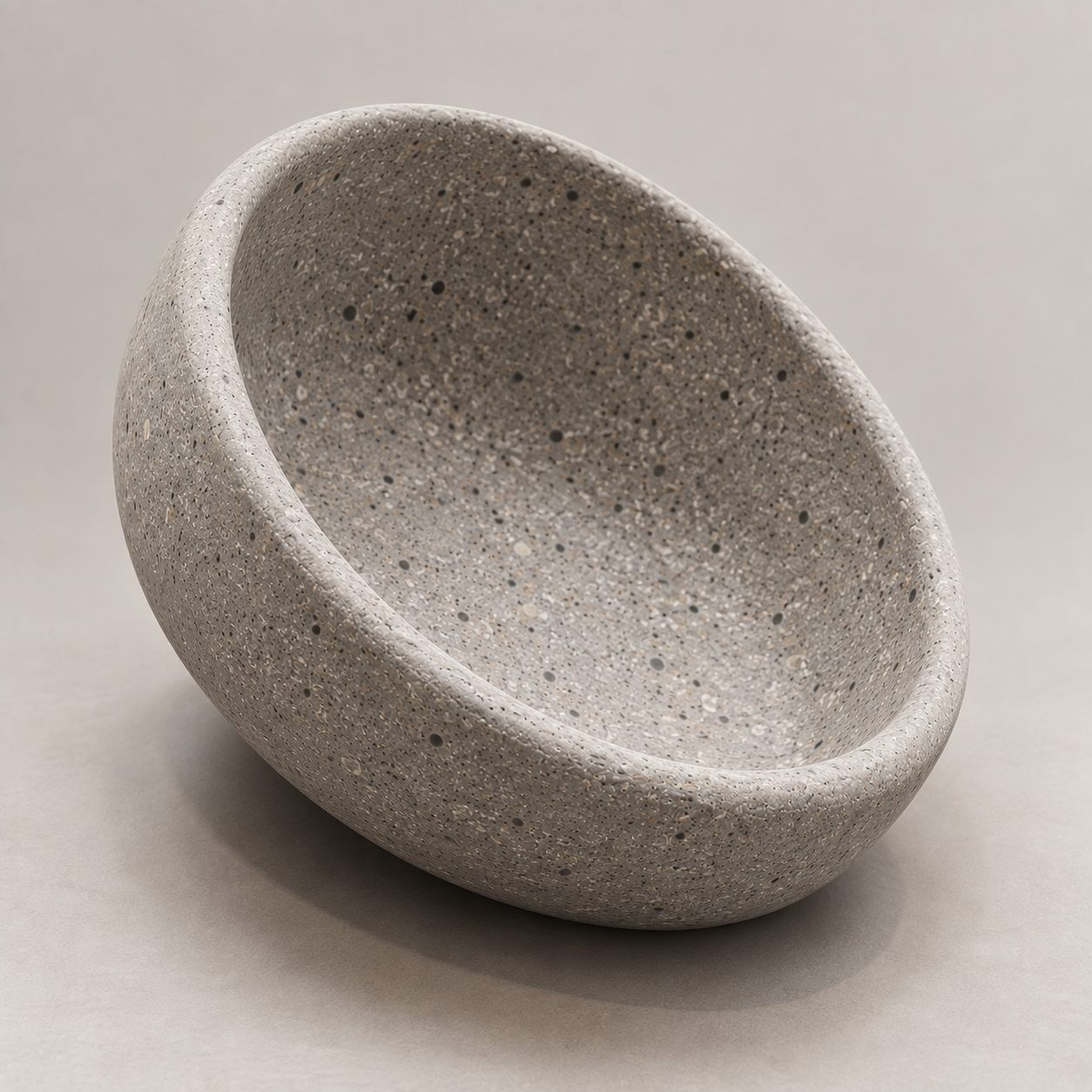
Peperino bowl
Trottola is a large sculptural bowl in peperino, developed from an earlier tilted bowl design and reinterpreted by Cardenio Petrucci at a more substantial scale. Its inclined form creates a sense of balance and movement, while the thick walls and volcanic stone give the object greater mass and permanence.
Designed as a functional centerpiece or fruit bowl, Trottola combines a simple circular geometry with a deliberately off-axis posture.
Material: Peperino
Dimensions: Ø 30 cm
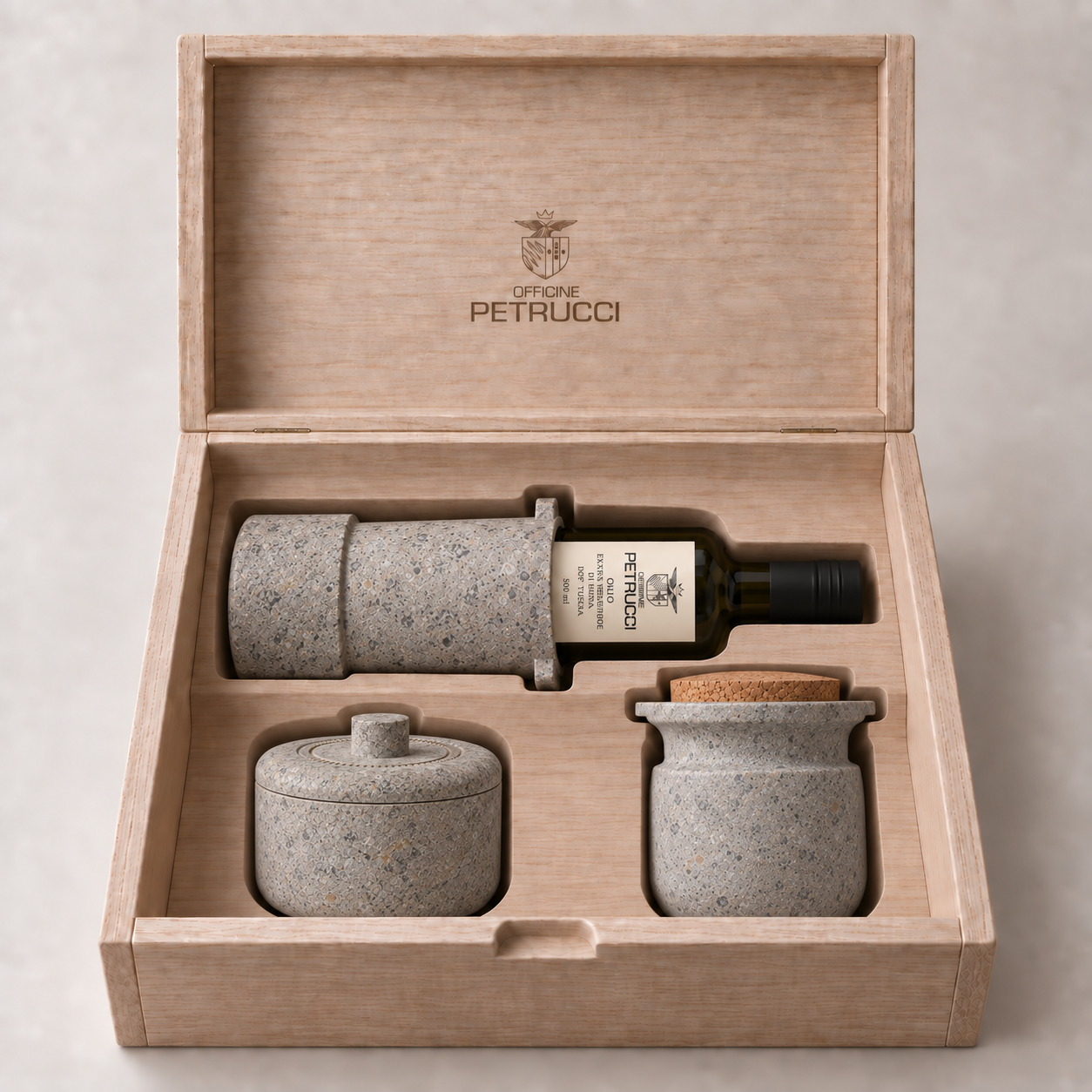
Gift Box Set
Olio, Nocciole, Dragées
A refined collection of three products from Tuscia, each paired with a permanent object in peperino, the grey volcanic stone characteristic of the region, and housed in a fitted natural-wood case.
Inspired by the forms and proportions of ancient Etruscan and Faliscan vessels, the stone pieces reinterpret this material language as contemporary objects designed to remain long after the original contents are gone.
The set contains:
500 ml DOP Tuscia extra-virgin olive oil, monocultivar Caninese, by Cooperativa Colli Etruschi
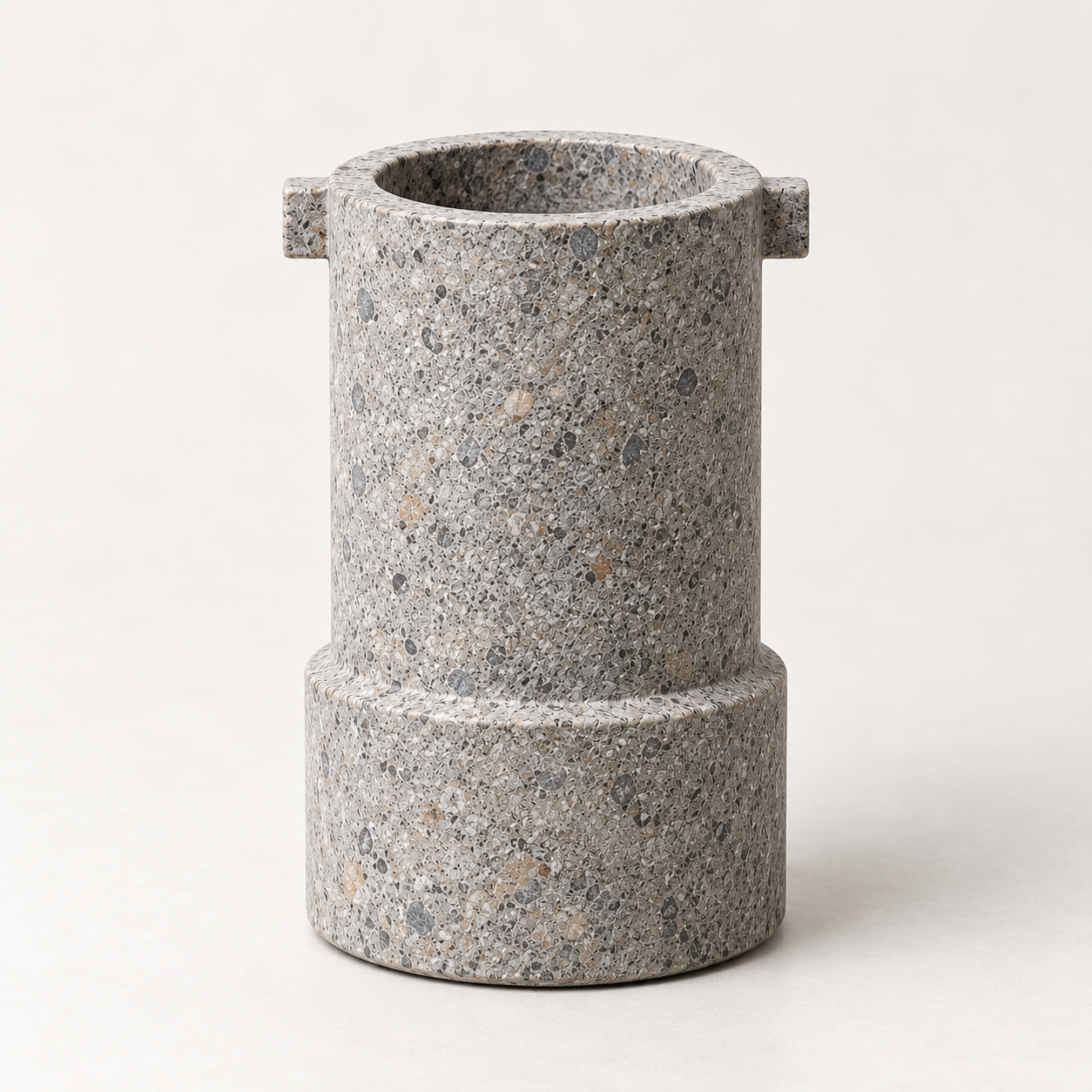
Amerina — peperino bottle holder
roasted Tonda Gentile Romana hazelnuts by Azienda Agricola Profili
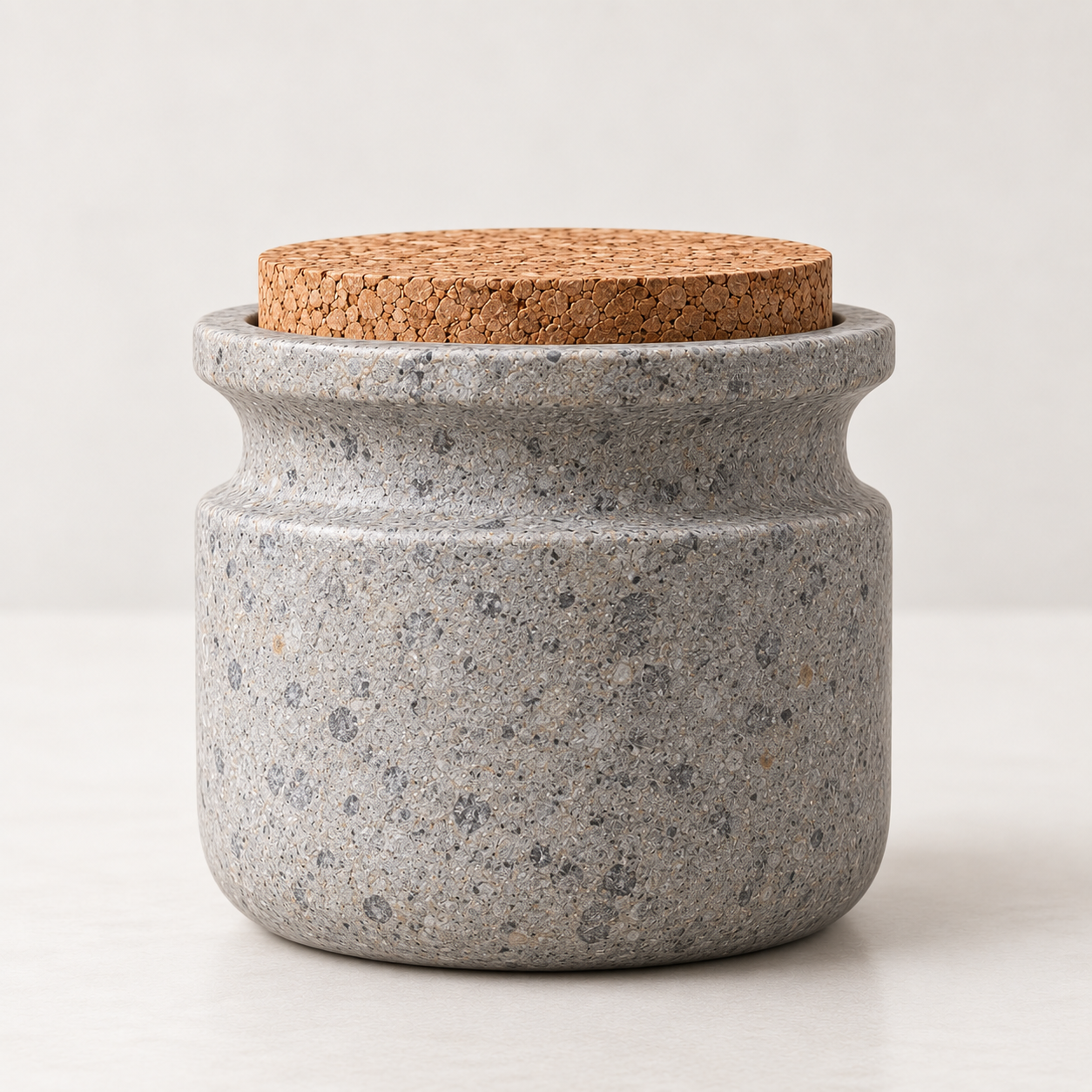
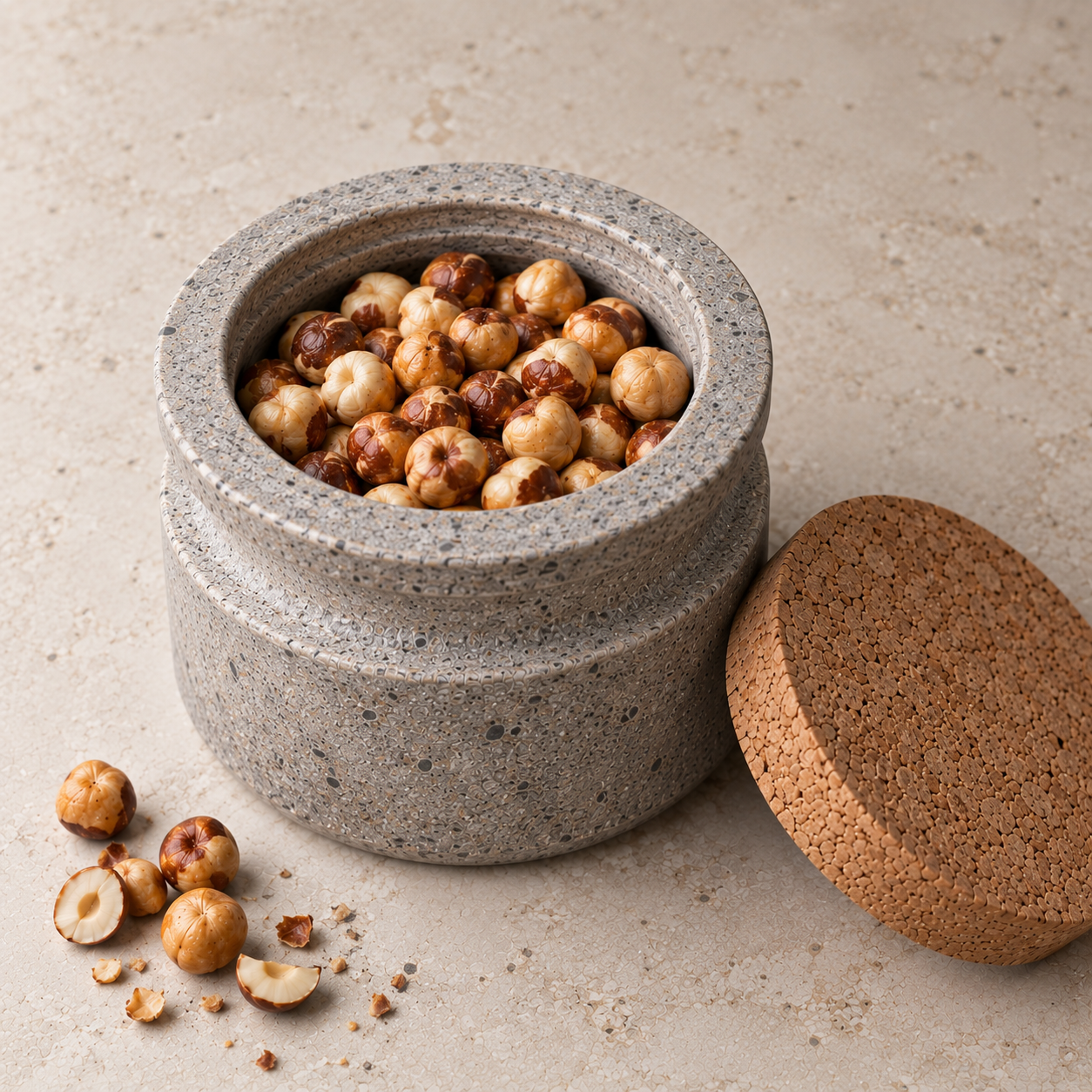
Faliscus — large peperino vessel with cork closure
chocolate-covered hazelnut dragées by Monia Achille / Isanti
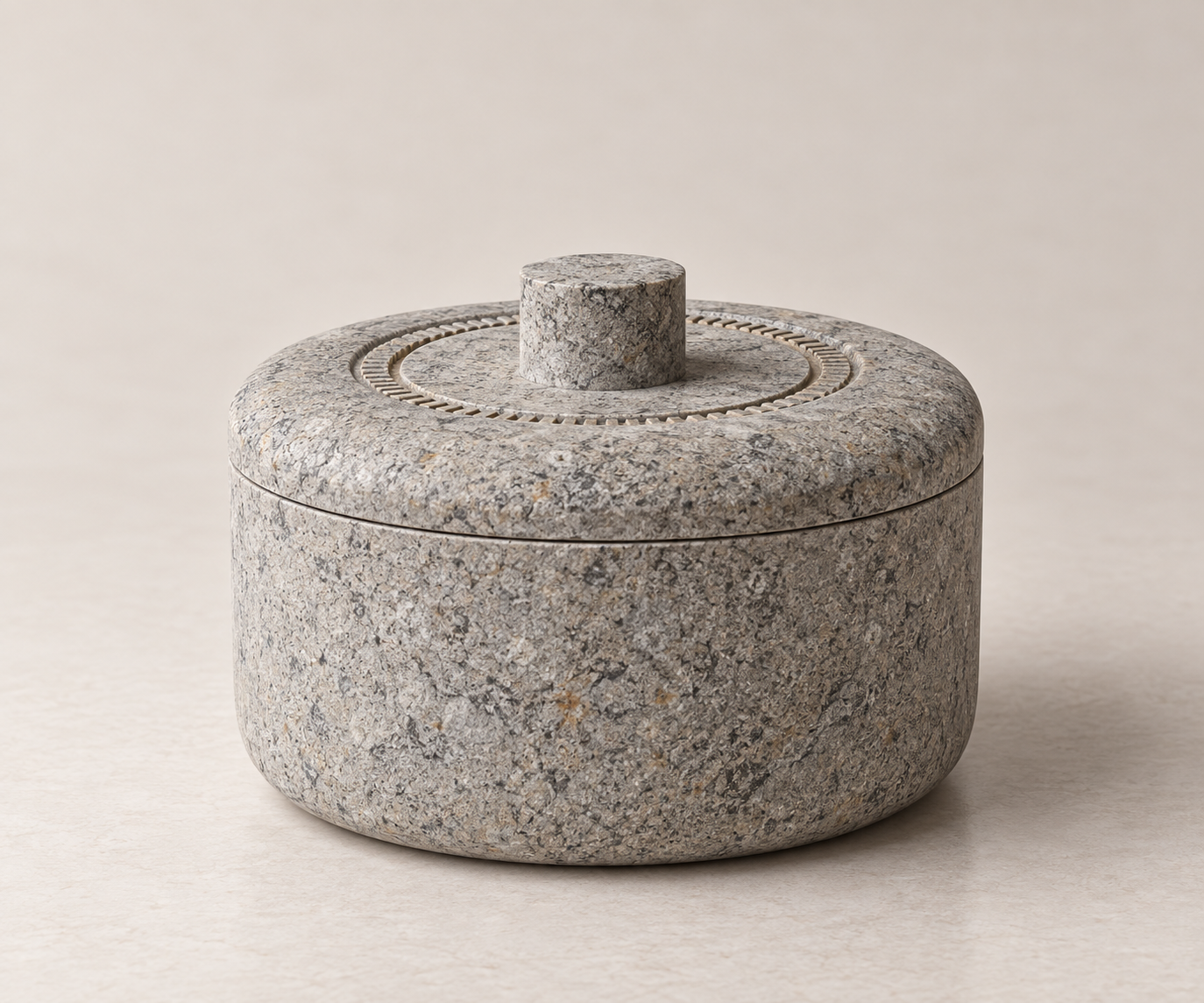
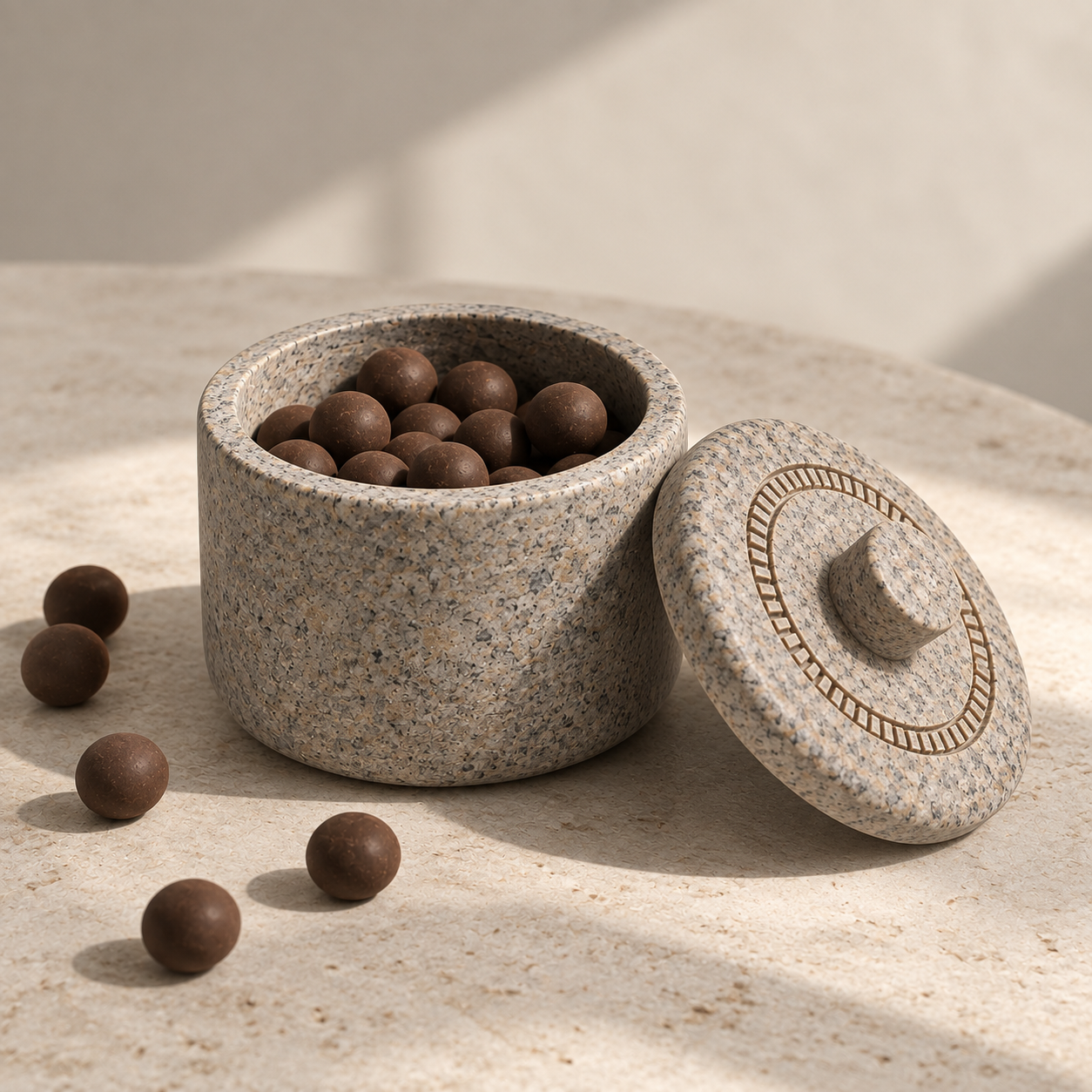
Vignale — small peperino vessel with fitted stone lid
fitted natural-wood Officine Petrucci presentation case
Vignale
Small peperino vessel
Named after the ancient Vignale settlement associated with Falerii, Vignale is a compact lidded vessel inspired by the proportions of small Etruscan and Faliscan containers. Carved from peperino, it is designed for dragées and small foods or objects.
Faliscus
Peperino vessel
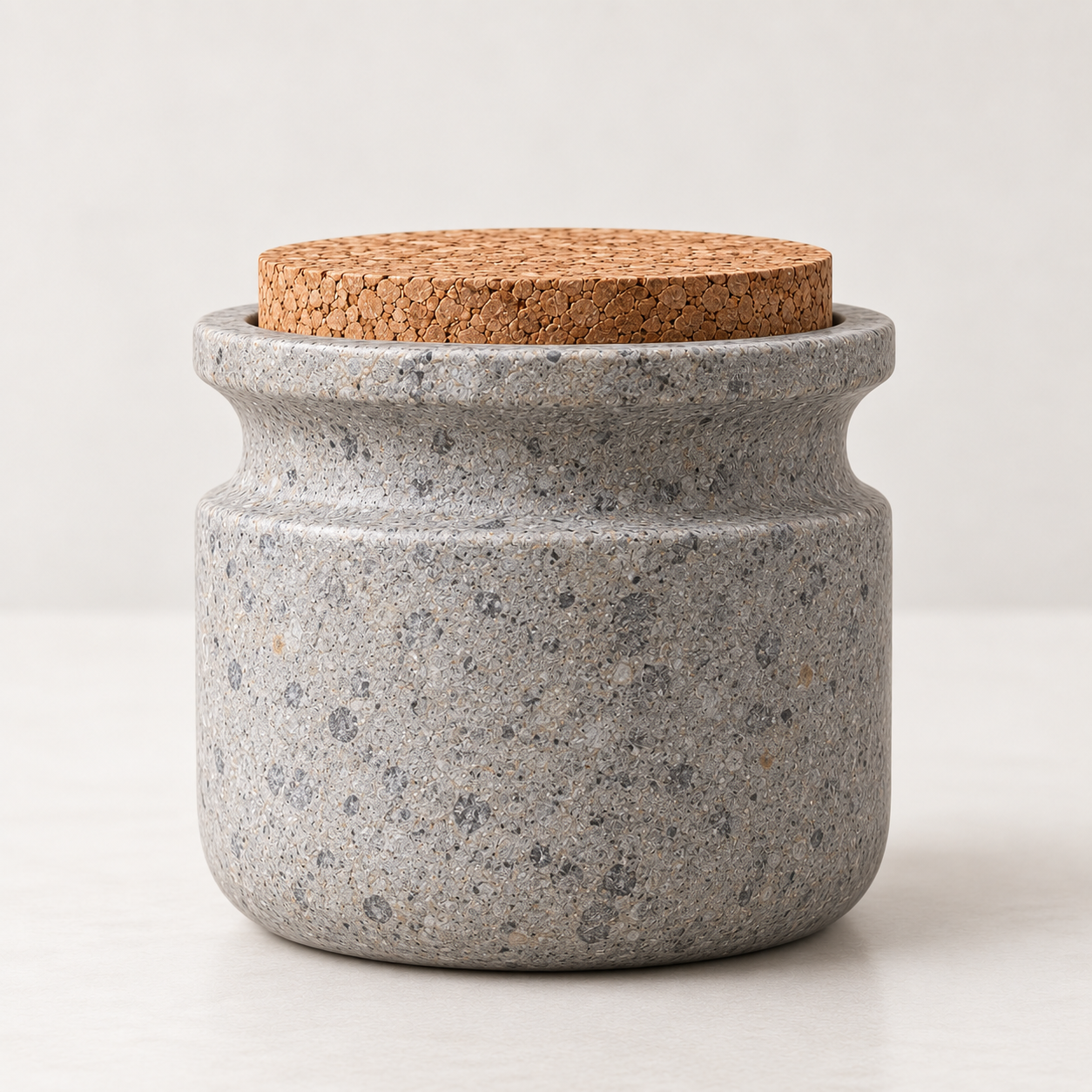
A larger vessel with a rounded body, articulated neck and cork closure. Its proportions draw from Faliscan and Etruscan pottery, translated into the weight and texture of local peperino.
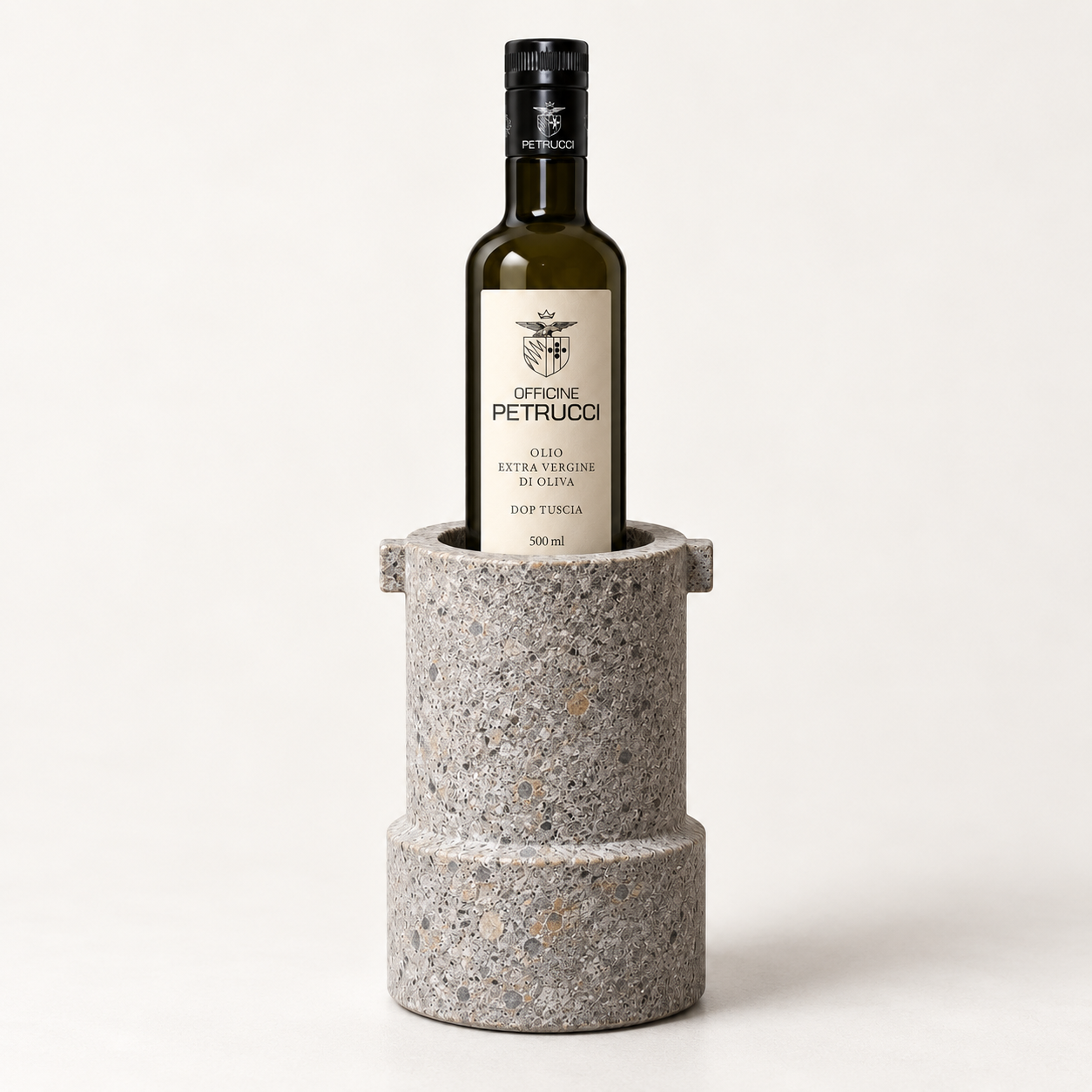
Amerina
Peperino bottle holder
Named for the Via Amerina, the ancient route that crossed the Agro Falisco, Amerina is carved from solid peperino to hold a 500 ml bottle. Its reduced cylindrical form treats the bottle and stone as a single composition.
Made in Tuscia
The foods, makers and materials in Set 01 come together through the territory of Tuscia in northern Lazio. Peperino is a dense grey volcanic stone formed by the ancient volcanic activity of the region and used for centuries throughout Viterbo and the surrounding towns in architecture, sculpture, paving and domestic objects.
Its granular surface, subtle tonal variation and substantial weight give each piece a distinctly local material character.
Designed to remain
The peperino pieces are not packaging. Once their original contents are finished, they remain as functional objects in their own right.
Replacement olive oil, hazelnuts and dragées will be available separately, allowing the vessels to be used again rather than replaced.
Materials
Peperino volcanic stone, natural cork, glass and natural wood.
Natural variation
Peperino is a natural stone. Tone, grain, inclusions and surface texture vary from piece to piece, making each object slightly different.
Care
Wipe the peperino pieces with a soft damp cloth. Do not place in a dishwasher or immerse in water.
Food products remain in their dedicated food-safe packaging and should not be placed directly against the stone unless specifically indicated.
Gifting
Set 01 is housed in a fitted natural-wood Officine Petrucci case and arrives ready for gifting.
Corporate and private gifting quantities are available on request.
Gift Box Set
Olio
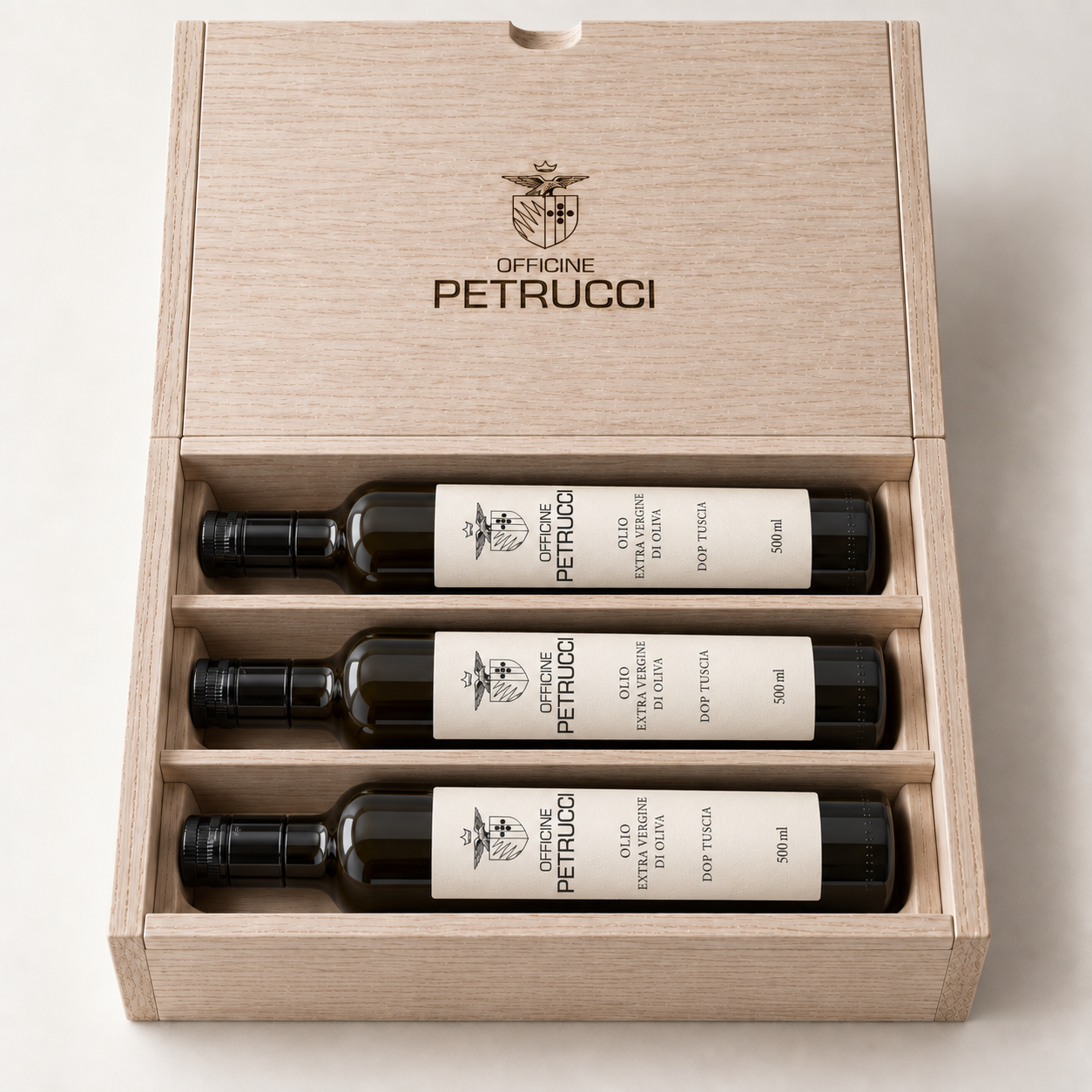
Three bottles of Officine Petrucci Extra Virgin Olive Oil DOP Tuscia presented in a fitted natural-wood box. The box follows the same restrained material language as the Agro Falisco collection, with three individual compartments divided by two wooden partitions. Designed as a substantial gift or presentation format, it brings the bottles together as a single composed object rather than a conventional multipack.
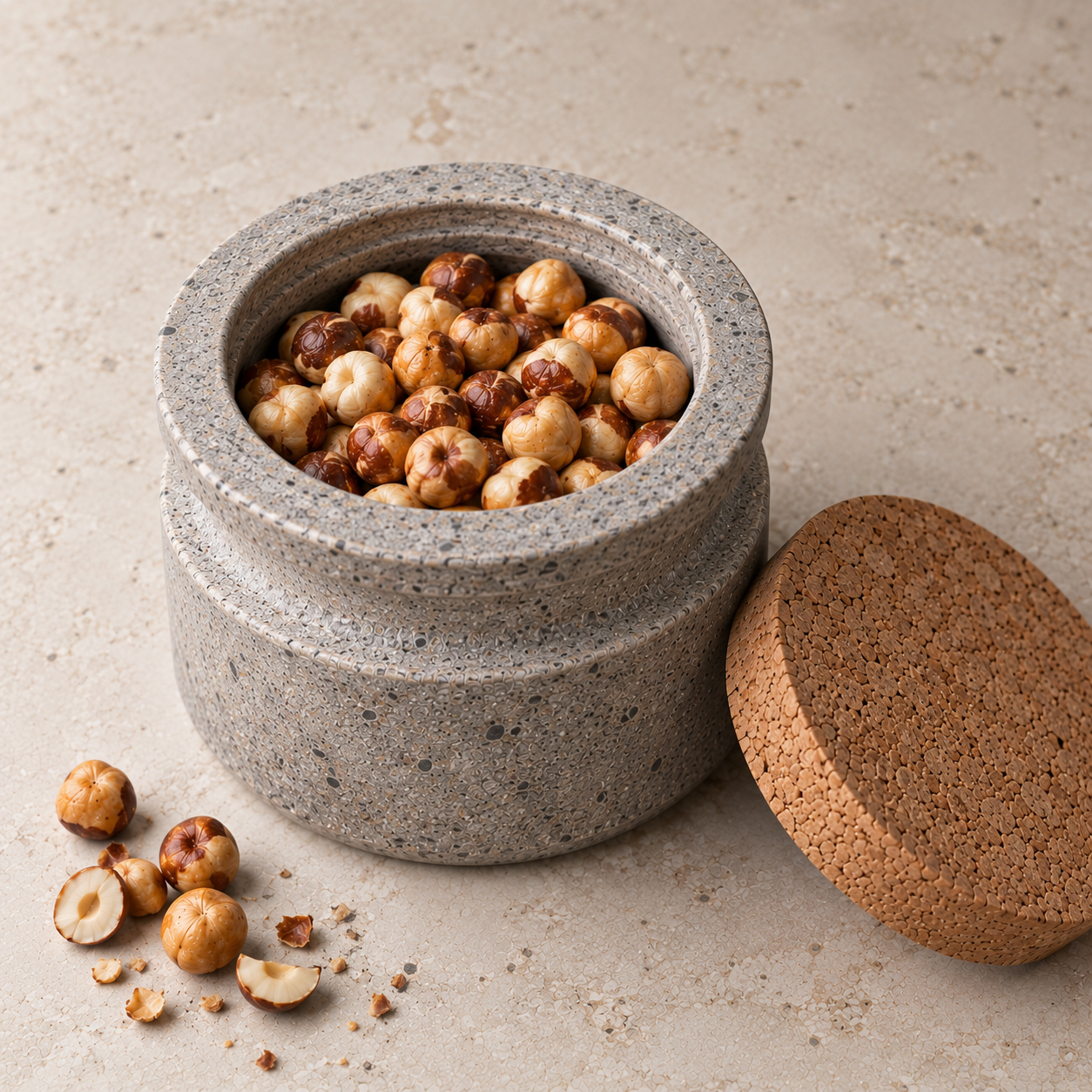
Peperino vessel with roasted Tonda Gentile Romana hazelnuts
A larger vessel carved from local peperino, with a rounded body, articulated neck and cork closure. Its proportions draw from Faliscan and Etruscan pottery, translated into the weight and texture of volcanic stone.
Faliscus is presented filled with roasted Tonda Gentile Romana hazelnuts, grown in Corchiano in the Agro Falisco area of Tuscia. One of the characteristic hazelnut varieties of northern Lazio, the Tonda Gentile Romana connects the object directly to the agricultural landscape from which both its material and contents originate.
The hazelnuts are produced by Azienda Agricola Profili in Corchiano, where they are grown, harvested and prepared locally.
Together, peperino and hazelnuts bring two expressions of the same territory into a single object: volcanic stone shaped by hand and a crop cultivated in the surrounding landscape.
Peperino · Tonda Gentile Romana · Tuscia
Made in Italy
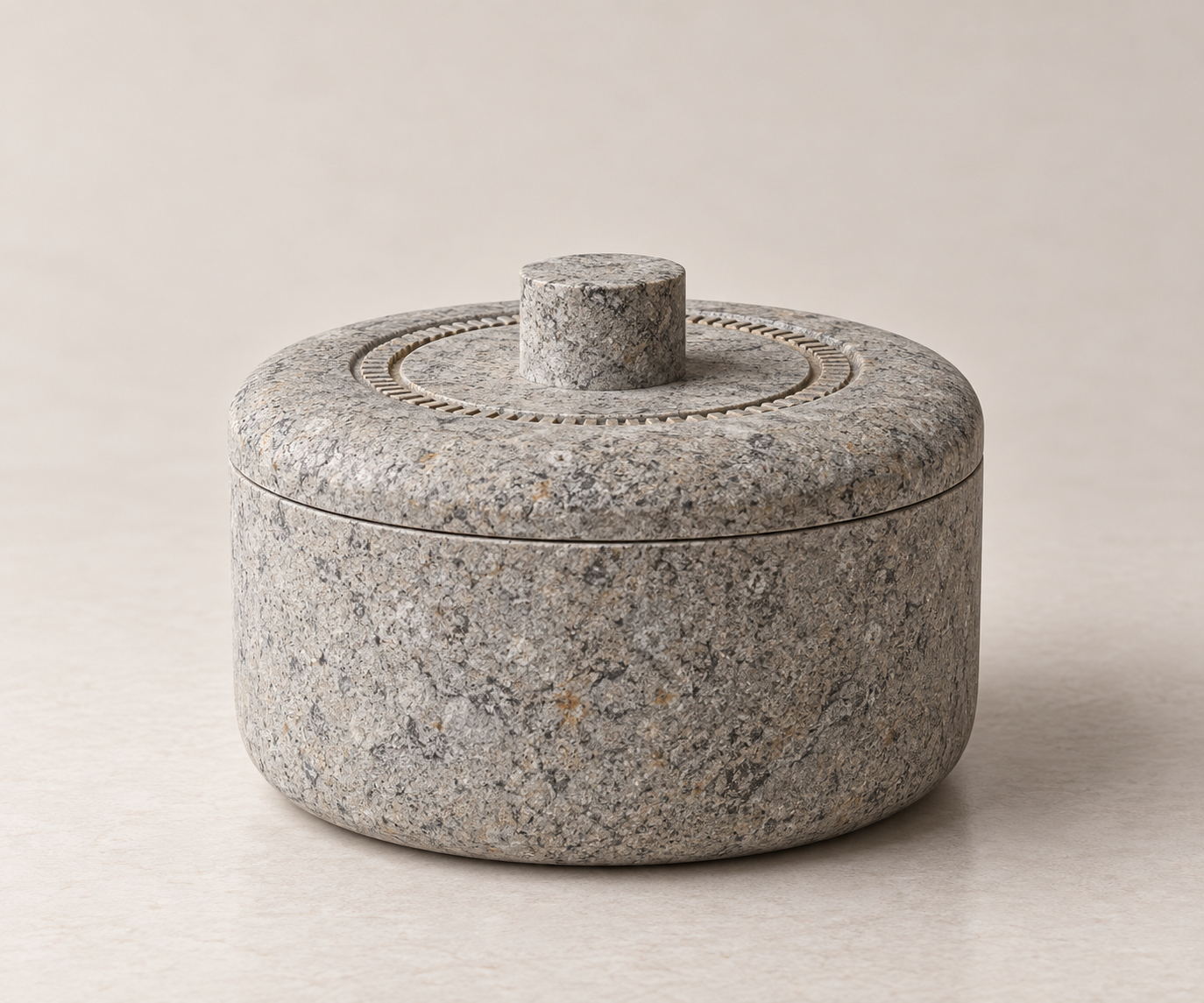
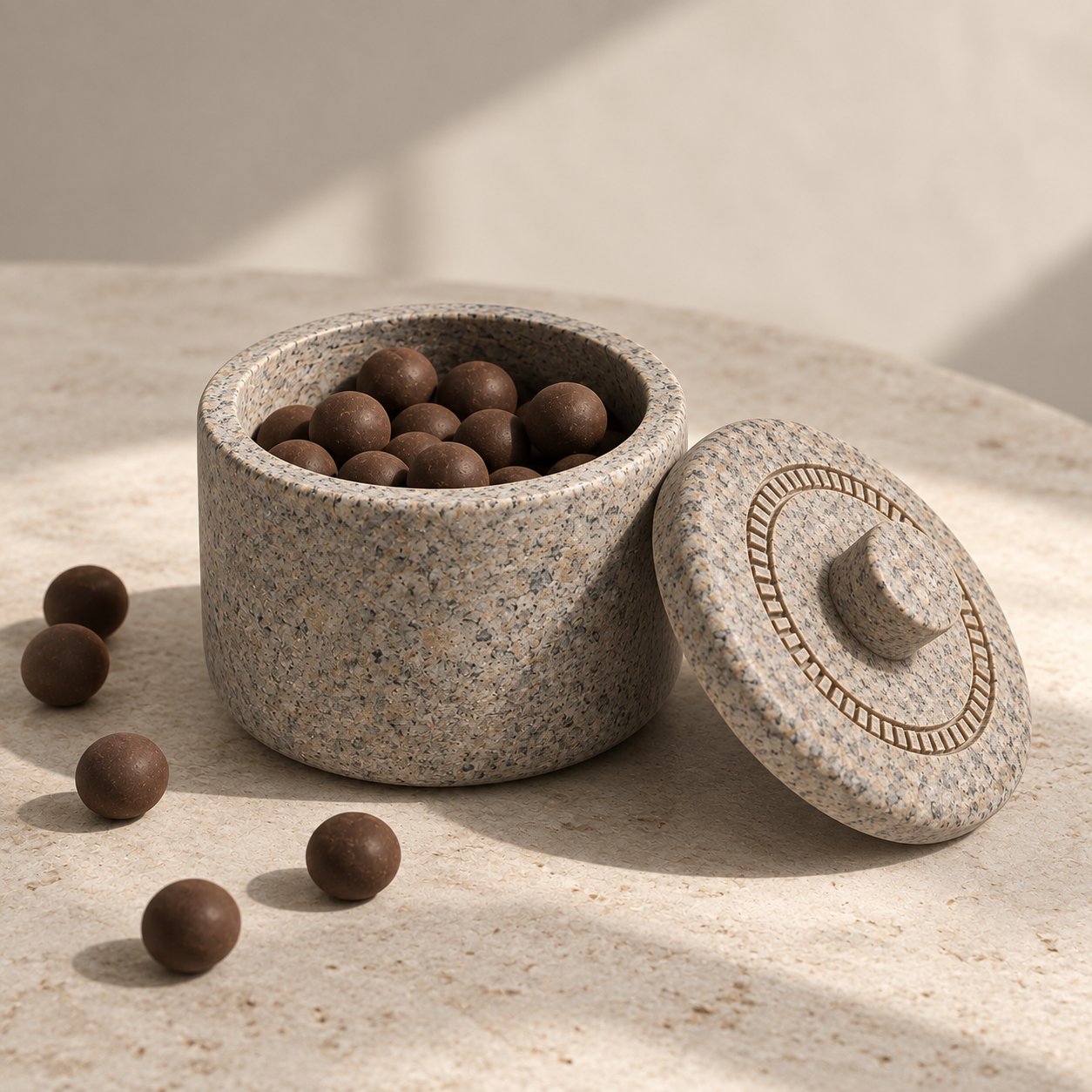
Small peperino vessel with hazelnut dragées
A compact lidded vessel carved from local peperino, inspired by the proportions of small Etruscan and Faliscan containers. Its rounded base, fitted lid and central knob translate an ancient vessel archetype into a contemporary object.
Vignale is presented filled with Tre Cioccolati dragées made in Corchiano by artisan chocolatier Monia Achille. At their center are Tonda Gentile Romana hazelnuts, coated in three successive layers of white, milk and dark chocolate of Madagascar origin.
The hazelnuts connect the piece to the agricultural landscape of northern Lazio, while the chocolate introduces another layer of local craftsmanship. Together, the peperino vessel and its contents bring stone, food and artisanal production into a single expression of Tuscia.
Peperino · Tonda Gentile Romana · Tre Cioccolati · Tuscia
Made in Italy
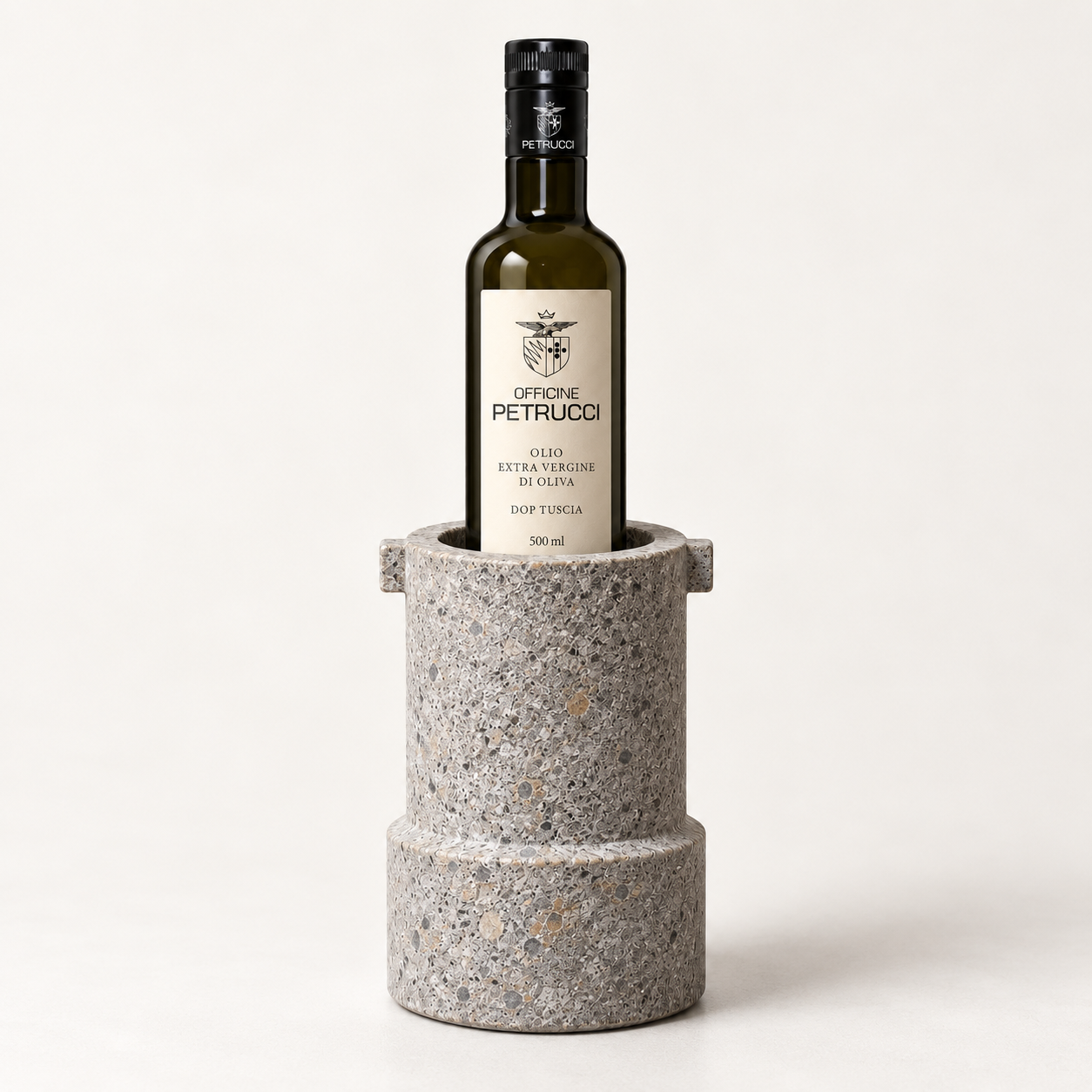
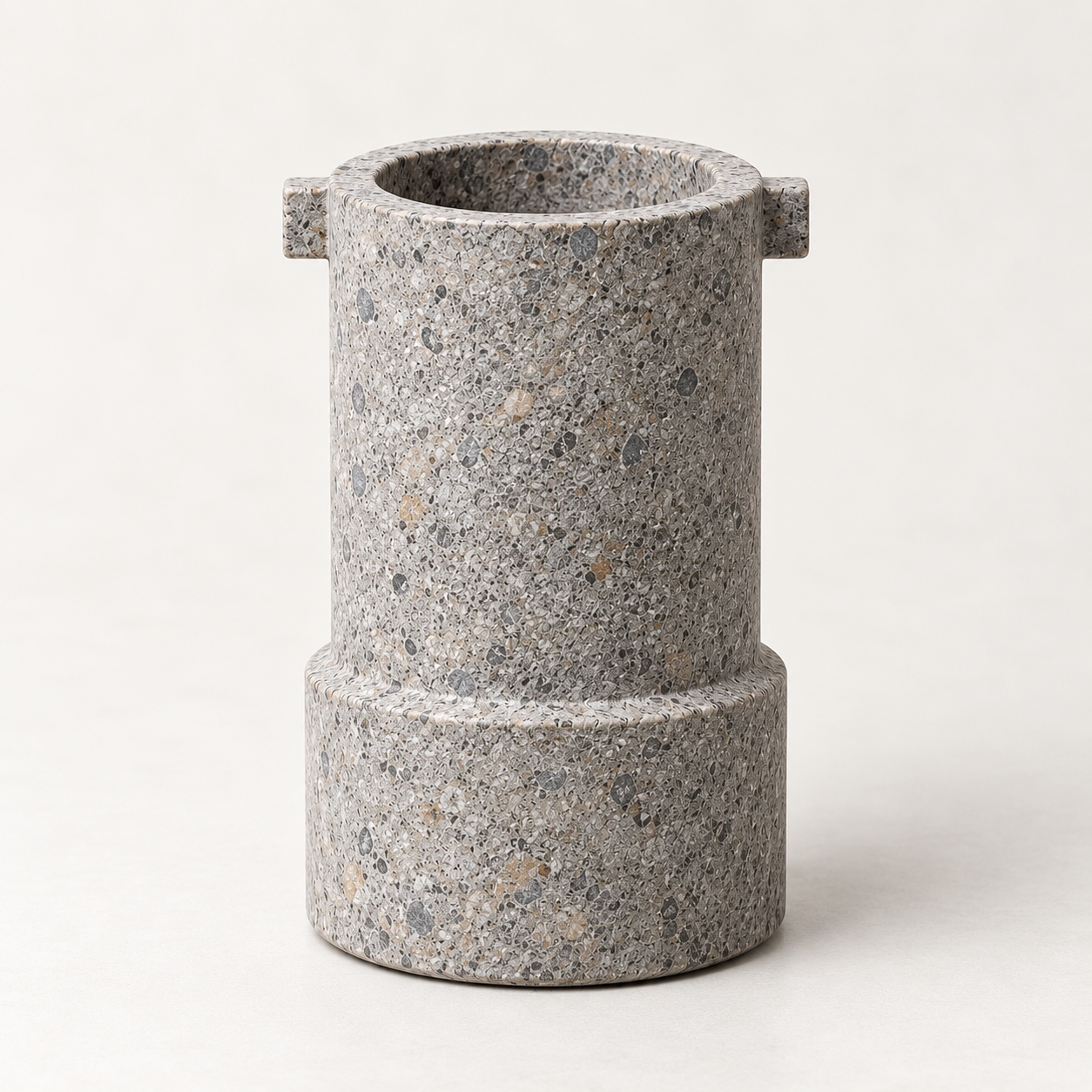
Peperino bottle holder
Named for the Via Amerina, the ancient route that crossed the Agro Falisco, Amerina is carved from solid local peperino to hold a 500 ml bottle of olive oil.
Its reduced cylindrical form is deliberately architectural, treating bottle and stone as a single composition. The volcanic weight and texture of peperino give the object a sense of permanence while keeping the gesture itself simple and functional.
Designed around the Officine Petrucci 500 ml olive oil bottle, Amerina can remain in use as a permanent table or kitchen object after the bottle is replaced.
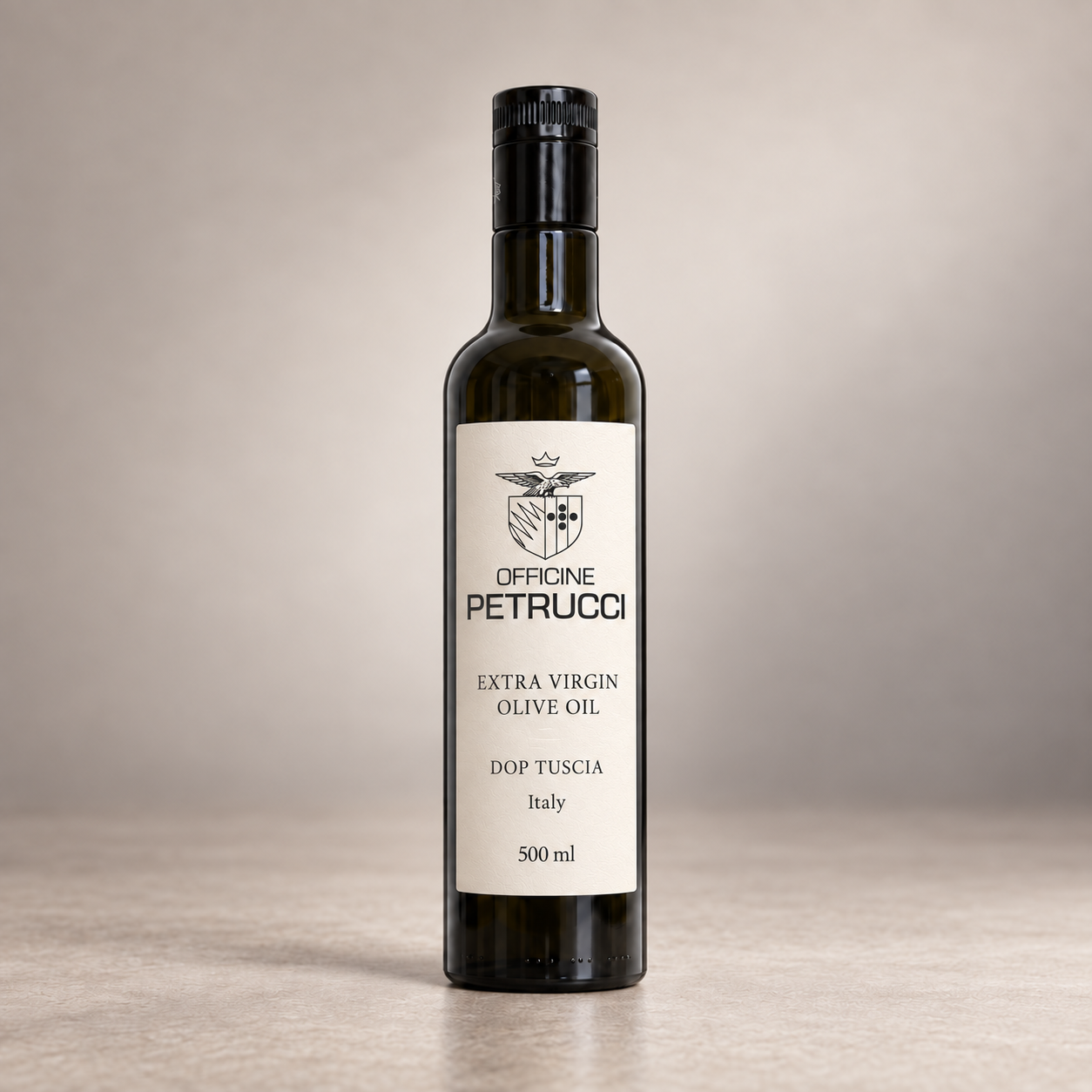
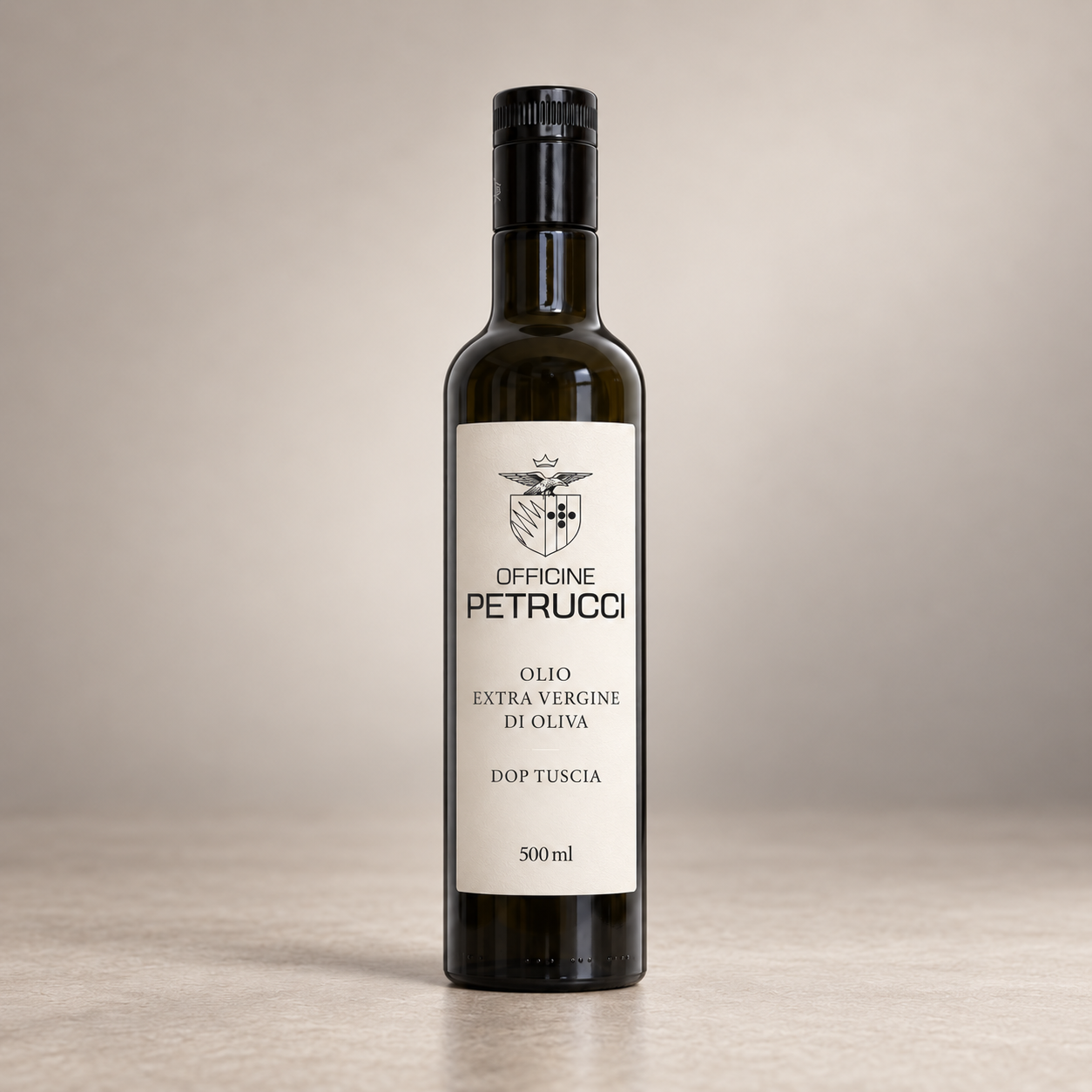
Produced in Tuscia from Italian olives grown in volcanic soil, Officine Petrucci Extra Virgin Olive Oil reflects the agricultural landscape and material culture of northern Lazio. The 500 ml bottle is the primary presentation format: restrained, direct and intended for everyday use at the table as much as for gifting.
Produced in Blera, in the heart of Tuscia, this extra virgin olive oil comes from Caninese olives grown at approximately 280–310 meters above sea level.
Caninese is one of the historic olive cultivars of northern Lazio, deeply associated with the landscape around Viterbo and an agricultural tradition shaped by the volcanic soils of Tuscia.
The olives are harvested in October and brought promptly to the mill, where they are processed within hours of picking. Extraction takes place exclusively by mechanical means using a two-phase system. The oil is mechanically micro-filtered and preserved in stainless-steel tanks under nitrogen before bottling.
Characterized by low acidity and a high polyphenol content, the oil carries the Tuscia DOP — Protected Designation of Origin, connecting its production to a defined territory and controlled production specification.
Produced for Officine Petrucci by Colli Etruschi, an agricultural cooperative founded in Blera in 1965.
500 ml · Product of Italy
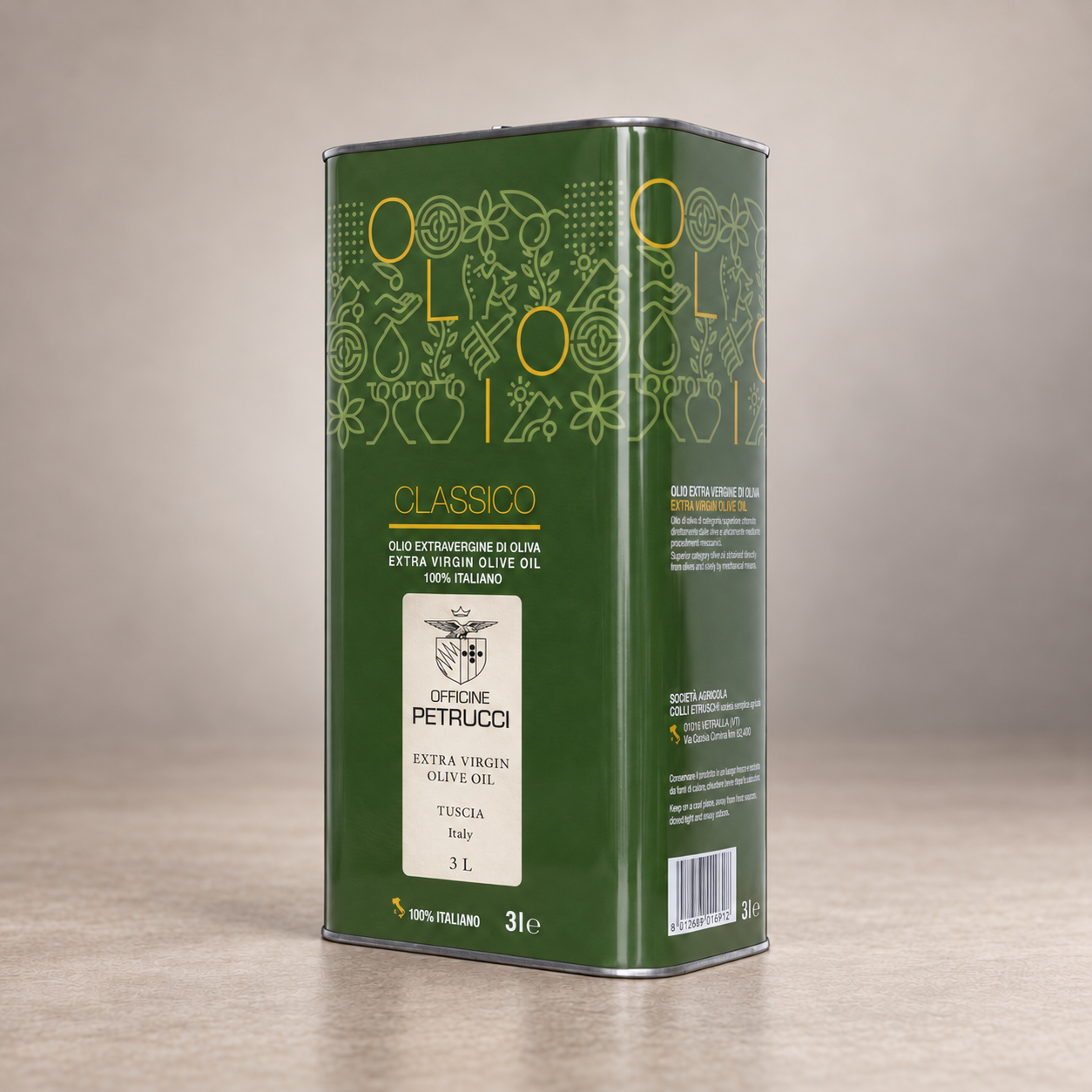
Produced in Tuscia, Classico is a multivarietal extra virgin olive oil made from Caninese, Leccino, Frantoio and Coratina olives.
The olives are grown in the Province of Viterbo, a landscape shaped by its volcanic origins and a long tradition of olive cultivation. The blend produces a medium-fruity extra virgin olive oil that reflects the character of the territory.
Made entirely in Italy from olives harvested and milled in Italy, Classico is presented in a 3-liter tin as the generous format of the Officine Petrucci olive oil collection, intended for everyday use in the kitchen and at the table.
Caninese · Leccino · Frantoio · Coratina
Medium Fruity · 100% Italian
3 L · Product of Italy
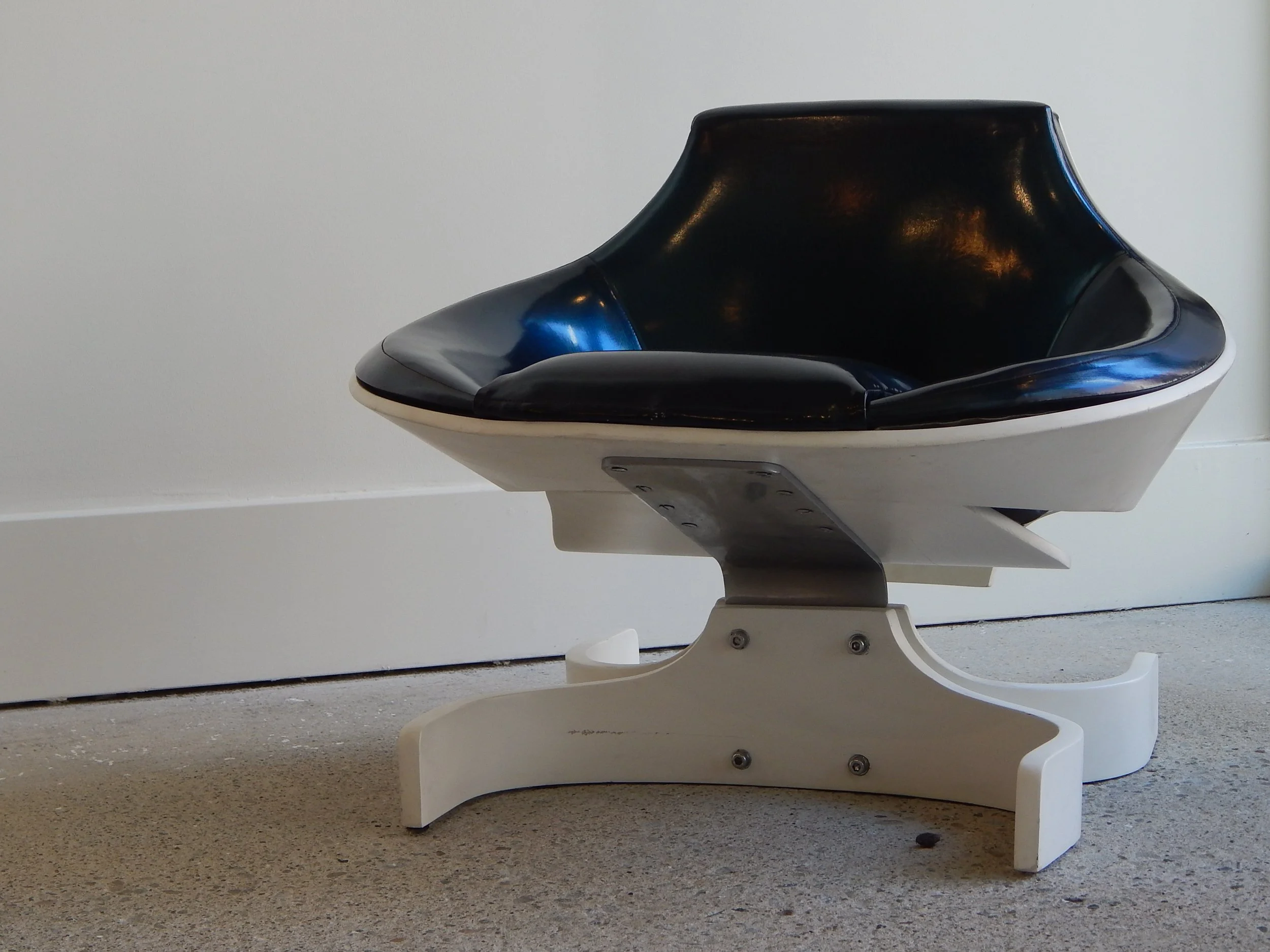
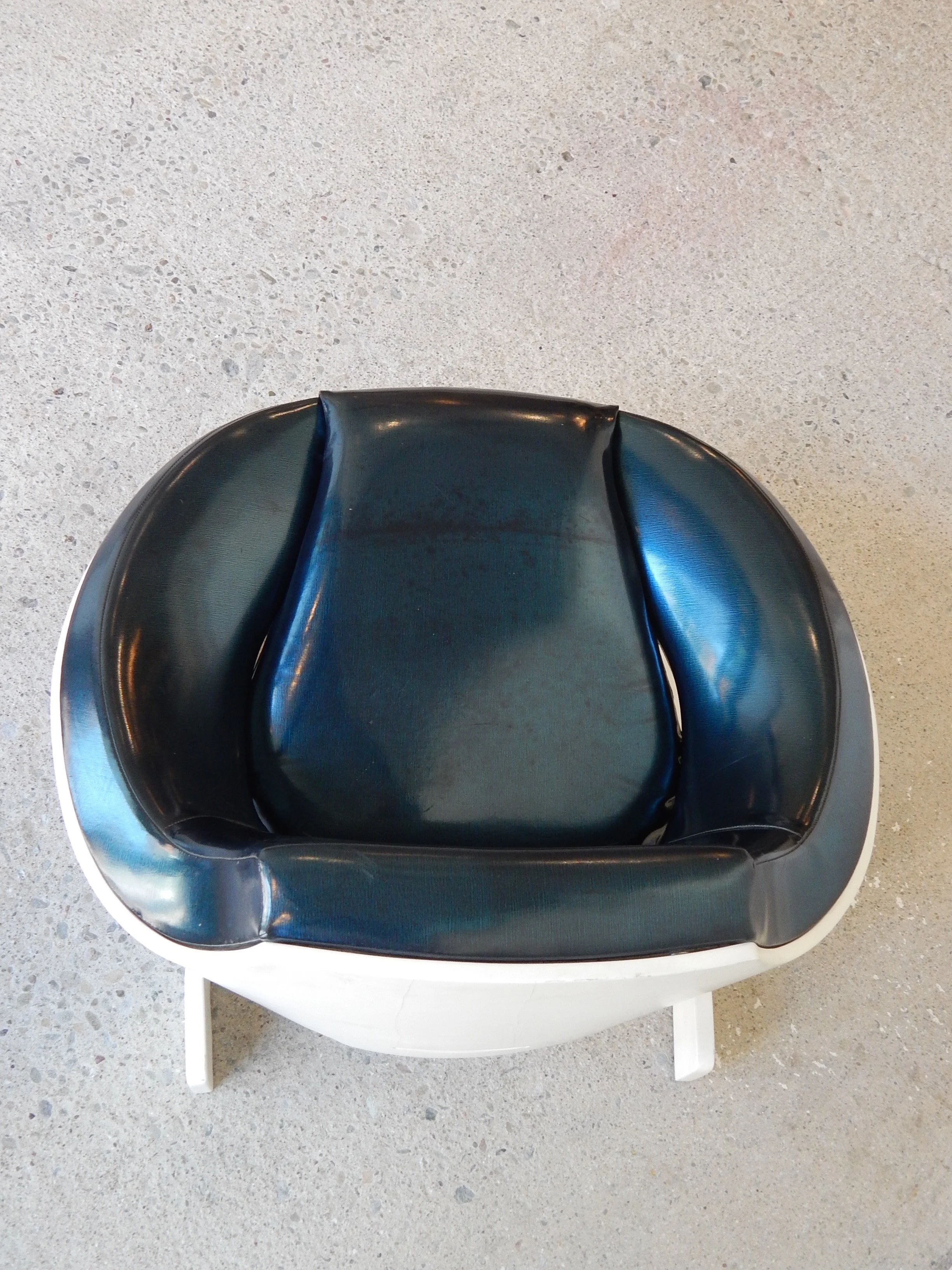
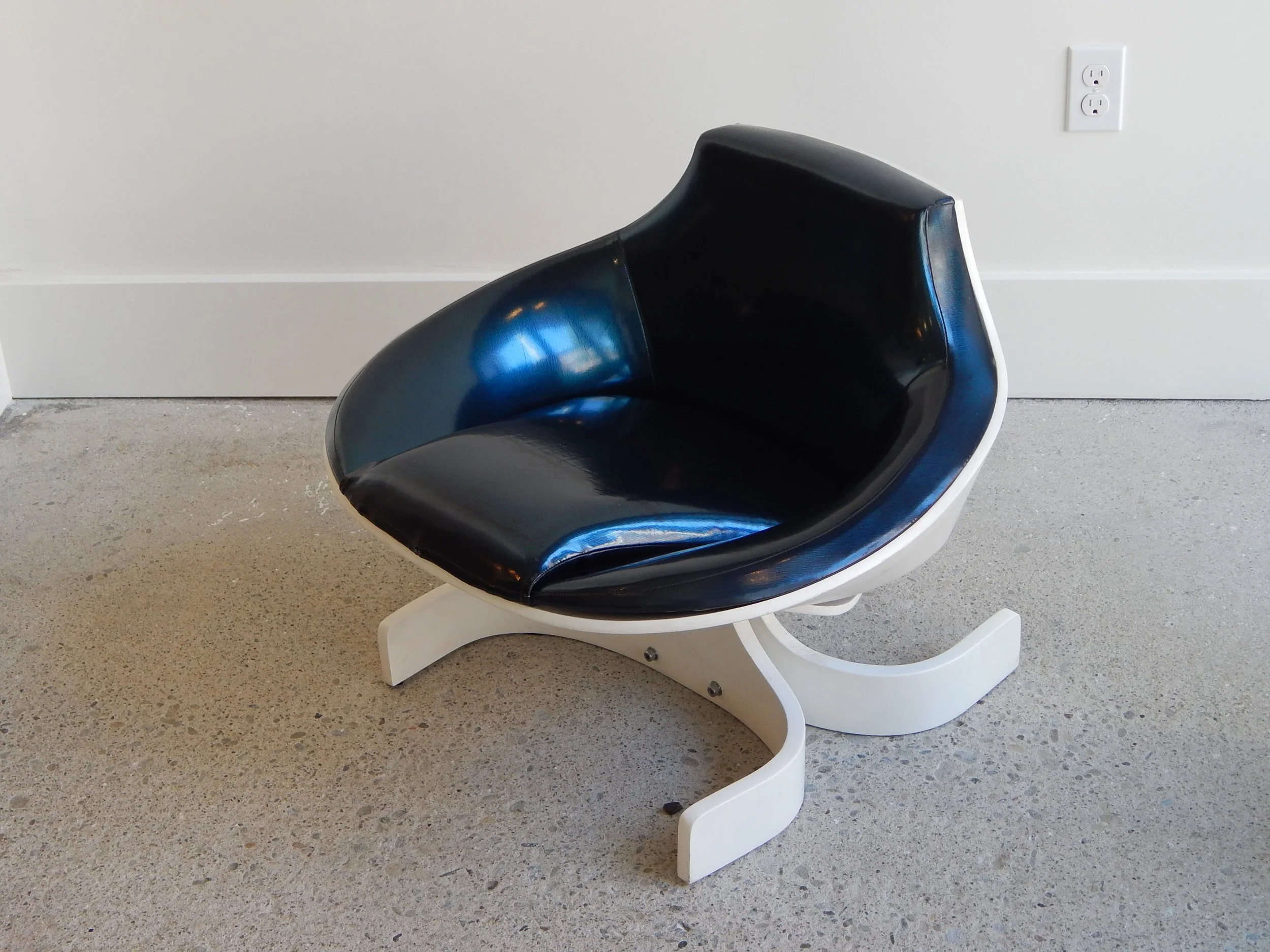
Design by Joe Colombo
Italy, c. 1963
Vinyl and plywood
57.5 × 71 × 62 cm, seat height 38 cm
An early seating design by Joe Colombo, Sella 1001 combines a molded plywood shell with upholstered vinyl in a low, compact form characteristic of the experimental direction of Italian furniture design in the early 1960s.
Its curved profile and continuous seat-back geometry give the piece a strong sculptural presence while remaining functional and restrained.
Materials: vinyl and plywood
Dimensions: 57.5 H × 71 W × 62 D cm
Seat height: 38 cm
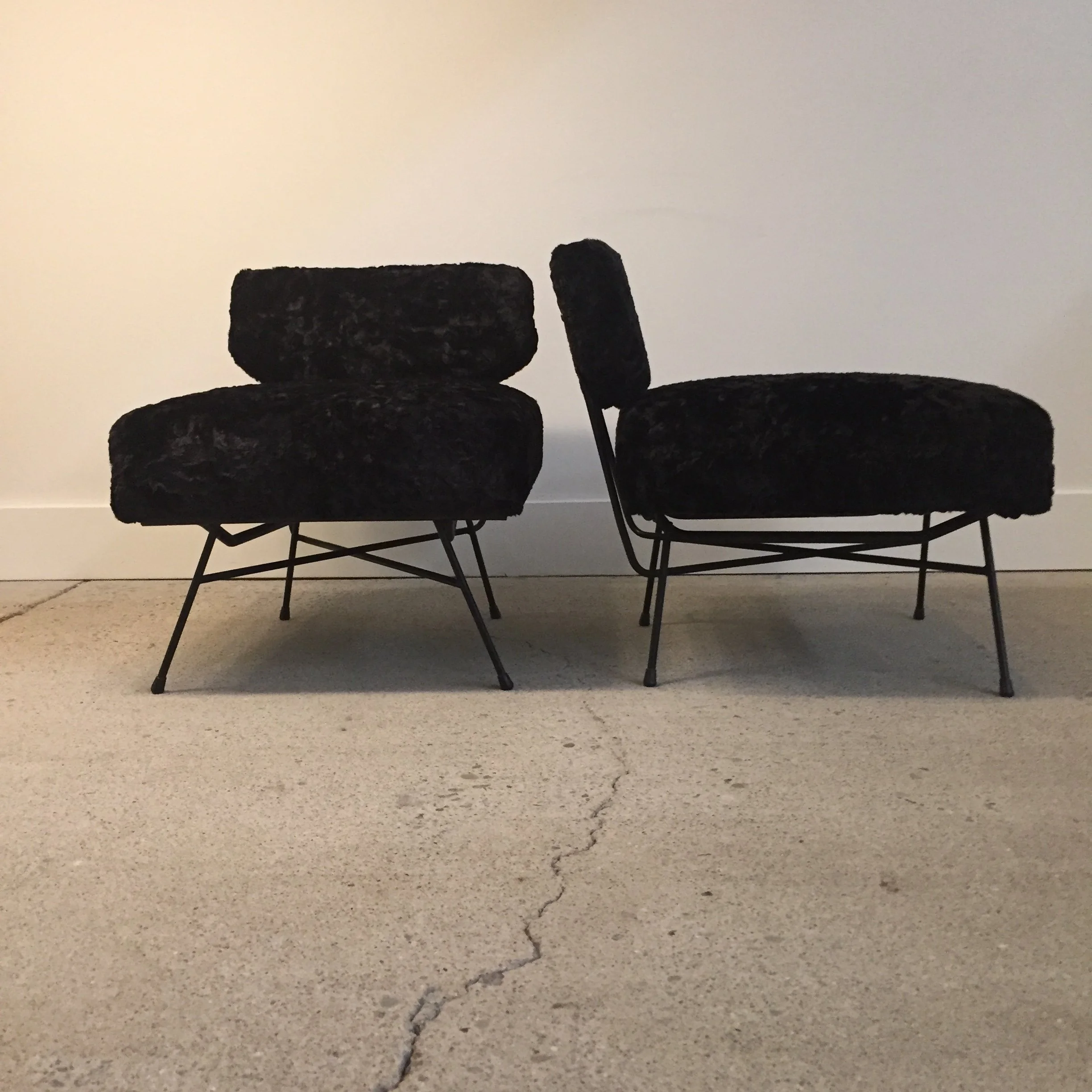
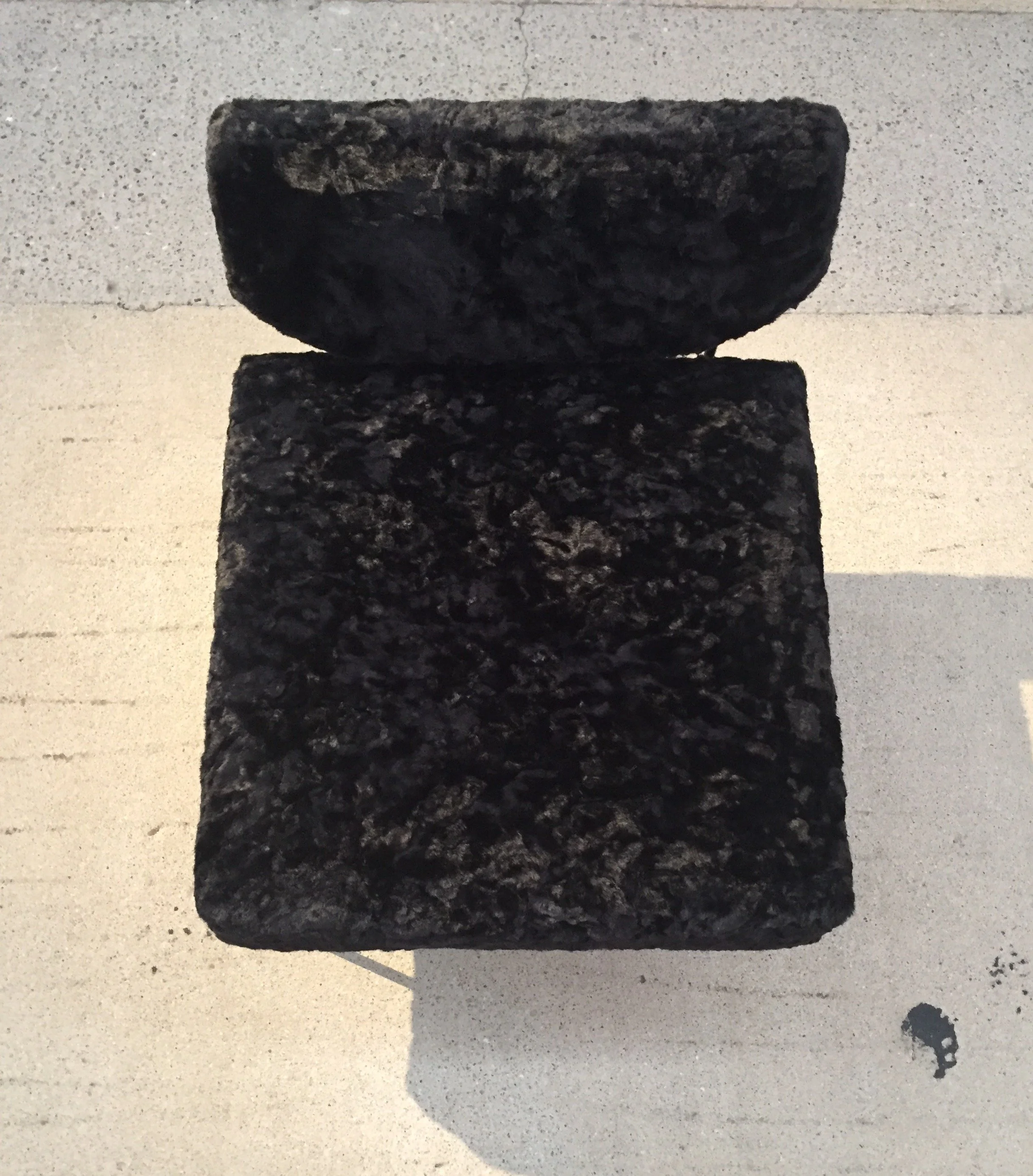
Designed by B.B.P.R., c. 1956
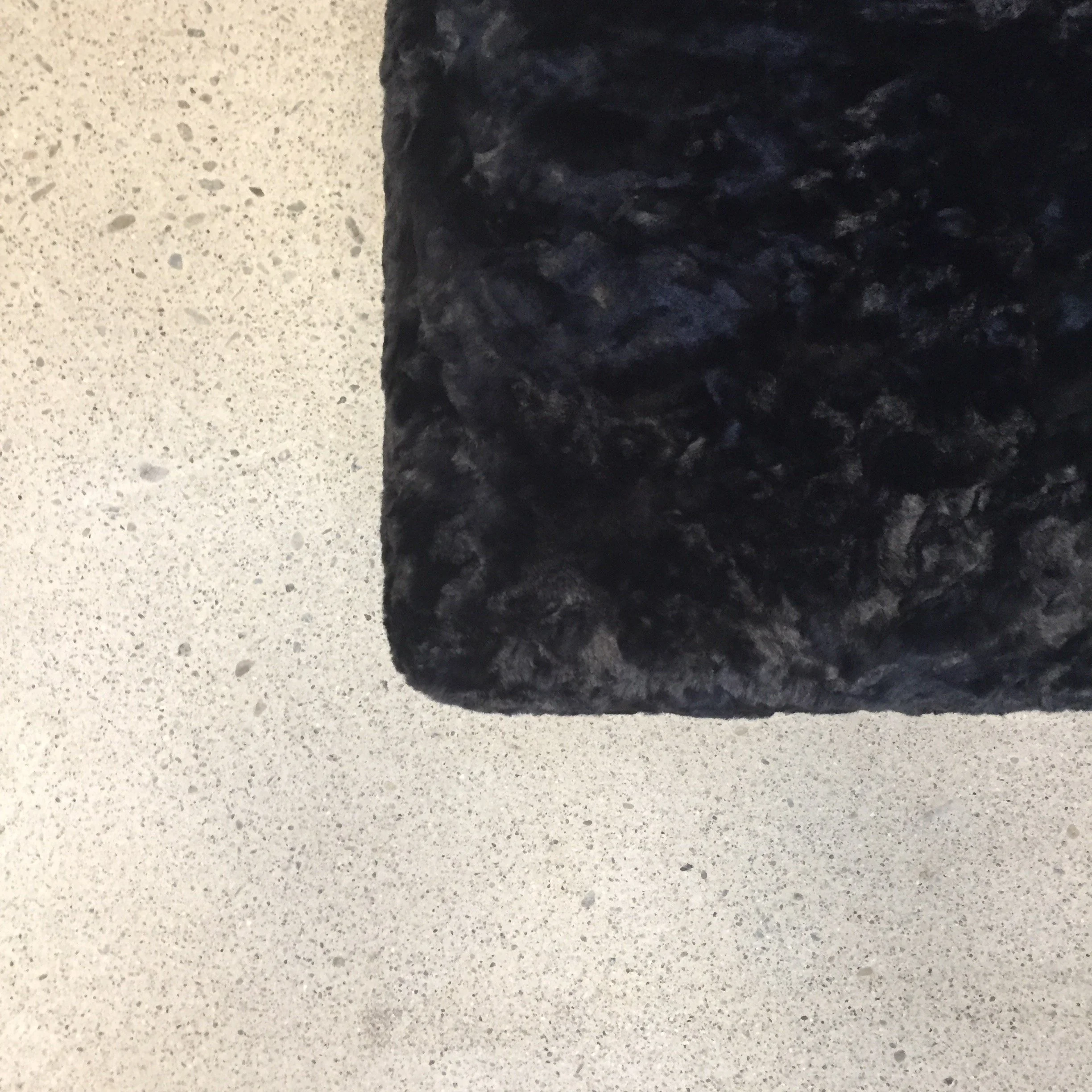
A pair of Elettra armchairs designed by B.B.P.R. in the mid-1950s, combining a compact upholstered body with slender metal legs.
The design reflects the disciplined geometry of postwar Italian modernism, softened by the generous seat and rounded upholstered form. This pair is upholstered in black plush faux fur, giving the chairs a more tactile and graphic presence while retaining the clarity of the original structure. The page lists the pair as Italy, c. 1956, with metal legs and upholstered construction.
Materials: metal legs, black plush faux fur upholstery
Dimensions: 71 H × 62 W × 72 D cm
Seat height: 46 cm
Design by Carl Auböck, c. 1956
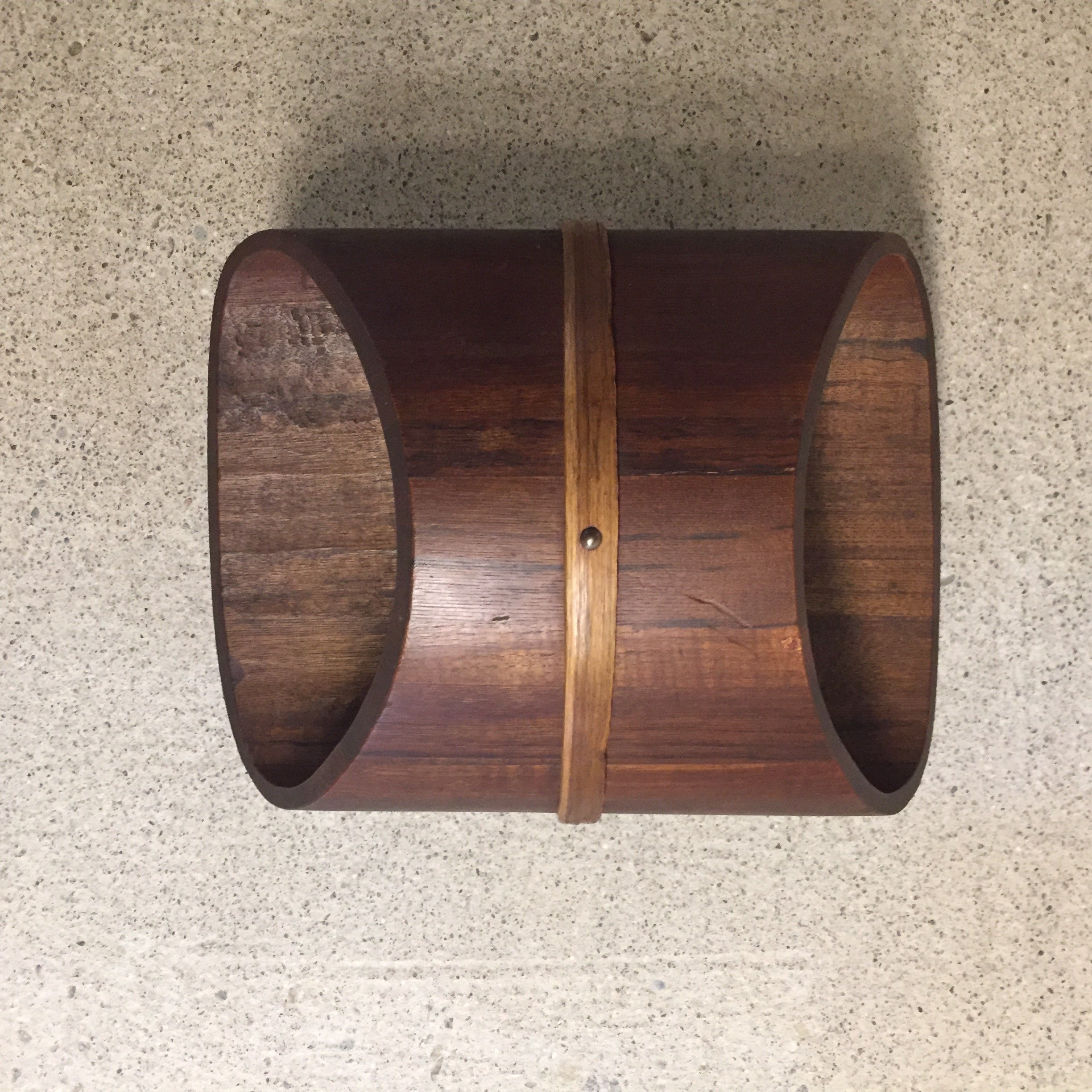
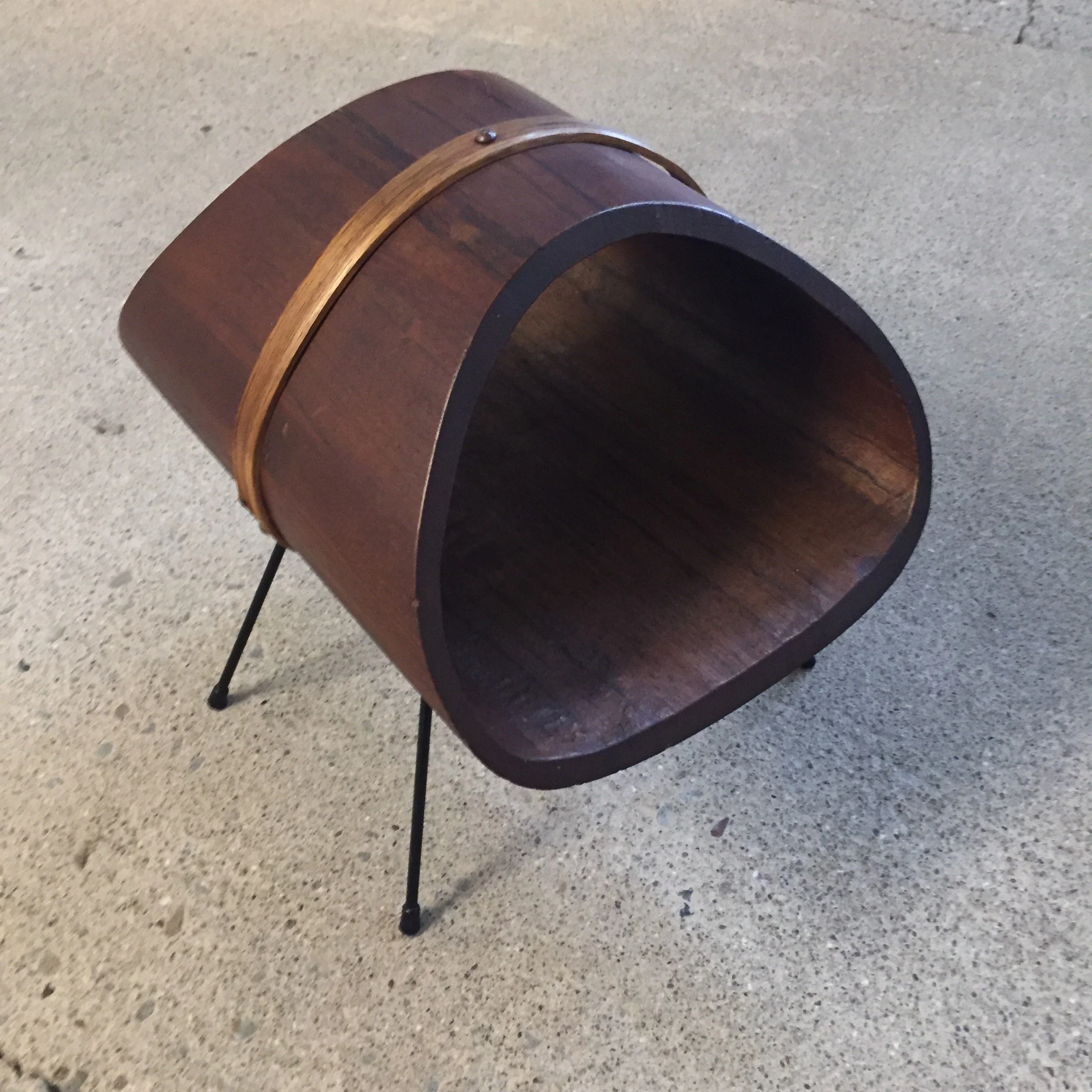
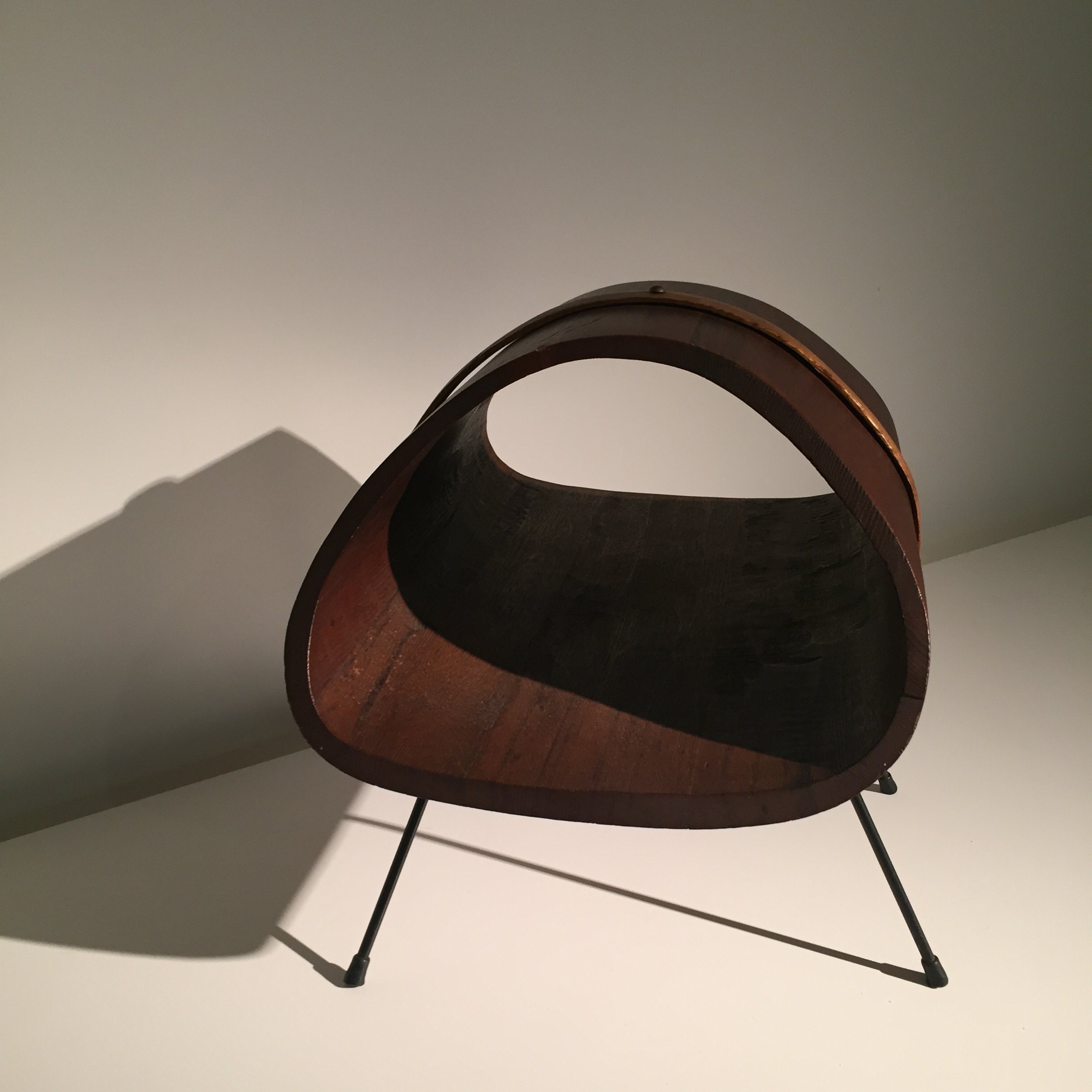
A sculptural magazine stand designed by Carl Auböck in Austria in the mid-1950s. Carved entirely from wood, the piece reduces a functional household object to a simple, strongly defined form.
Its appeal lies in the balance between utility and sculpture: the carved profile gives the stand a substantial physical presence while preserving the economy and directness associated with Auböck’s work.
Materials: carved wood
Dimensions: 41.91 H × 44.45 W × 31.75 D cm
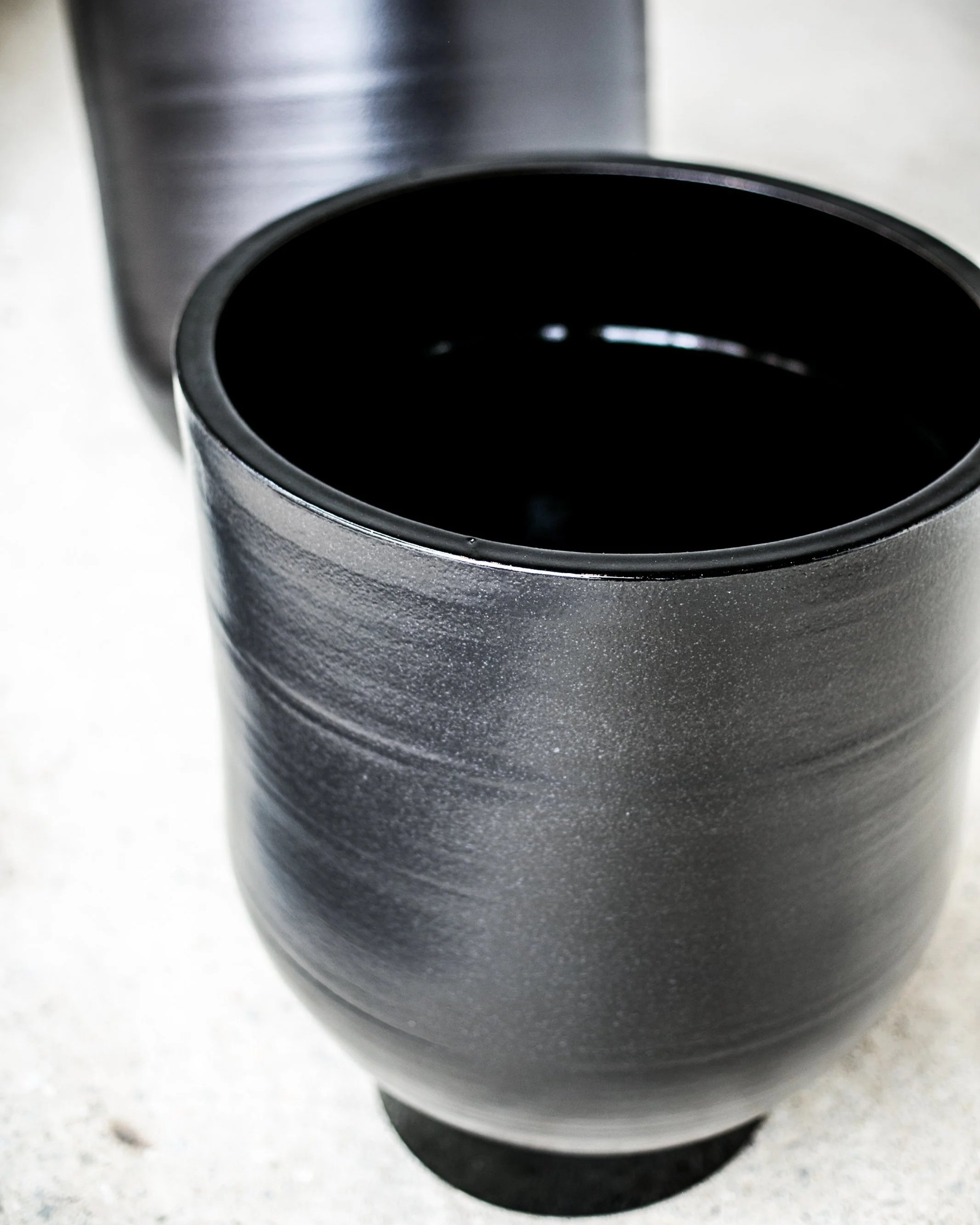
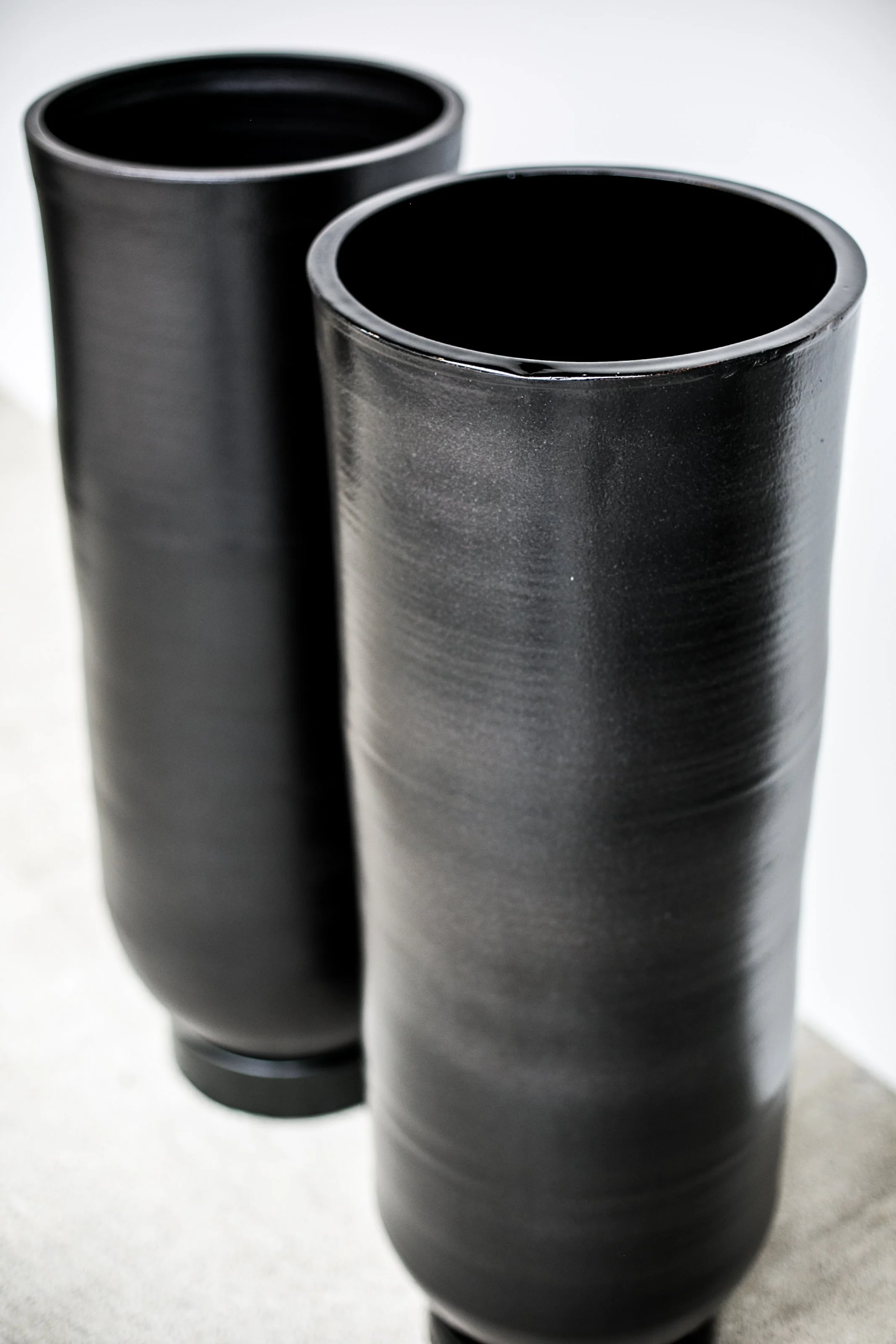
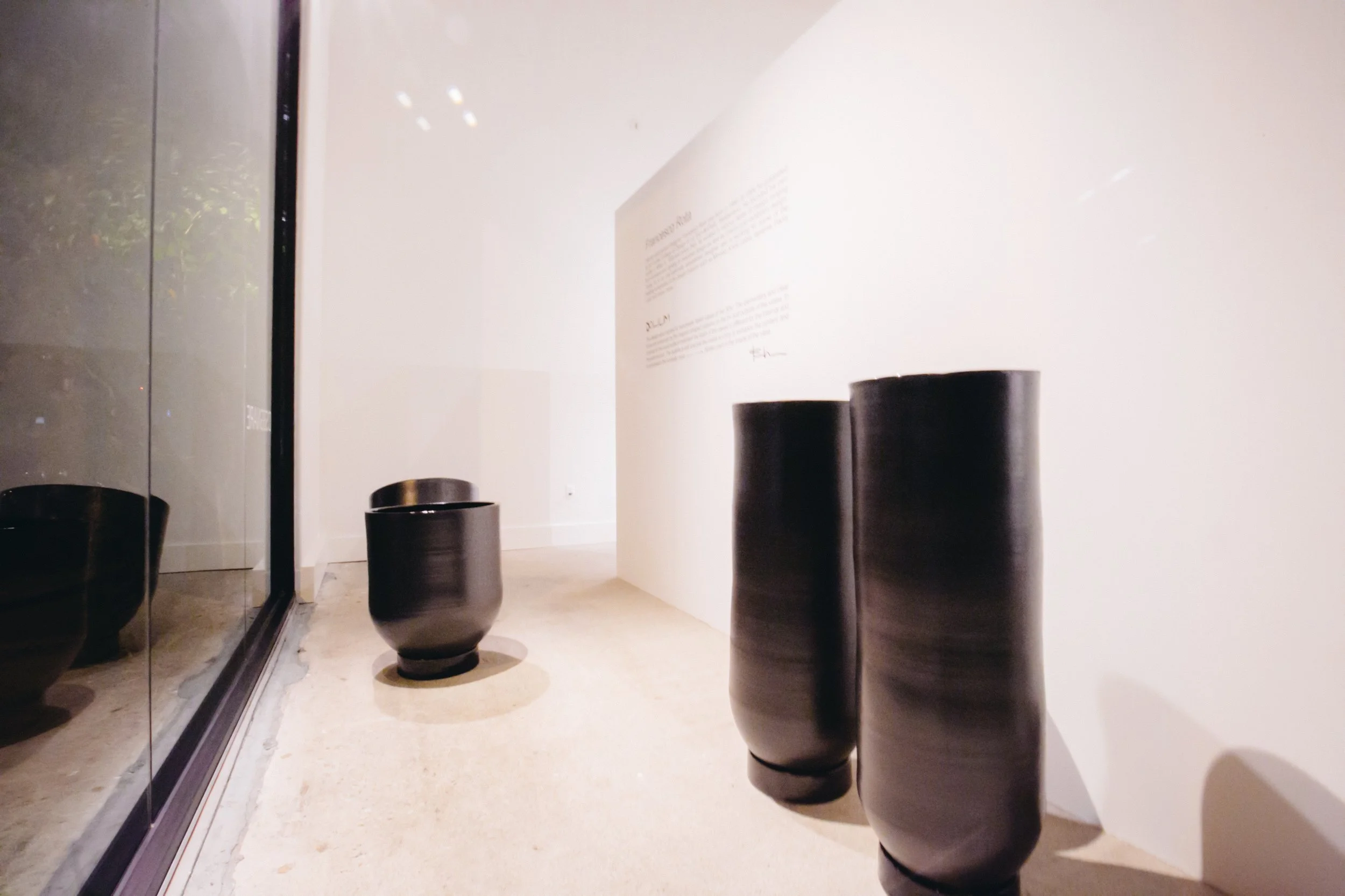
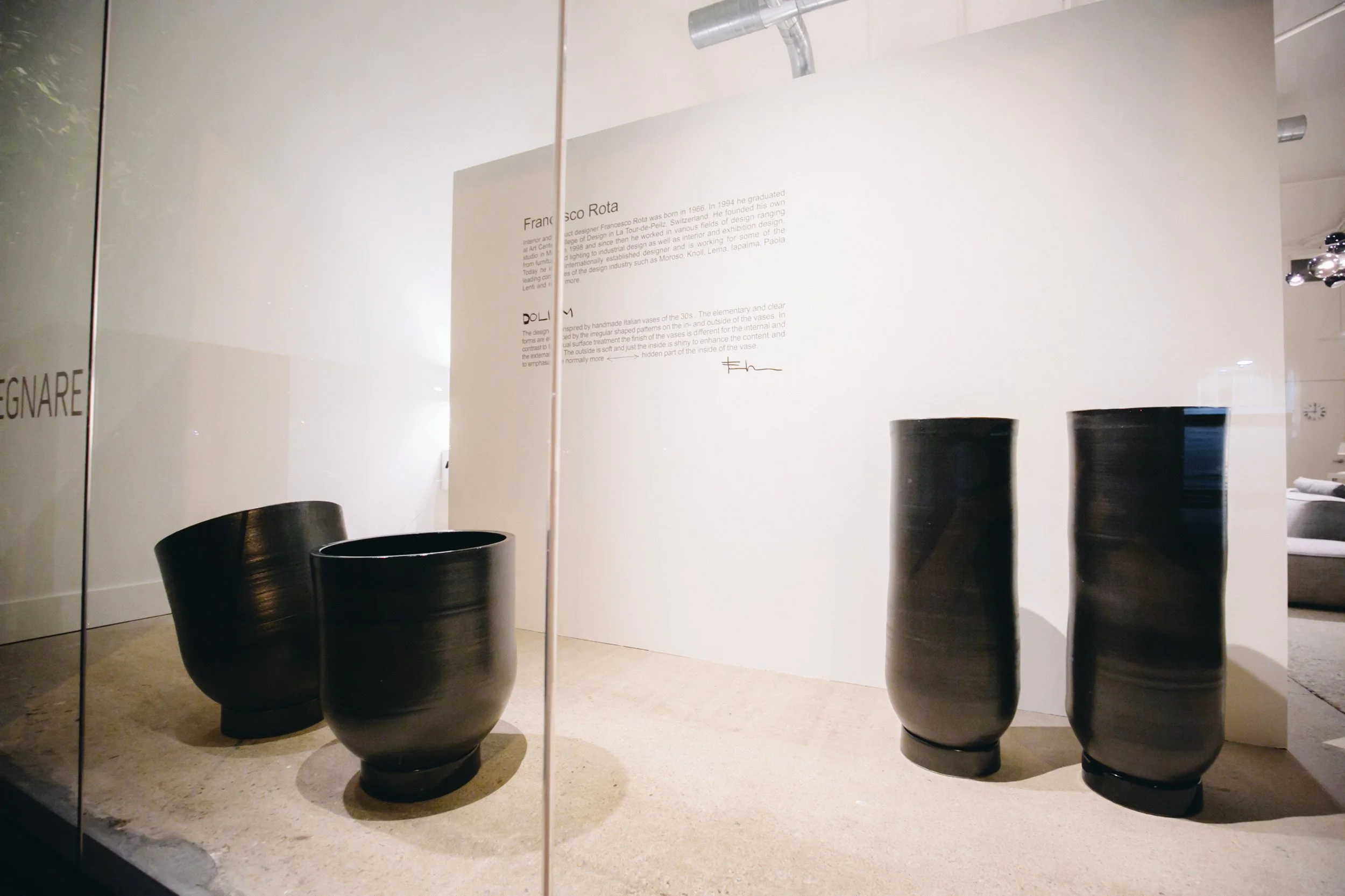
Dolium
Commissioned by Cardenio Petrucci for Dsegnare
Design by Francesco Rota
California, 2014
Commissioned by Cardenio Petrucci for Dsegnare and designed by Francesco Rota, the Domus vases combine simple cylindrical forms with a black gloss ceramic finish. Shown here as a pair, the two proportions create a quiet dialogue between volume and height.
Materials: black gloss ceramic
Dimensions:
Low vase: approximately 26 in H × 24 in diameter
Tall vase: approximately 40 in H × 12 in diameter
Design by Giorgetto Giugiaro
Officine Petrucci project
2001
Restoration / modification / development
Estimated completion: April 2027
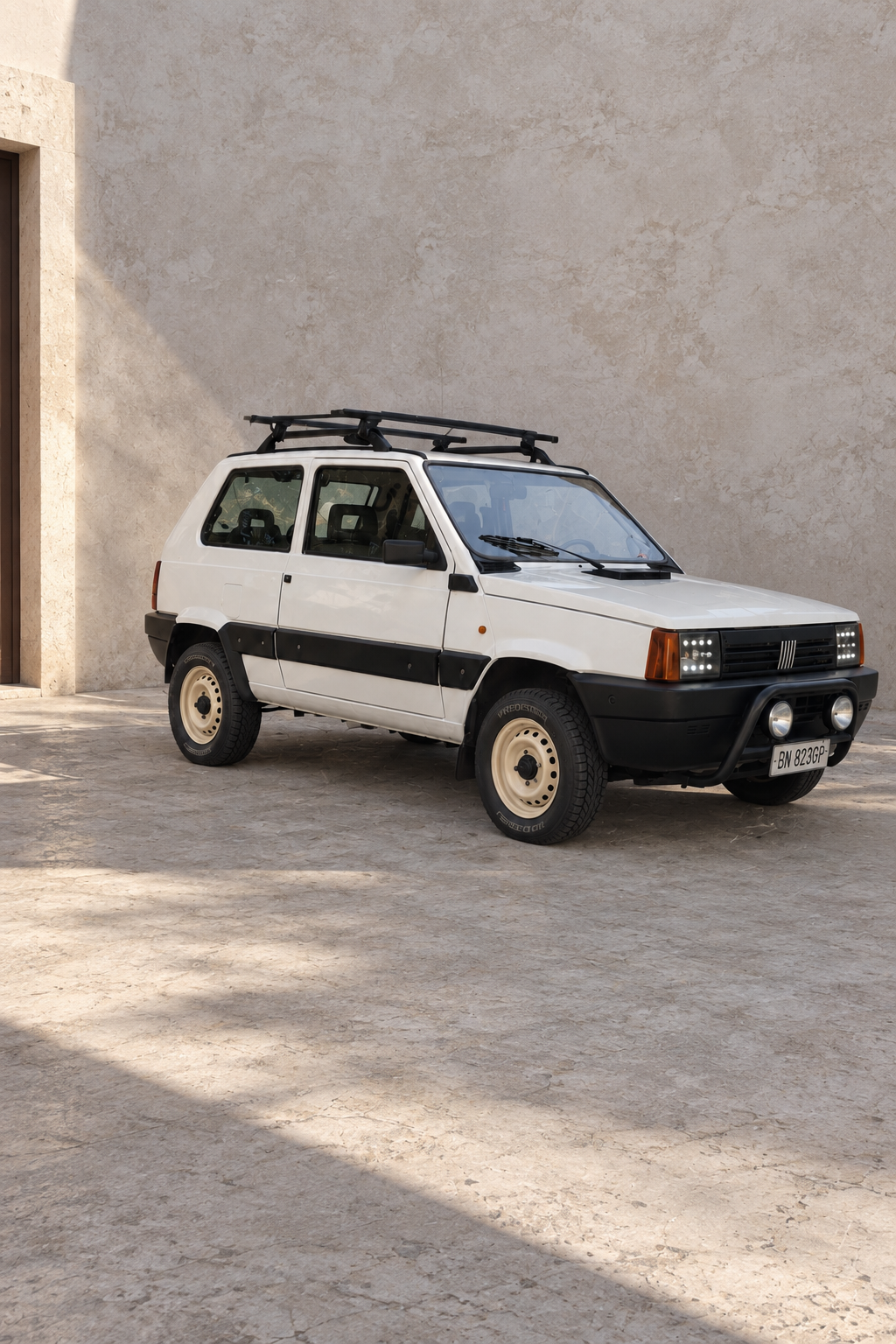
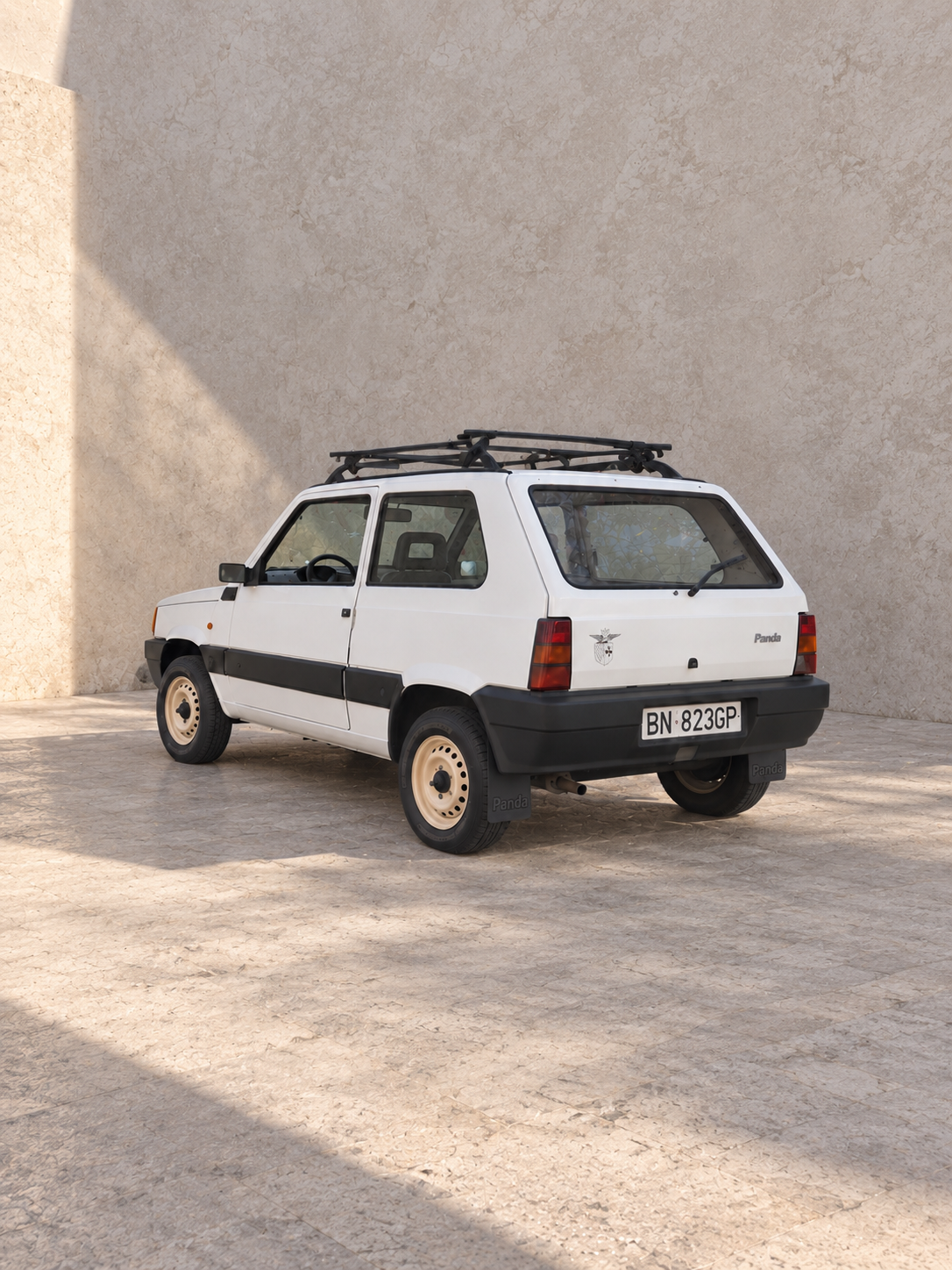
A 2001 Fiat Panda 1100 FIRE reworked by Officine Petrucci as a compact utility vehicle with a more purposeful, off-road character.
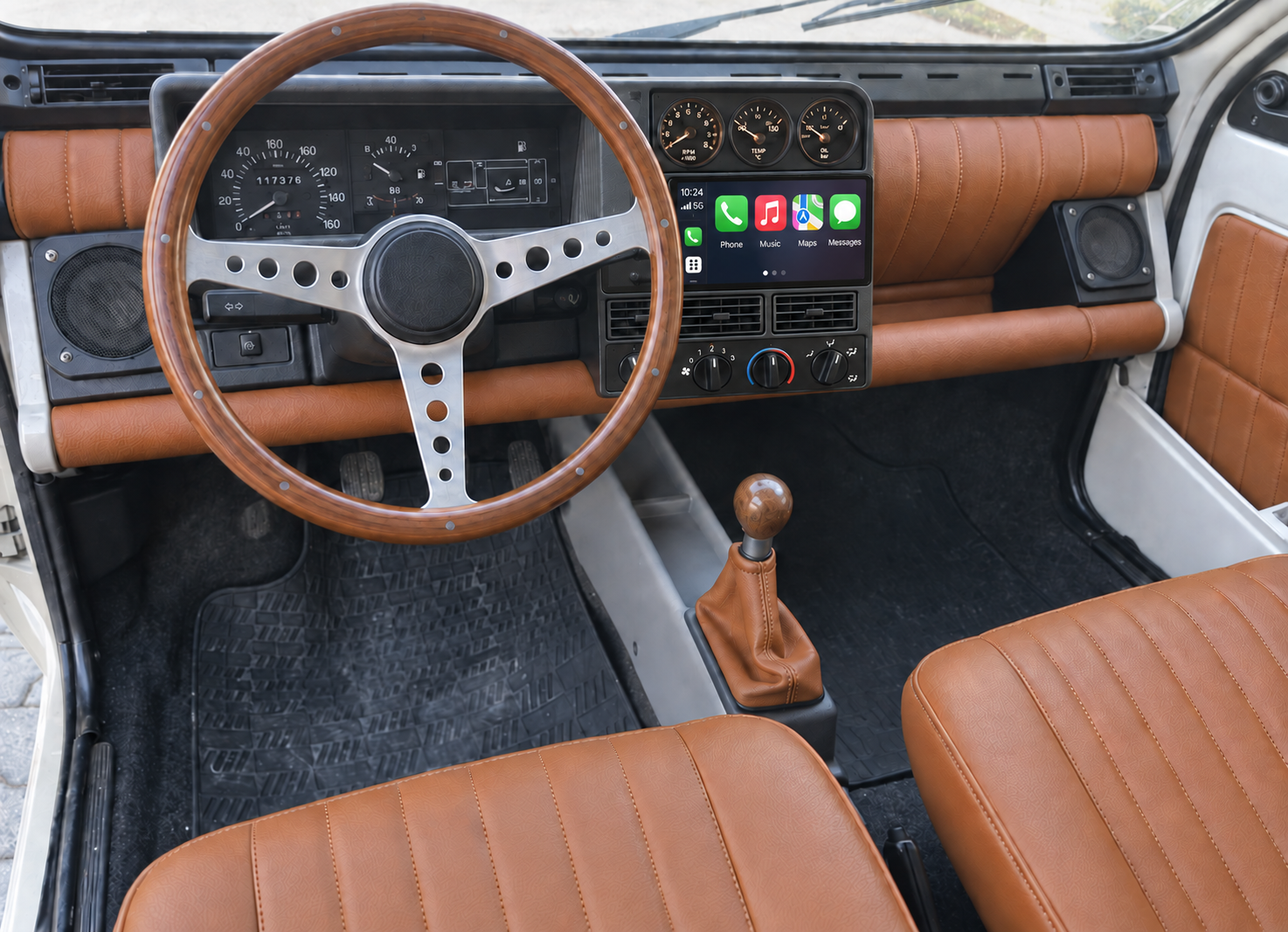
The project preserves the essential proportions and simplicity of the original Panda while introducing a series of carefully considered modifications: raised stance, steel wheels, all-season tires, roof rack, front protection bar and wider mud flaps, together with a fully revised interior in light cognac with a wood-rim steering wheel, wood gear knob, upgraded instrumentation and integrated CarPlay.
The intention is not to turn the Panda into something it is not, but to sharpen what was already there: practicality, lightness, economy of form and a distinctly Italian character.
Status: Ongoing project
Estimated completion: April 2027
Available upon completion · Inquire
No results match your search. Try removing a few filters.