The Land

La Tuscia — What Lies Beyond the Gate

Casale Fallarese sits in the ancient Ager Faliscus — the fertile corridor between the Tiber valley and the volcanic hills of the Cimini. The Faliscans settled here before Rome; their necropolises

still surface in the tufa walls below Corchiano's streets. Corchiano itself may be Fescennium, the settlement whose satirical verse-forms — the fescennini versus — were absorbed into Roman

literary tradition and later into the theatre. What remains is a landscape shaped by eruption and erosion, by water cutting through stone, by centuries of olive cultivation and vine. It does not

announce itself. It requires time and a degree of attention. Within thirty to forty-five minutes in any direction lies some of the most layered and least diluted territory in central Italy.

Architecture & Borghi

Corchiano — Fescennium

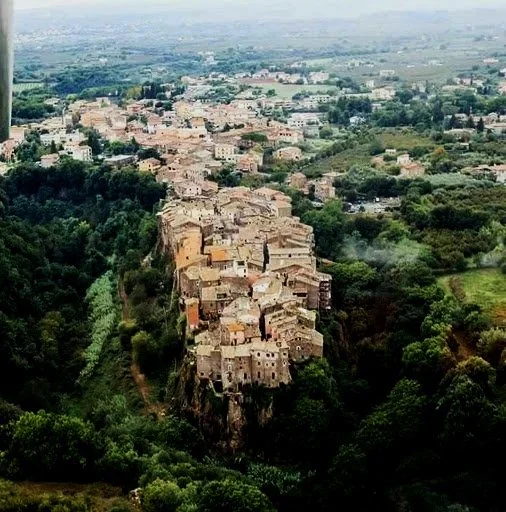
Corchiano occupies a tufa spur above the gorge of the Rio Fratta, its back walls dropping directly into the canyon. Settlement here begins in the Paleolithic; the Faliscan presence — documented by rock-cut tombs, carved roads, hydraulic works, and funerary inscriptions — dates from the eighth century BC. The site is likely ancient Fescennium, cited by Dionysius of Halicarnassus as the birthplace of the fescennini versus: improvised satirical verse performed at harvest festivals, in dialogue form, ribald and abusive, eventually absorbed into Roman theatrical tradition and later suppressed by law for their dangerous irony. Virgil mentions Fescennium in the Aeneid. The etymology of the name is debated; the connection to the local harvest rites is not.

The borough's medieval history passes through Orsini ownership (late thirteenth century to 1472), a period of Church administration under Cardinal Estouteville (from 1478, when the Madonna del Soccorso was built), and then 110 years of Farnese dominion from 1539, when Pope Paul III assigned Corchiano to his son Pier Luigi as part of the Ducato di Castro. The Farnese lily appears repeatedly in stone throughout the centro storico, and on the city's coat of arms alongside the comb, the symbol of San Biagio's martyrdom.

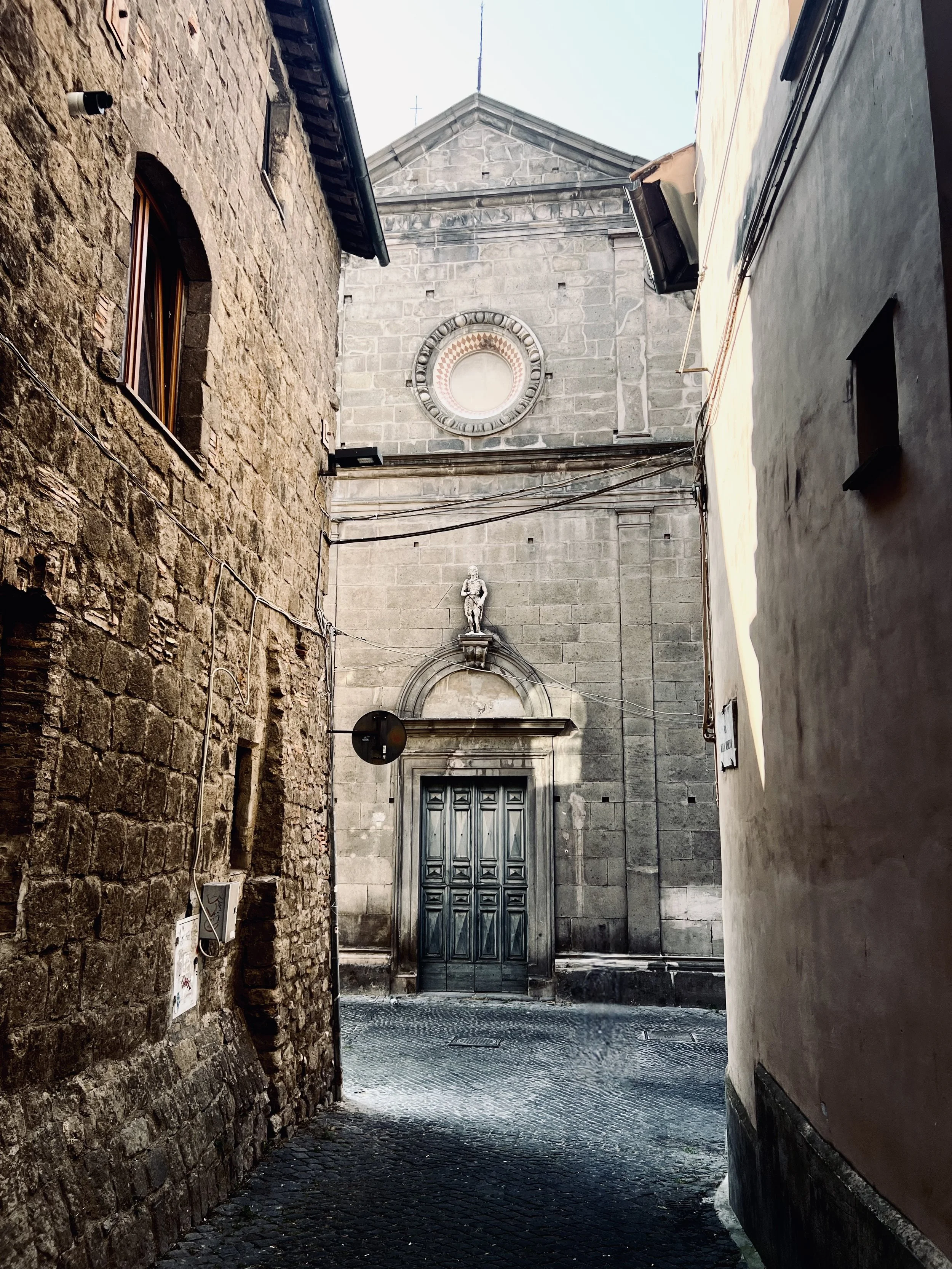
Walking the borgo, the register shifts from one century to the next without announcement. The six-spout Fontana Farnese on Piazza IV Novembre is among the most restrained civic fountains in the province. The Palazzo Farnese — built on the ruins of the original medieval castle — still occupies the corner of the piazza. The Chiesa di San Biagio (sixteenth century) contains a series of votive frescoes by Lorenzo da Viterbo and his student, known only as the Maestro da Corchiano, as well as Cosmatesque capitals salvaged from the demolished church of San Valentino that once stood in the main square.

The Sanctuary of the Madonna del Soccorso stands just outside the center, at the point where the Via Amerina descended toward the gorge. The architecture is attributed to Giuliano da Sangallo (fifteenth century) and was declared a national monument in 1902. The façade closely resembles — or deliberately references — the Basilica della Madonna della Quercia at Viterbo: four free-standing columns in peperino, composite pilasters, three portals with Corinthian capitals, carved festoons and angel faces. The founding legend involves a simultaneous dream shared by a local couple and Pope Sisto IV, who both independently saw the Madonna asking for a church on this spot beside the Via Amerina. The interior holds the Cappella del Paradiso, frescoed by Taddeo and Federico Zuccari; a founding narrative cycle on the left wall; a portrait of the devil dated 1581; and a gilded baroque altar of 1616.

Adjacent to the church, the Necropoli del Soccorso preserves Faliscan tomb facades with the rare Becco di Civettadecorative carving — a motif found almost nowhere else. The Necropoli di Musate, in the surrounding countryside, preserves the Pontone: a Faliscan aqueduct of nearly thirty meters, built around the fifth century BC.

Corchiano's annual calendar carries the weight of its origins. The Infiorata, on the last Sunday of May, covers the entire centro storico in a long carpet of flowers and geometric patterns made by hand by the residents of each quarter. The Presepe Vivente — the Living Nativity — is performed in the forre themselves, with soundscapes composed by Nicola Piovani and, historically, narration by Gigi Proietti; it has run for over fifty years. The Fescennino d'Oro in August revives the satirical verse tradition that bears the town's ancient name.

On site

Orte

Orte is the northernmost town of the Ager Faliscus, set on a tufa spur above the confluence of the Tiber and the Nera valleys. It is Tuscia — Province of Viterbo — and historically part of the Patrimonium Petri in Tuscia, donated to the Church in 728 by the Lombard king Liutprando. In Roman times it was a river port and a principal crossing point of the Tiber on the Via Amerina. The medieval center, divided into seven contrade whose boundaries are still marked in the paving stones, is compact and almost entirely intact.

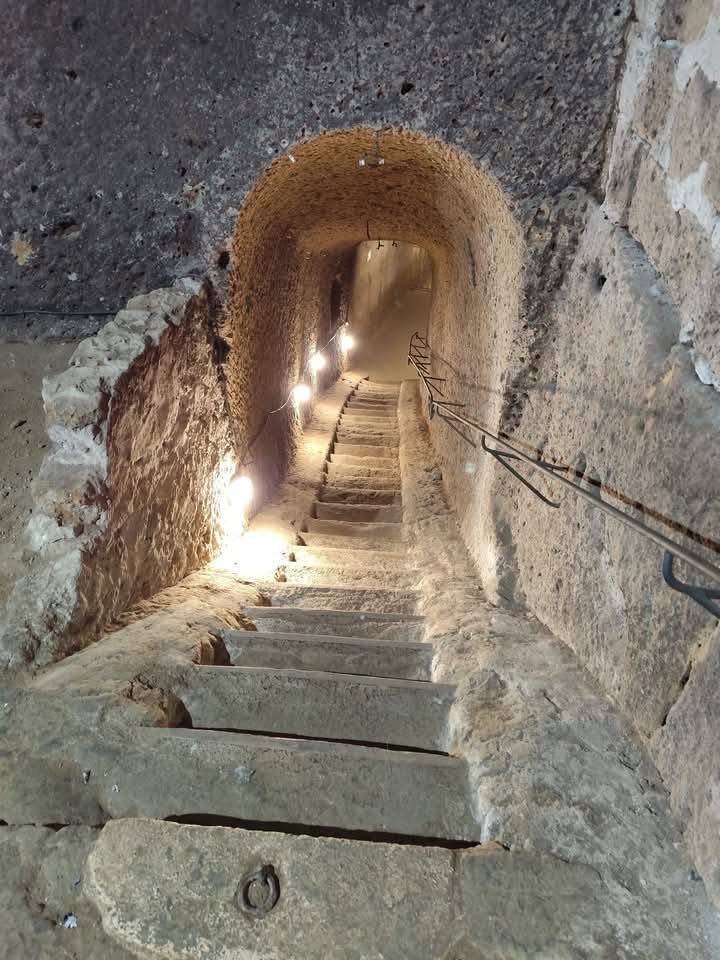
The defining experience of Orte is underground. Over approximately 2,500 years of continuous habitation, the tufa spur was excavated into an extensive network of cisterns, water channels, cellars, stables, dovecotes, wool and hemp workshops, summer dining rooms, and snow wells. Orte Sotterranea — the guided archaeological itinerary through this network — covers approximately two kilometers of passages on two routes (a shorter and a complete version). The system includes: the Fontana Ipogea under Piazza della Libertà, the terminal point of the original Roman aqueduct; the 280-meter main tunnel begun in the sixth to fifth century BC; the Ipogeo del Vascellaro, with a Roman-era wine press intact in the floor; the Pozzo di Neve, a nineteenth-century ice well whose inscription of 1891 records its commissioner, intended use, and builder; and a rupestrian dovecote with walls almost entirely lined with nest niches. Visits by guided tour only, through the town's Pro Loco tourist office. Advance booking strongly recommended.

~10–15 minutes

Civita Castellana

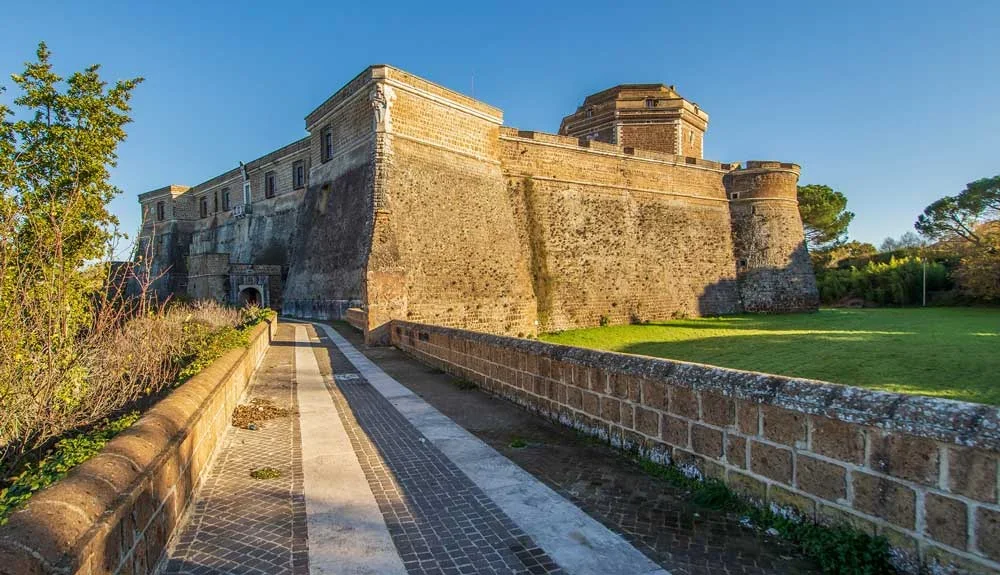
Corchiano's closest city of consequence. The Forte Sangallo — begun by Antonio da Sangallo the Elder under the Borgias, continued by the Younger under Julius II — is one of the most intact Renaissance fortresses in Lazio. The cathedral's Cosmatesque façade belongs to a different register entirely: twelfth-century Roman marble work of rare precision. The Museo dell'Agro Falisco, housed inside the fort, holds one of the most important collections of Faliscan and Etruscan ceramics in existence.

~15 minutes

Bomarzo — Sacro Bosco

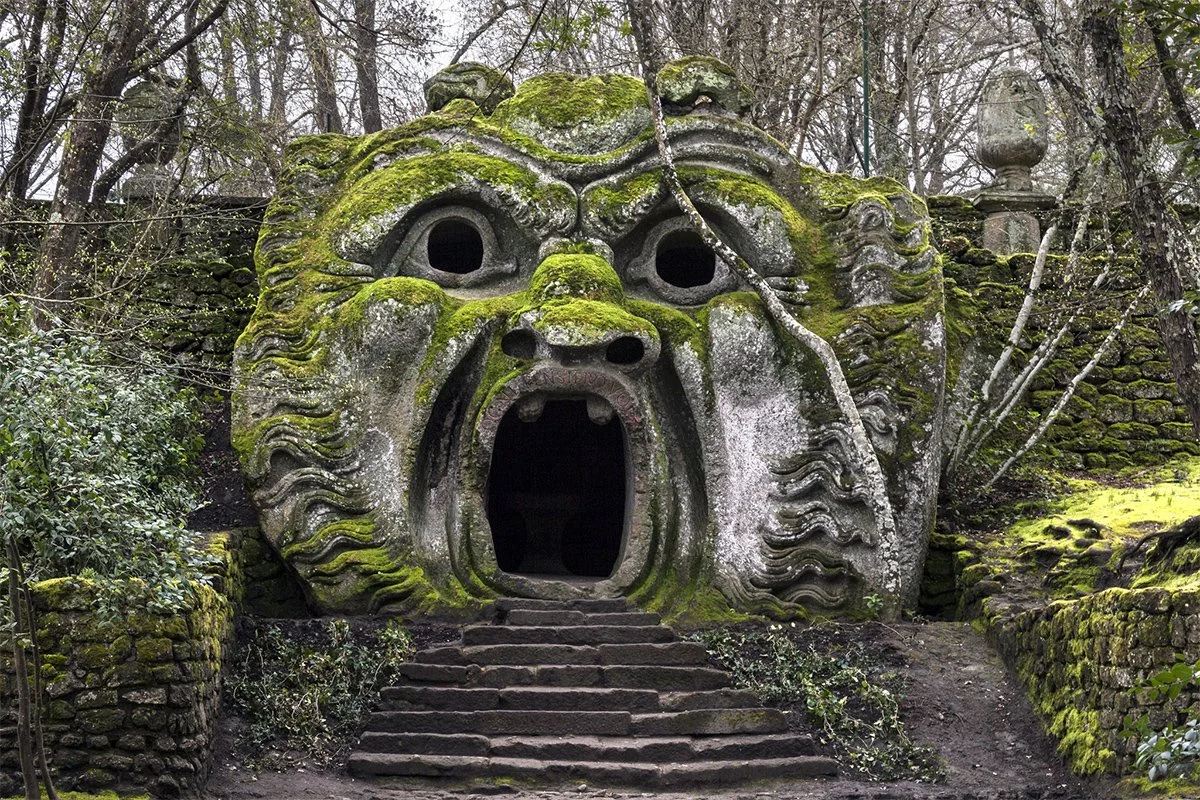
The Parco dei Mostri, commissioned by Pierfrancesco Orsini (Vicino) around 1552 and attributed to architect Pirro Ligorio, is among the strangest gardens the sixteenth century produced. Enormous figures carved directly from the local peperino stone — a gaping face, a leaning house, a dragon locked in combat, a screaming giant — are distributed through dense woodland with no apparent axis or sequence. The inscriptions are deliberately enigmatic. It is the opposite of Villa Lante, and a necessary counterpoint to it.

~20 minutes

Palazzo Farnese, Caprarola

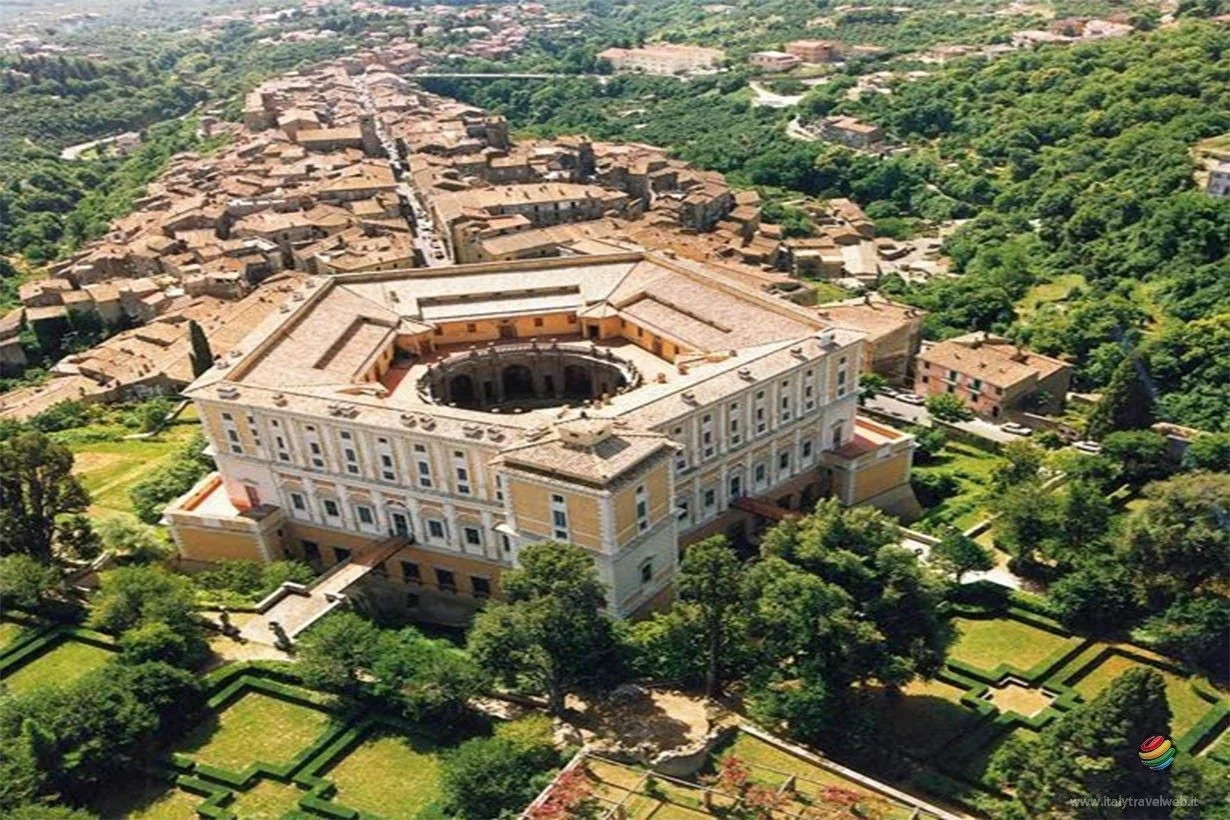
The defining monument of Farnese ambition in the Tuscia. The pentagonal palazzo, designed by Vignola for Cardinal Alessandro Farnese and begun in 1559, stands at the head of a long straight road cut through the borgo below. The interior is one of the great fresco cycles of the Italian Cinquecento: the Sala dei Fasti Farnesiani, the Sala della Cosmografia, the Scala Regia, and the Sala del Mappamondo are each separately significant. The gardens include a lower formal garden and an upper giardino segreto on the terrace behind, both intact.

~20 minutes

Viterbo — Città dei Papi

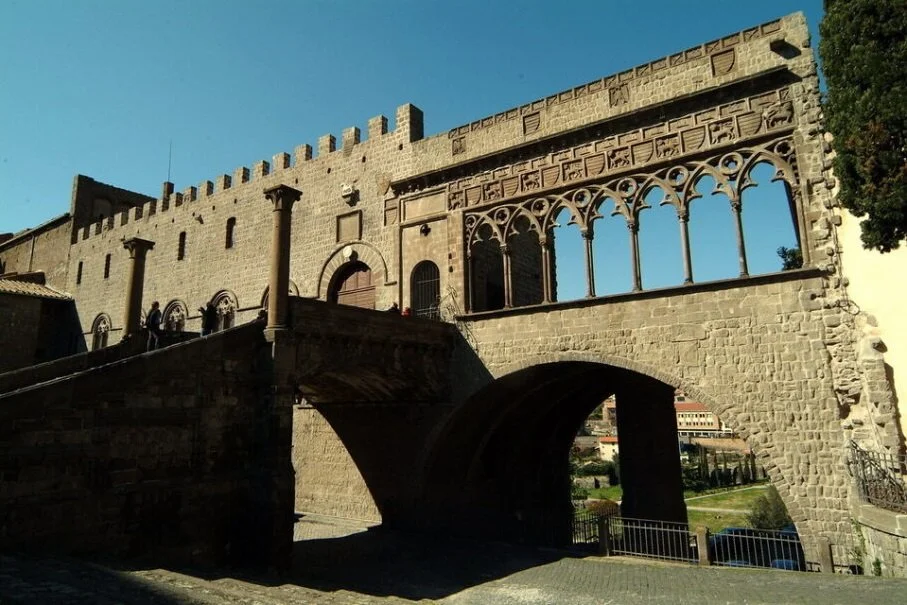
Viterbo served as the seat of the papal Curia from 1257 to 1281, when Pope Alexander IV moved the Church out of Rome to escape factional conflict. The Palazzo dei Papi — built at the behest of Raniero Gatti, Captain of the People, between 1255 and 1266 — hosted the first and longest conclave in Church history: from 1268 to 1271, 1,006 days, during which the citizens, exhausted by the wait, removed the roof from the Sala del Conclave to expose the cardinals to the elements and accelerate their decision. The word conclave — from the Latin cum clave, under lock and key — was born here. The Loggia delle Benedizioni, completed in 1267, is a delicate exercise in Gothic stonework: seven openings of pointed trilobed arches on slender twin columns, from which the popes addressed the faithful. The Sala Gualterio retains its medieval frescoes and the parchment of the first conclave. The complex is visited with audio guide as part of the Polo Monumentale Colle del Duomo, which also includes the twelfth-century Cathedral of San Lorenzo and the Museo del Colle del Duomo.

On the evening of September 3 each year, Viterbo stages one of the most extraordinary public rituals in Italy. One hundred men — the Facchini di Santa Rosa — carry a tower thirty meters high and weighing over five thousand kilograms through the streets of the historic center on their shoulders, beginning at nine o'clock at night in Piazza San Sisto. The Macchina di Santa Rosa commemorates the transport of the body of Santa Rosa in 1258, when the Pope himself accompanied four cardinals carrying the saint's remains from the Crocetta to the Monastery of Santa Chiara. The machine itself is redesigned every five years through a competition promoted by the comune; the design is a permanent architectural commission of civic significance. Before shouldering the structure, the porters receive the bishop's blessing in articulo mortis — the rite of extreme unction. The tradition has been uninterrupted, plague years aside, since the first machine was built in 1664. In December 2013 it was inscribed in the UNESCO Representative List of the Intangible Cultural Heritage of Humanity, as part of the network of Italian grandi macchine a spalla. The Museo del Sodalizio dei Facchini di Santa Rosa, in the Quartiere San Pellegrino, holds models of previous machines, photographs, and historical documentation.

The Quartiere San Pellegrino is one of the best-preserved medieval urban quarters in Europe: external staircases, loggette, arched passageways, and profferli — the characteristic outdoor stairways of Viterbese domestic architecture — in dark peperino stone. The Palazzo dei Priori houses two large canvases by Sebastiano del Piombo on the ground floor and a suite of frescoed rooms on the piano nobile. The Museo Nazionale Etrusco alla Rocca Albornoz, a military fortress later transformed by Bramante into a Renaissance residence, contains the only excavated and investigated remains of an Etruscan acropolis, along with significant recent finds. Outside the walls, the Bullicame thermal spring — mentioned by Dante in the Inferno — feeds a natural crater visible from the road.

~25 minutes

Villa Lante, Bagnaia

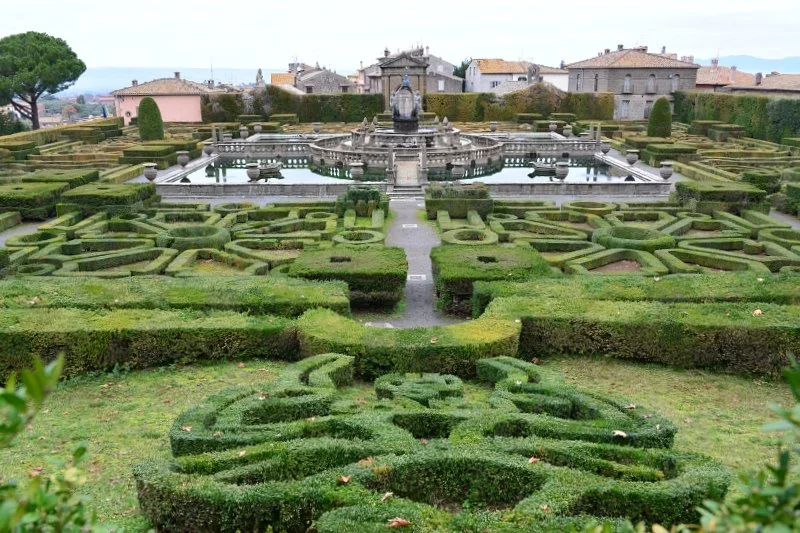
A hamlet of Viterbo. One of the supreme examples of Italian Renaissance garden design, attributed to Jacopo Barozzi da Vignola and begun in the 1560s for Cardinal Gambara. The garden is organized around water — descending from a natural spring through fountains, channels, runnels, and cascades to the formal parterre below. Two nearly identical casino buildings flank the central axis, built thirty years apart by different owners yet nearly indistinguishable. The interior frescoes are exceptional. Owned by the Italian State, managed by the Lazio Region's Museum Centre.

~25 minutes

Sutri — Parco Archeologico dell'Antichissima Città

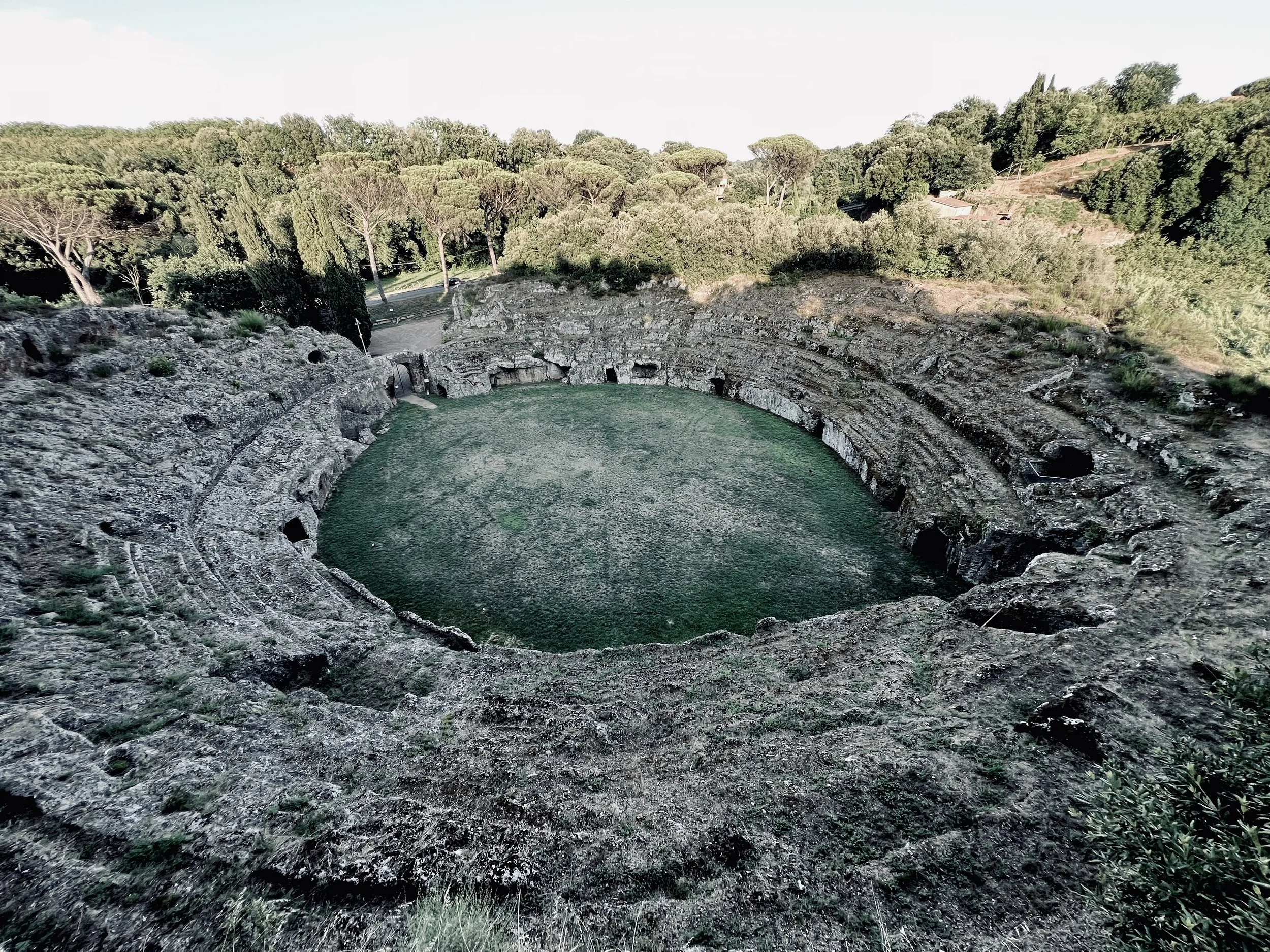
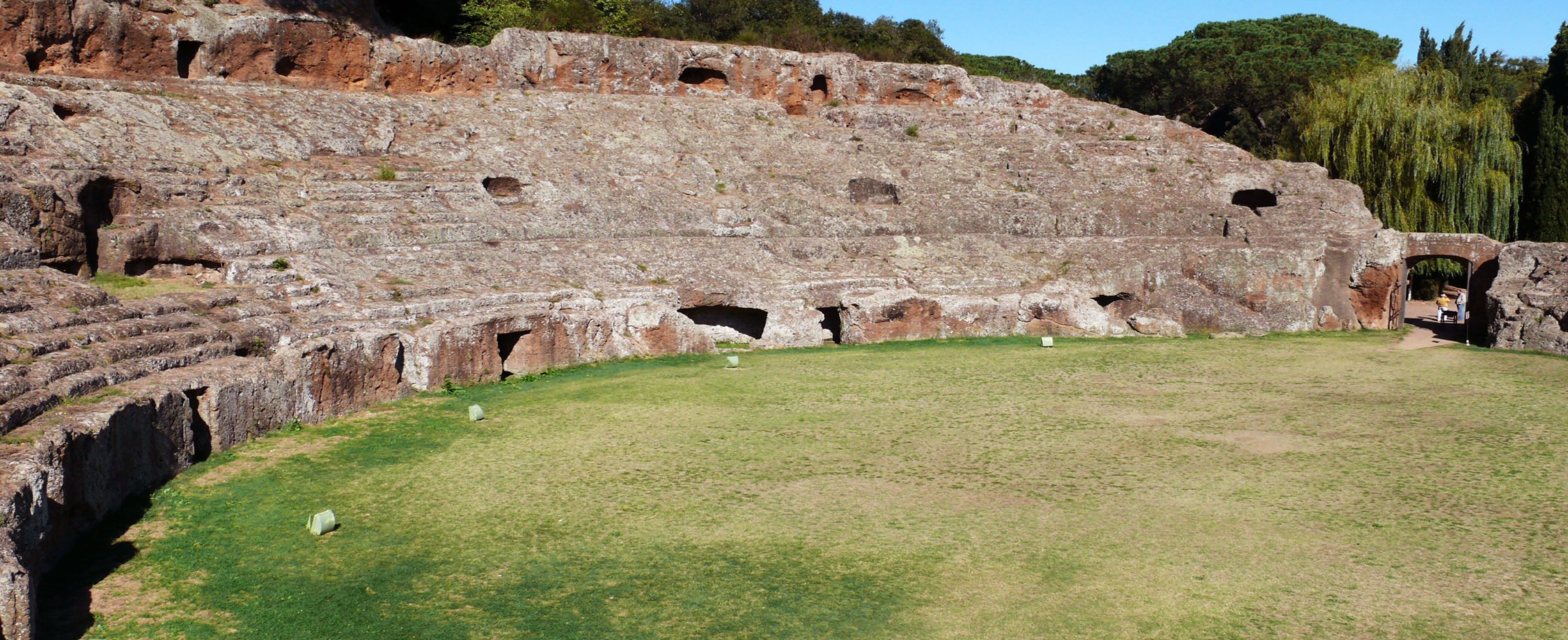
Sutri stands on a tall tufa spur between two streams, at the point where the Via Cassia cuts through the Cimini hills. Originally Faliscan, it controlled the gateway into the Etrurian interior for centuries. The seven-hectare archaeological park contains three distinct monuments in close succession. The Roman amphitheater — carved entirely from a hillside of solid tufa, without masonry support, dating to the late Republican or early Imperial period — held an estimated seven thousand spectators and is one of a very small number of its kind in the world, with analogies only at Cagliari and Leptis Magna. Adjacent, the Mitreo is a sanctuary to the god Mithras cut directly into the rock, subsequently converted into the Christian chapel of the Madonna del Parto; the paleochristian frescoes inside — depicting pilgrims on the Via Francigena, San Michele Arcangelo, and the Nativity — are intact across two phases of use. The Roman rupestrian necropolis extends for approximately 180 meters along the Cassia ridge: 64 tombs at multiple levels, used from the first century BC through the fourth century AD. Above the park, the gardens of Villa Savorelli look down over the amphitheater and the surrounding countryside.

~30 minutes

Tuscania

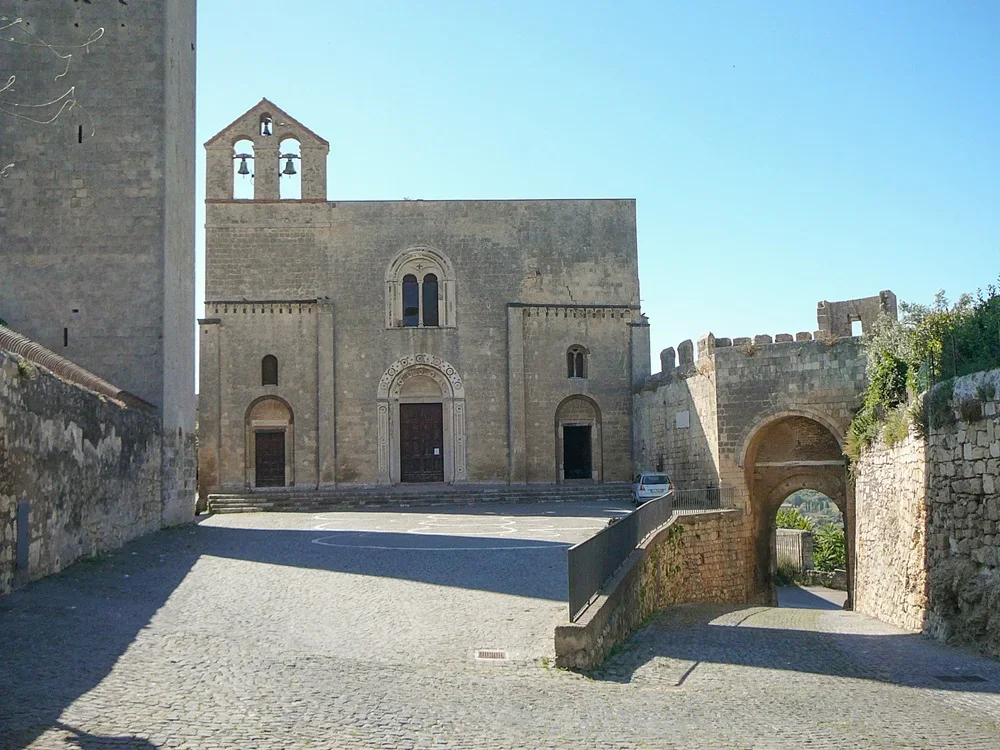
A walled medieval city with Etruscan roots, set on a tufa hill above the valley of the Marta river, surrounded by olive groves and open countryside. Two Romanesque basilicas — both outside the medieval walls, on the hill of San Pietro — constitute among the most important ensembles of medieval religious architecture in central Italy.

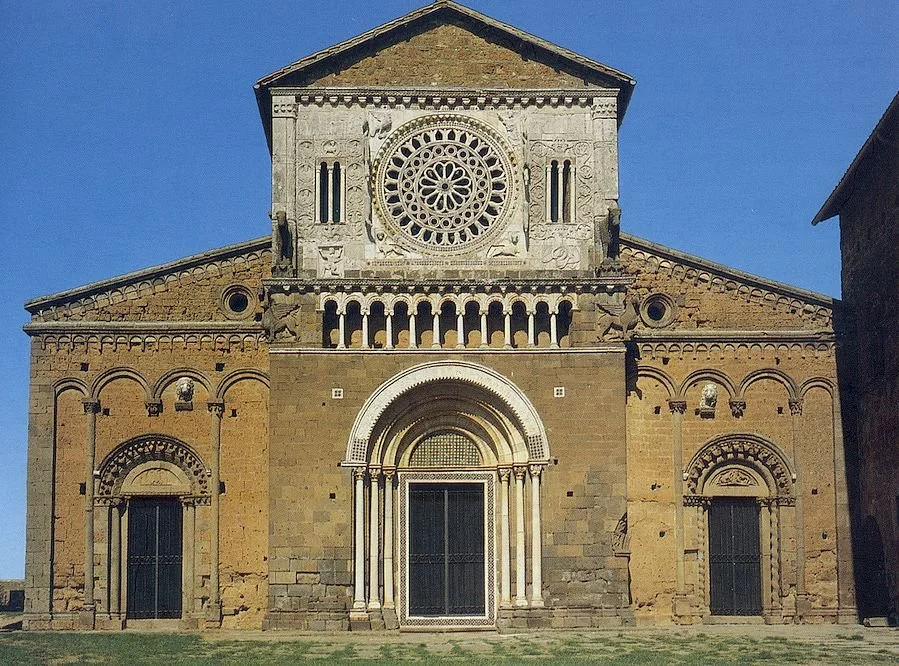
The Basilica of San Pietro stands on the probable site of the Etruscan acropolis, founded in the eighth century on the remains of a pagan temple, reconstructed and enlarged through the eleventh, twelfth, and thirteenth centuries. The façade is bipartite and bicolored: the older sections in courses of dark nenfro stone, the central body in white sculpted marble, crowded with reliefs whose iconographic program — zodiac signs, allegories of labor, two winged dragons flanking the rose window — has never been fully decoded. The Cosmatesque rose window is one of the finest in Lazio. Inside: three naves, a Cosmatesque pavement indicating the original construction, two ciboria (eleventh and thirteenth centuries), and a crypt of the eleventh to twelfth century supported by twenty-eight columns of Roman and early medieval spolia, all different, arranged in nine vaulted bays. The nearby Basilica of Santa Maria Maggiore is a second full Romanesque complex with frescoes and sculptural programs of similar quality.

The medieval center below is intact: city walls, the Fontana delle Sette Cannelle, the Parco Torre di Lavello with its views over the Marta valley and the medieval Rivellino.

~40 minutes

Civita di Bagnoregio

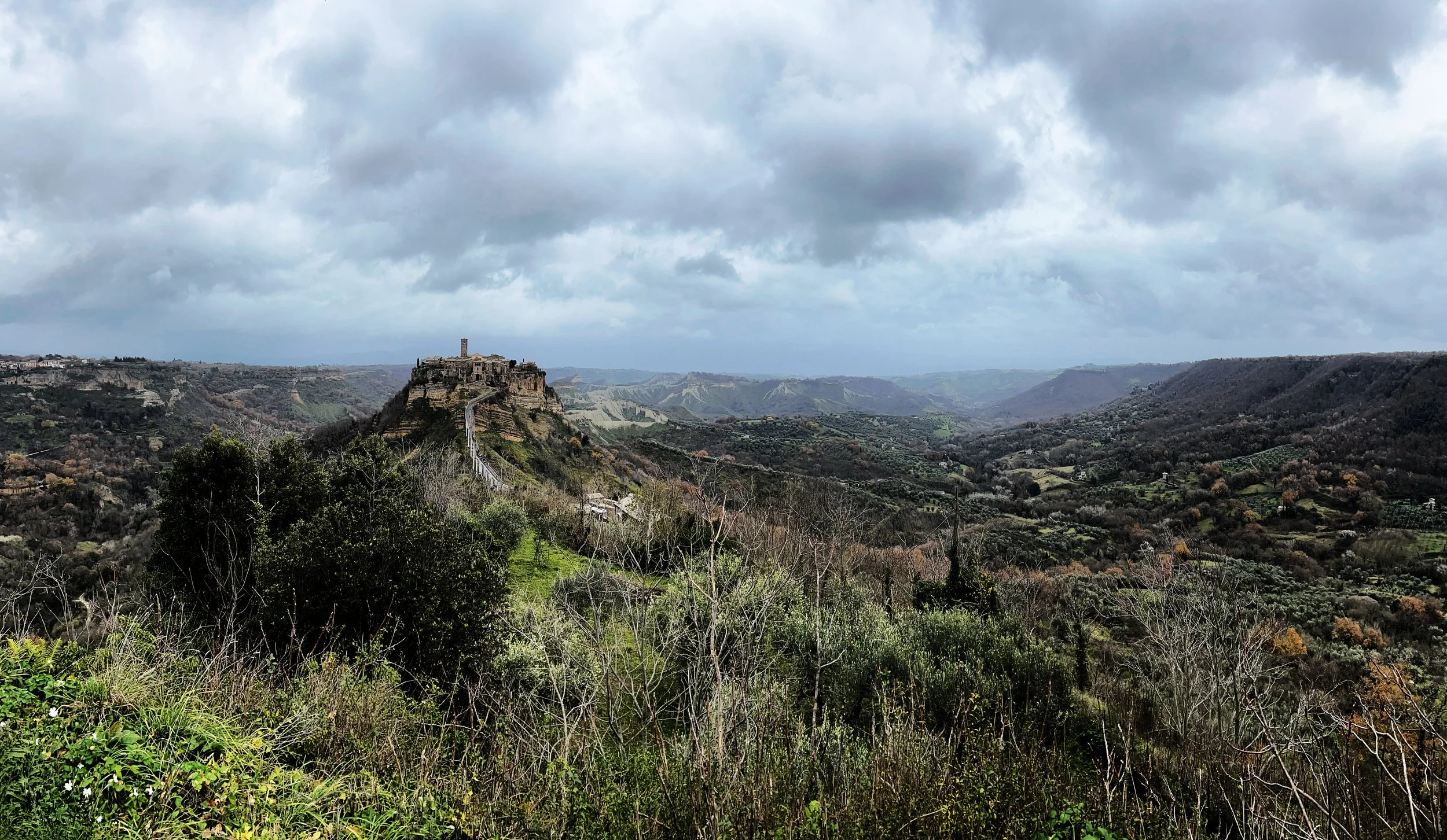
Civita stands on a tufa pinnacle above the Valle dei Calanchi, accessible only by foot across a long pedestrian bridge built in 1965. The erosion of the surrounding valley has isolated the village completely and continues; at the time of writing it has fewer than fifteen permanent residents. It was described by the writer Bonaventura Tecchi — who grew up there — as "la città che muore." The streets, the volcanic stone church, and the views over the calanchi at different hours of light are unlike anything else in the region. Best visited early morning in shoulder season. Entry requires an access fee at the bridge.

~45 minutes

Tarquinia — UNESCO World Heritage

Tarquinia was one of the great city-states of the Etruscan dodecapolis, known in Etruscan as Tarchna. What remains is among the most significant archaeological complexes in the Mediterranean world.

The Necropolis of Monterozzi — declared UNESCO World Heritage in 2004, jointly with the necropolis of Cerveteri — contains 6,000 rock-cut tombs covering 130 hectares, of which approximately 200 are painted. The painted tombs, the oldest dating to the seventh century BC, constitute the largest surviving body of pre-Roman figurative painting in existence: hunters, fishermen, musicians, dancers, wrestlers, banquet scenes, mythological figures, demons, and portraits of the dead rendered in intense, movement-driven color across more than two and a half millennia of relative preservation. Among the most celebrated: the Tomba dei Leopardi (fifth century BC), the Tomba della Caccia e Pesca (sixth century BC), the Tomba degli Auguri, the Tomba dell'Orco, the Tomba degli Scudi, and the Tomba del Tifone. A rotating selection is open for public visit; certain tombs can be accessed by special appointment through the Soprintendenza.

The Museo Nazionale Tarquiniense occupies the fifteenth-century Palazzo Vitelleschi in the center of the city. Three floors of Etruscan and Roman finds are organized chronologically: ceramics, gold jewelry, bronze mirrors, votive objects, coins. The two absolute masterpieces of the collection are the Cavalli Alati (Winged Horses) in terracotta, and the Mithras relief. Several detached fresco cycles are displayed in climate-controlled rooms on the upper floor. The cardinal's private chapel and studiolo, frescoed in the fifteenth century and restored in 2011, close the visit.

Allow a full day for necropolis and museum combined.

~50–55 minutes

Water & Landscape

Forre di Corchiano — Monumento Naturale

The Forre are the defining landscape feature of Corchiano's immediate territory: deep tufa canyons carved over millennia by the Rio Fratta and its tributaries, now a protected Natural Monument of the Lazio Region (declared 2008). They descend directly from below the village and hold — within a relatively short circuit — one of the most compressed concentrations of Faliscan and Roman material in the Ager Faliscus.

The trail begins from Piazza San Biagio or the parking area of Via XXV Aprile. The base circuit is approximately 5 kilometers, easy to medium difficulty, with a 100-meter elevation change: three hours on foot. An extended itinerary following the Via Amerina south toward Falerii Novi covers approximately 10 kilometers and takes a full day.

~ on site

The Via Cave.

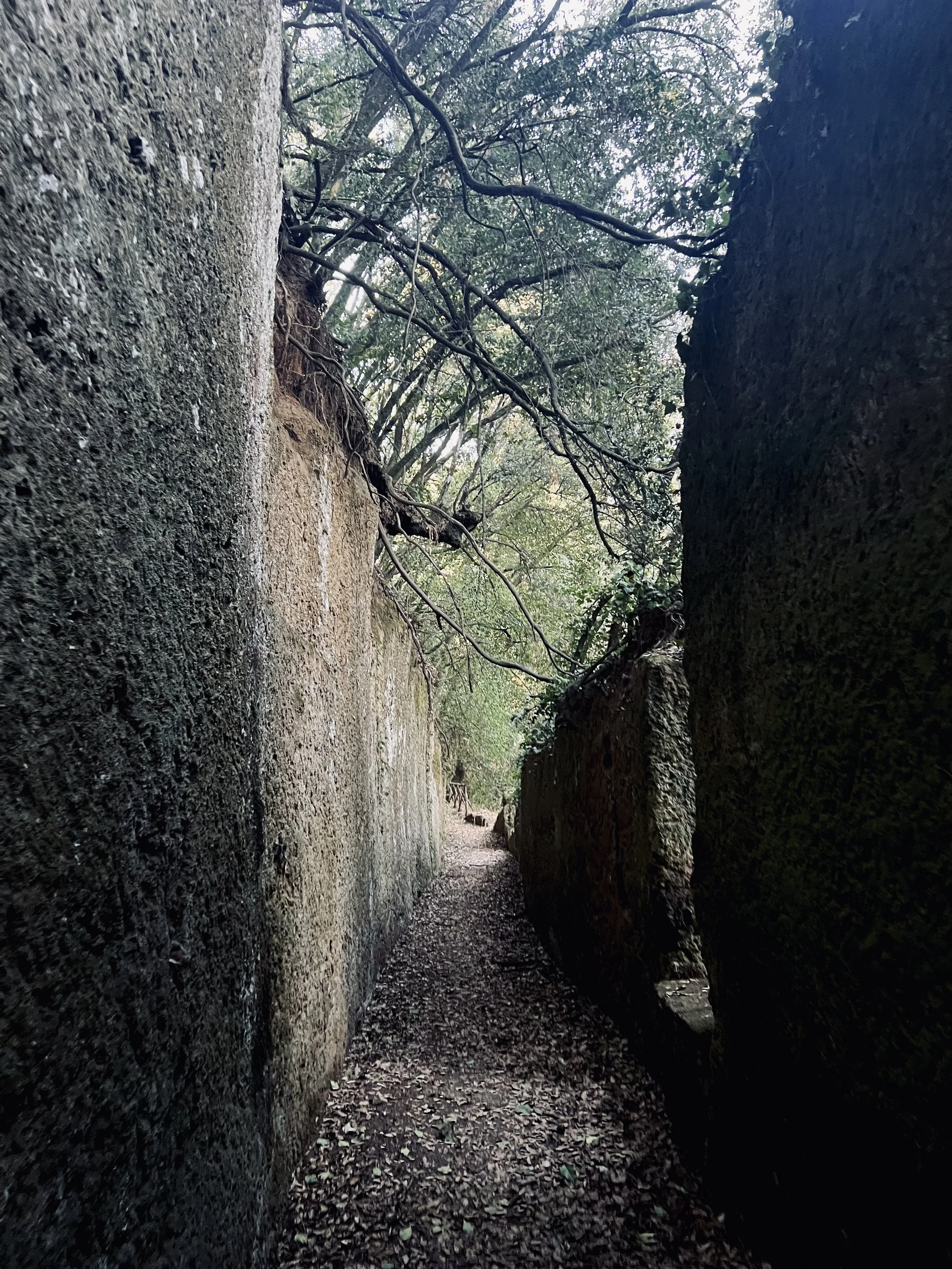
The Faliscans cut their roads directly into the tufa, producing enclosed passages — vie cave or tagliate — of extreme depth and narrowness. Corchiano has four principal examples. The Via Cava della Spigliara (sixth century BC), also called of the Sasso Pendulo for a boulder wedged between the walls for centuries. The Via Cava di Sant'Egidio, the most dramatic: over ten meters high, with two Etruscan inscriptions carved into the walls — one signed in full, Larth Vel Amies, the name of the Etruscan contractor who cut it. The Via Cava della Cannara, whose walls carry its builder's mark. A fourth connects the borgo to the Sanctuary of the Madonna del Soccorso along what was an ancient pilgrimage route.

~ on site

The Via Amerina.

The Roman consular road from the third century BC — connecting Veio to Amelia via Nepi, Falerii Novi, Fescennium, Gallese, Vasanello, and Orte — passes through the gorge. Stretches of the original basolato (basalt paving slabs) survive. The road was cut in part over earlier Faliscan trackways; the stratigraphic overlap of the two civilizations is visible in the rock.

~ on site

The Necropoli.

The walls of the forra are studded with Faliscan tombs at multiple levels. The Necropoli del Soccorso, near the church, includes facades with the rare Becco di Civetta decorative carving. The Necropoli delle Caprarecceoccupies a separate section of the canyon. The Necropoli della Genitura, encountered along the Via Amerina before descending into the gorge, is among the finest Faliscan funerary sites along this stretch of road. Paleolithic caves and rock shelters open from the base of the tufa walls.

The Ponte and Cascata del Sambuco.

The circuit arrives at the Orto del Sambuco, a small grassy clearing where the Rio Fratta drops over a step of basaltic rock on both sides, meeting below the Roman bridge. The bridge — third century AD, single arch in tufa — is intact and in daily use as part of the trail. Two freshwater springs surface at the base of the waterfall.

Flora and fauna.

The gorge floor is dense with riparian species — elderberry, alder, ash, robinia. Protected fauna includes the European wildcat, porcupine, fox, badger, pine marten, weasel, and boar; birdlife includes the kingfisher, green and spotted woodpecker, barn owl, tawny owl, kestrel, and buzzard.

The gorge is accessible year-round. Spring (March–May) is the richest season for flora. Walking boots required; sections near the waterfall can be muddy after rain. No entry fee.

~ On site

Lago di Vico

A smaller and less visited volcanic crater lake, enclosed entirely within a regional nature reserve and largely undeveloped along its shoreline. Beech and chestnut forest descend from the Cimino slopes to the water's edge. The lake circuit road is approximately twenty kilometers through dense woodland. The Monti Cimini hazelnuts — among the most prized in Italy for confectionery — grow on the slopes above it.

~30 minutes

Lago di Bolsena

The largest volcanic crater lake in Europe, formed by the eruptions of the Volsini system. The water is remarkably clear; the two islands — Bisentina and Martana — are visible from the shore and accessible by boat from the ports of Capodimonte and Bolsena. The medieval center of Bolsena, with the Castello Monaldeschi dominant above it, retains its historic fabric largely intact. The lake produces a freshwater fish — coregone (lavaret) — that appears on every serious local menu. The Aleatico di Gradoli, a dessert wine made from the Aleatico grape in the volcanic soils on the western shore, is rarely found outside the province.

~40 minutes

Corchiano at the Table

Pizza Corchianese.

Corchiano's own pizza is a distinct preparation — not a regional variation of anything, but a dish with a documented identity and a territorial quality mark (Marchio Tuscia Viterbese) to protect it. The recipe is that of the Faliscan agricultural tradition: leavened dough baked in a wood-fired oven, dressed with chopped tomato, raw onion sliced thin, fresh basil, and grated pecorino — never in slices, because historically the cheese was expensive and only what could be dusted on the surface was affordable. Anchovies were added after the war, when commerce reached the village and salt fish became available. When the women of Corchiano said "oggi si fa la pizza", this is what they meant.

The bakery that has carried this recipe longest is Il Panificio di Paola — run by Paola, wife of the Officine Petrucci family's uncle on the maternal side. The bakery was originally the Panificio Petrucci, passed through the Isanti family for a generation, and has now returned to the Petrucci family. The name Isanti has been retired from the bakery; it lives on separately in the pasticceria next door, where Monia Achille continues her chocolate work. Two distinct operations, the same history.

Pasticceria Cioccolateria Isanti — Monia Achille.

Monia Achille — maître chocolatier, certified chocolate taster through the International Institute of Chocolate and Cacao Tasting, and teacher at the Gambero Rosso academy — has accumulated awards at the International Chocolate Awards (Italian/Mediterranean section) consistently across multiple years. In 2021, she won gold, silver, and bronze simultaneously at the Florence competition — all three steps of the podium in a single session. In 2022, four medals including the Innovation Prize. In 2024, four more. In March 2026, six awards: one gold, two silver, and three special recognitions, including one specifically for her valorization of the nocciola tonda dolce gentile romana.

Her creations draw directly from the territory: MMMiele pairs nocciola della Tuscia with eucalyptus honey; Marrakesh is a ganache of green tea, mint, and Damascene rose; Ma miele e sambuco — honey and elderberry — is named for the sambuco that grows in Corchiano's own forre. Un Tè con Hemingway and Nocturne are among the 2026 award-winning pieces.

Bertolacce.

A local preparation of the Corchianese countryside: very thin crepes made with flour, water, and eggs, dusted with grated pecorino romano. Sometimes they can be found at Paola’s bakery.

Gastronomia

The cuisine of the Tuscia is rooted in the cucina povera of the countryside — legumes, wild greens, freshwater fish, pork, bread. Several dishes have survived intact and remain genuinely good.

Acquacotta — The emblematic dish of the Viterbese. Stale bread, wild chicory, fresh mint, and extra virgin olive oil, finished with a poached egg or salt cod depending on the season. Declared UNESCO Intangible Cultural Heritage.

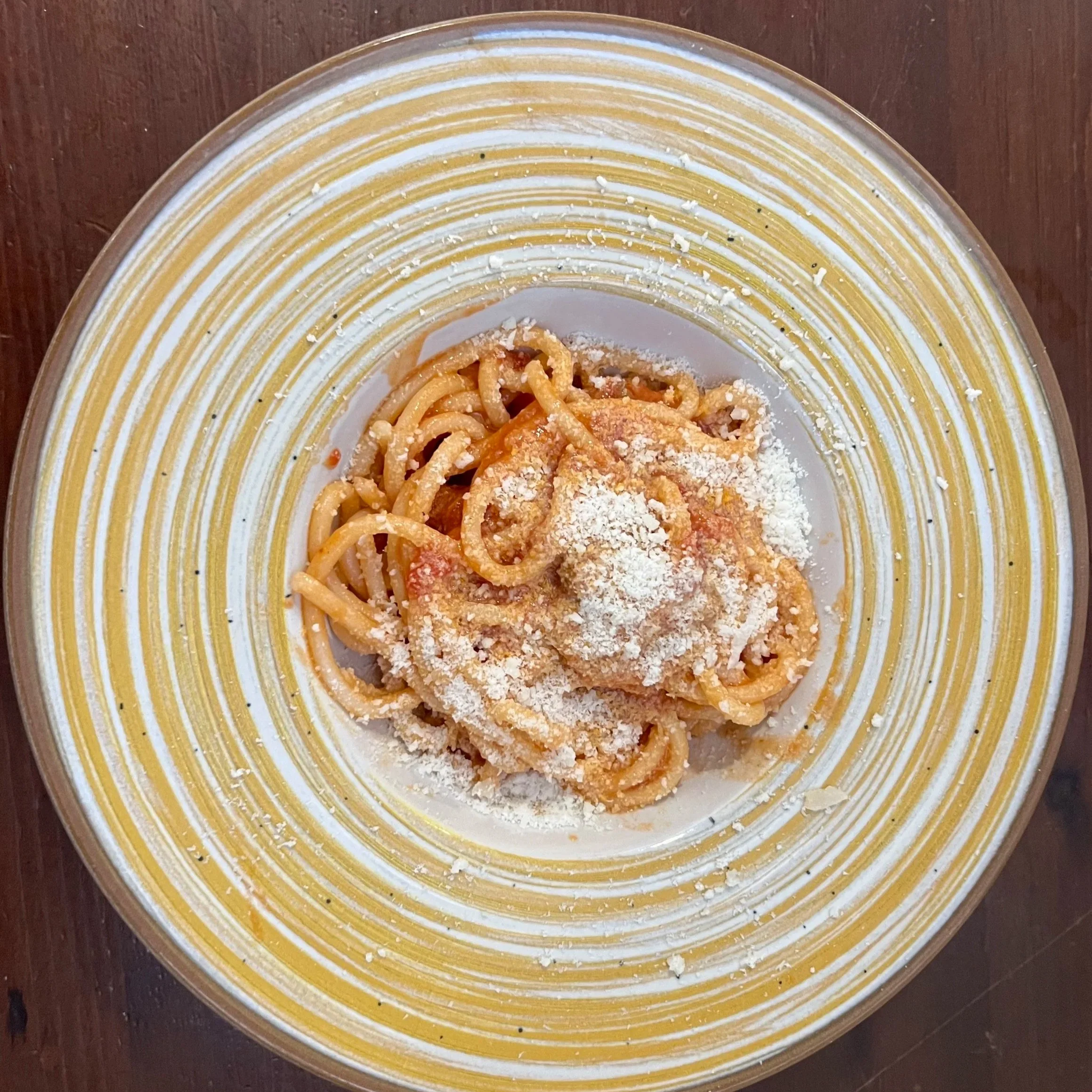
Lombrichelli — Hand-pulled fresh pasta, long and irregular, made with flour and water only. The rough texture holds a sauce — typically cinghiale (wild boar), lamb, or mushroom with sausage.

Fregnacce — Fresh pasta sheets made with wheat flour, pork rind, pecorino, and oil. A dish of the Viterbese countryside.

Susianella — A cured pork sausage of medieval origin, made from offal and fatback with spices. Presidio Slow Food. Produced by very few remaining artisans, principally the Coccia family in Viterbo, active in the sector since the early twentieth century. Not widely available outside the province.

Pecorino della Tuscia — Sheep's milk cheeses of the area cover a significant range: fresh primo sale, medium-aged forms wrapped in walnut leaves, slow-aged forms ripened in natural tufa or volcanic lapilli caves near Lago di Bolsena, and barricati types fermented in red wine, grape marc, or olive oil skins. The Alta Tuscia Formaggi caseificio produces across the full spectrum with consistent quality. The Piccola Formaggeria Artigiana of Marco Borgognoni in Viterbo produces a different range: soft cheeses, a blue sheep's milk (Blu di Pecora), and the Stracchinato dei Papi.

Nocciole dei Monti Cimini — Hazelnuts from the Cimino hills are among the most prized in Italy for confectionery and paste production. The tozzetti di Viterbo — a twice-baked biscuit made with them — are the standard local sweet.

Coregone — The lavaret of Lago di Bolsena, a cold-water freshwater fish with delicate white flesh, appears in the best local kitchens only when the lake supplies it. Served smoked as a panzanella, or baked with wild fennel and potatoes.

Restaurants

Il Richiastro — Viterbo In the historic center, occupying the former stables of Palazzo Mazzatosta. Open since 1982. A kitchen rooted in Viterbese tradition — wild herb preparations, freshwater fish dishes from the lake, legume soups, desserts based on local hazelnuts and ricotta. An internal courtyard for warmer months.

Trattoria al Vecchio Orologio — Viterbo The house of Paolo Bianchini. Traditional Viterbese cooking without revision: acquacotta, lombrichelli, offal preparations, seasonal dishes tied to what is in the market. Named among the notable kitchens of the province by the annual La Tuscia del Vino guide.

Il Casaletto — Grotte Santo Stefano An agriristorante in the countryside south of Viterbo. Chef Marco Ceccobelli's kitchen is built almost entirely on what the property produces: house-cured salumi, garden vegetables, fresh pasta, seasonal foraging. A large circular fireplace anchors the dining room. A wine cellar of approximately 400 labels. Rooms available in the farm structures.

Vineria San Lorenzo — Viterbo A wine-centered osteria in the historic center, run by sommelier Domenico Reitano. A carefully curated selection of natural and territorial wines, paired with serious local food. One of the better addresses for wine knowledge in the province.

La Parolina — Trevinano, Acquapendente At the northern limit of the province, at the border with Tuscany. Two women — Antonella Ciocia in the kitchen, Miriam Sardi in the dining room — produce a menu anchored in local tradition with genuine gastronomic intelligence: soups, fresh pasta, a wine list that prioritizes natural producers from Tuscia and neighboring regions. One of the most consistently distinguished restaurants in the province. ~45 minutes

Ceramics

The province has deep traditions in ceramics, tied to the volcanic clay deposits of the Viterbese. Civita Castellana has been a production center since antiquity — the Museo dell'Agro Falisco documents its roots in Faliscan polychrome ware — and several active workshops in the town continue the tradition. The Museo della Ceramica della Tuscia in Viterbo, housed in the sixteenth-century Palazzo Brugiotti, covers the full arc of territorial production.

In movimento

The landscape of the Tuscia is not decorative. The tufa canyons, the volcanic lake circuits, the ancient roads cut through open country — these are working terrain for anyone who wants to move through it on foot, on a bicycle, or on horseback.

On Foot

Le Forre di Corchiano. The full circuit through the Natural Monument is approximately 5 kilometers, easy to medium difficulty, 100 meters of elevation change, three hours on foot. The extended itinerary following the Via Amerina south toward Falerii Novi extends to 10 kilometers and occupies a full day. Both depart on foot from Casale Fallarese. Full description in the Water & Landscape section above.

La Via Amerina — Cammino della Luce. Corchiano sits on the third stage of the Via Amerina, a waymarked long-distance walking route recognized by the Lazio Region (L.R. 13/2017) and managed by the Biodistretto della Via Amerina e delle Forre. The route follows the ancient Roman consular road from Amelia in Umbria south to Campagnano di Roma, where it joins the Via Francigena. The full itinerary covers six stages across 80+ kilometers.

The two stages most directly accessible from Casale Fallarese:

  • Stage 2: Vasanello → Corchiano — 10.5 km, 4 hours, easy. The route enters the Forre, follows the Rio Fratta through the canyon, crosses the Roman bridge, and ascends through the Via Cava di Sant'Egidio into the borgo.

  • Stage 3: Corchiano → Falerii Novi → Nepi — 16 km, 6 hours, medium. Passing through Contrada Fallarese (the estate's own road), entering Macchia del Quartaccio, following basolato of the Via Amerina through the Cavo degli Zucchi necropolis, reaching the Roman city walls of Falerii Novi, continuing to the waterfall Cascata Cavaterra and the medieval center of Nepi.

GPX tracks available via the InAgroFalisco portal.

WWF Oasis — Pian Sant'Angelo. Adjacent to the Forre, the 500-hectare protected oasis managed by WWF offers a family-friendly circuit of approximately 3 kilometers through flat woodland and open fields, passing the Necropoli della Genitura and a recovered section of Via Amerina basolato. Easy, no elevation change, suitable for all ages.

On Two Wheels

Cicli Montanini — Corchiano. Less than one kilometer from Casale Fallarese, at Contrada Pantalone, Cicli Montanini has operated since 1983 in a 700-square-metre store and is an official dealer for Bianchi, Cannondale, Colnago, Giant, and Lombardo. The shop runs a bike rental operation covering e-bikes, gravel bikes, MTB, and road bikes. Simone Montanini — son of the founder, degree in Sports Science from the Università degli Studi di Roma "Foro Italico," certified mountain bike instructor — leads the technical side and is available for guided rides and instruction. Cicli Montanini also operates as a sporting association (ASD Cicli Montanini) that organizes events, races, and mapped routes across the Agro Falisco territory. GPX tracks available via ciclimontanini.com.

Tour dei Borghi Sospesi dell'Agro Falisco. The defining route of the territory, designed and mapped by the Cicli Montanini team in collaboration with the Biodistretto della Via Amerina e delle Forre. It departs from the shop in Contrada Pantalone — less than one kilometer from Casale Fallarese — which functions as the official start/finish and base for the ride.

The gravel and MTB variant covers approximately 74 km with 900 meters of positive elevation gain. The road variant extends to 80–84 km with 1,050–1,250 meters. Both are suitable for gravel bikes, MTB, and e-MTB; GPX download required.

The circuit passes through terrain that is difficult to match anywhere in central Italy for the density of what it crosses: the Bosco del Quartaccio; the Roman city walls and Cistercian abbey of Falerii Novi; Civita Castellana (Forte Sangallo, Cosmatesque cathedral); the gorges above Castel Sant'Elia; the medieval center of Nepi; the Cascate di Monte Gelato; the hanging village of Calcata; and the tufa ridgeline of Faleria — before returning south to Corchiano through the open agricultural land of the Ager Faliscus. The route is consistently on low-traffic provincial roads and strade bianche.

Rental, mechanical support, and route briefing all available at Cicli Montanini before departure. Less than one kilometer from Casale Fallarese

Giro del Lago di Vico. The volcanic crater lake of Vico, enclosed within its nature reserve, approximately 30 minutes from Corchiano. The basic lake circuit is 20–30 km on low-traffic roads with negligible elevation. The Monte Fogliano variant adds a significant climb through beech forest to the summit at 963 meters, then descends to San Martino al Cimino — a proper mountain ride for anyone who wants elevation. E-bikes for hire at the lakeside. ~30 minutes

Monti Cimini MTB. The volcanic mountains above Viterbo — Monte Fogliano, Monte Venere, Monte Cimino — offer a network of single track and forest roads for technical riders. The Strada di Mezzo through the Cimino pinewoods descending to Soriano nel Cimino is a benchmark ride in the regional MTB community. Navigation requires GPS; terrain is demanding.

On Horseback

The agricultural landscape of the Ager Faliscus — open fields, unpaved roads, forre, and river valley tracks — is historically horse country. The estate's own connection to the local equestrian world runs through the Centro Ippico Madonna delle Grazie, a riding club (circolo ippico) located in Contrada Madonna delle Grazie, Corchiano, of which Silvia Ottaviani is a member. The club operates as an association offering lessons at all levels, trail rides through the surrounding countryside, and horse boarding. Guided excursions into the forre and across the open land of the Ager Faliscus are available by arrangement directly through the club.

For riders seeking longer country itineraries along the Via Amerina corridor, the Centro Ippico Gli Amici del Sorrisonear Nepi also operates guided trail riding explicitly in the Agro Falisco territory. Centro Ippico Madonna delle Grazie: Corchiano

Swimming

For lake swimming, the shoreline of Lago di Bolsena — particularly at Capodimonte and Bolsena itself — offers clear volcanic water, public beaches, and boat hire throughout summer. Lago di Vico has a small lakeside area open in season. Neither lake has significant tourist infrastructure; both reward early arrival.

Acque Termali

Thermal Waters

The Tuscia is one of the most thermally active territories in central Italy. The same volcanic system that shaped the landscape — tufa, craters, crater lakes — pushes sulfurous water to the surface across a wide arc around Viterbo. The waters are classified as sulfurous-sulfate-bicarbonate-alkaline-earth and have been in continuous use since Etruscan times. The territory offers several distinct experiences, from organized spa facilities to entirely open and free bathing in the open countryside.

Bullicame — Viterbo

The most historically charged of the thermal springs. The Bullicame emerges from a natural crater approximately 2.5 km west of Viterbo's historic center at a source temperature of 58°C, feeding two pools: one circular, closest to the crater, and one larger elongated basin at a lower temperature. The setting is raw — no facilities, no entrance fee, open every day of the year. Dante cited the Bullicame explicitly in Canto XIV of the Inferno, comparing the sulfurous streams of Hell to the steaming reddish water flowing from the crater. A stele beside the spring carries the relevant lines. Michelangelo made drawings of the site. The name derives from the Latin bullicare — to simmer. The waters deposit a natural sulfurous mud on the skin; come prepared to rinse.

~30 minutes from Casale Fallarese

Bagnaccio — Viterbo

Located approximately 8 km west of Viterbo along the Via Cassia, on the route of the ancient Via Francigena. The Bagnaccio has served pilgrims and travelers for centuries. Five pools, fed by springs ranging from 23°C to 65–66°C, sit in open farmland surrounded by an organic botanical garden of autochthonous Tuscia species. Managed by the Associazione di Promozione Sociale Il Bagnaccio. Entry requires a modest daily or annual membership fee. One of the better-maintained wild thermal experiences in the region.

~30 minutes from Casale Fallarese

Terme dei Papi — Viterbo

The organized thermal establishment outside the historic center of Viterbo, with a long institutional history — frequented by popes, and Pope Niccolò V had a residence built adjacent to it in the fifteenth century. The current facility includes a large outdoor pool of over 2,000 square meters, a natural thermal grotto, indoor treatment rooms, and accommodation. Booking required for treatments.

~30 minutes from Casale Fallarese

Piscine Carletti — Viterbo

Open-air, free-access thermal pools approximately 2.5 km from Viterbo's center. Iperthermal source at approximately 58°C. No facilities. Open at all hours, all year.

~30 minutes from Casale Fallarese